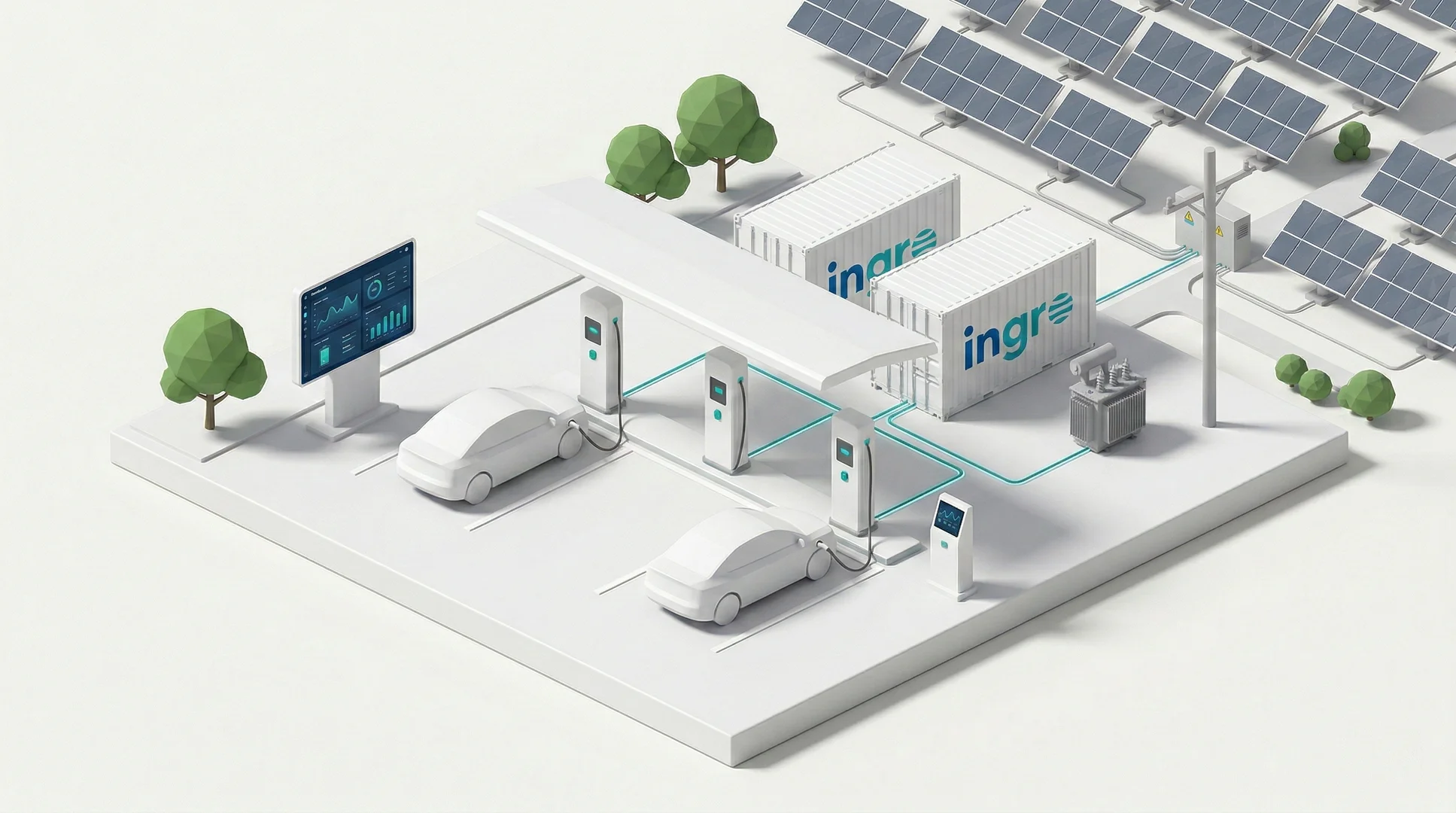
BESS-buffered EV charging decouples charger power from grid capacity, enabling 150-350 kW DC fast charging on weak 30-50 kW connections. Deploy fast charging in Tier 2/3 cities and highway corridors where grid upgrades would take years.
The Opportunity
India's EV Revolution Needs Infrastructure That Doesn't Exist Yet
EV sales are surging. Charging infrastructure is not. The bottleneck isn't demand, it's the grid.
India sold 19 lakh EVs in 2024, a 19% year-on-year surge, with electric car sales jumping 77% in 2025. The PM E-DRIVE scheme has allocated INR 2,000 crore for 88,500 new charging sites. But the grid can't deliver the power these chargers need. The EV-to-charger ratio stands at 1:235 against an ideal of 1:20. Charge point operators who can deploy fast charging anywhere, now, without waiting 18 months for a grid upgrade, will capture this market.
The Infrastructure Gap
Why Fast Charging Is Impossible Without BESS
150-350 kW DC fast chargers need 500+ kVA from the grid. Most locations outside metro cities have 30-50 kW. Do the math.
Power Mismatch
500+ kVA
A single 150-350 kW DC fast charger demands a 500+ kVA grid connection. Most Tier 2/3 locations have only 30-50 kW available.
Prohibitive Grid Upgrades
INR 50-80L
New HT connections cost INR 50-80 lakh, take 6-18 months to install, and require land for substations, killing project economics.
Demand Charge Traps
40-60%
Simultaneous fast-charging sessions create demand spikes that attract punitive peak demand charges, eroding station profitability by 40-60%.
Highway Dead Zones
1,000+ km
Major highway corridors have stretches of 100+ km with no fast charging, not because there is no demand, but because there is no grid capacity.
The Solution
How Battery Buffering Works
Slow grid charge. Fast vehicle discharge. It's that simple.
Grid Supply
30-50 kW
Slow, continuous draw
Ingro BESS Buffer
500 kWh - 2 MWh
Stores energy over hours
DC Fast Charger
150-350 kW
Rapid burst to vehicle
The BESS absorbs energy slowly from the grid (or solar) over hours, then dispenses it rapidly to vehicles on demand. The grid never sees the 350 kW spike, it only sees a steady 30-50 kW draw.
X
Without BESS
500+ kVA grid connection required
INR 50-80 lakh infrastructure cost
6-18 month wait for grid upgrade
Demand spikes crush margins
Only viable in metro cities
With Ingro BESS Buffering
30-50 kW grid connection sufficient
Deploy in weeks, not months
150-350 kW output to vehicles
Flat demand profile, low grid charges
Viable anywhere, highway, Tier 2/3, rural
AI Powered BESS
Intelligent Software That Maximizes Every kWh
Hardware gets energy in and out. Software decides when, how much, and for whom, turning a battery into a revenue-optimizing platform.
Smart Charge Management
Queues and prioritizes vehicles intelligently, optimizes BESS state-of-charge in real time to ensure charger availability even during peak hours.
Solar-BESS Optimizer
Maximizes solar carport utilization and minimizes grid draw during peak tariff hours. Automatically shifts load to stored solar energy when rates spike.
Demand Charge Controller
Prevents simultaneous charging sessions from creating demand spikes. Keeps contracted demand low and station economics healthy month after month.
Fleet Scheduling AI
Optimizes overnight bus and truck charging sequences to minimize grid connection requirements. Charges 20-50+ vehicles from a single connection.
CPO Integration
APIs that integrate seamlessly with OCPP-compliant charge management platforms. Plug into existing CPO software stacks without vendor lock-in.
Revenue Analytics
Per-session cost tracking, margin optimization, and utilization dashboards. Know exactly which chargers, time slots, and tariff windows drive profit.
Remote Monitoring
Cloud-based BESS health monitoring with predictive maintenance alerts. Track cell-level temperatures, SOC, cycle counts, and degradation curves 24/7.
Every Ingro BESS ships with our cloud-connected EMS platform. Firmware updates, algorithm improvements, and new features are delivered over-the-air, your charging station gets smarter every month, not just the day it was installed.
Deployment Scenarios
Three Ways to Deploy BESS-Buffered Charging
Whether you're a highway concessionaire, a mall operator, or a transit authority, there's a configuration built for your use case.
Highway Corridor Fast Charging
150-350 kW charging every 50 km
Deploy high-power DC fast chargers along national highways where grid infrastructure is weakest. BESS buffers enable 350 kW output from 30-50 kW grid connections, turning roadside dhabas and fuel stations into EV charging hubs.
2-4 x 150-350 kW DC fast chargers per site
500 kWh - 1 MWh BESS per station
30-50 kW grid connection sufficient
Solar canopy integration optional
20-minute charge for 200+ km range
Urban Hub with Solar Carport
Grid-independent charging in city centers
Transform mall parking lots, commercial complexes, and transit hubs into solar-powered EV charging destinations. Solar carports generate energy, BESS stores it, and smart software ensures every vehicle gets the fastest possible charge.
4-8 x 60-150 kW chargers per hub
200-500 kWh BESS + 100-200 kWp solar
30-40% energy from solar, rest from off-peak grid
Demand charges reduced by 60-80%
Green energy certification for ESG compliance
Fleet Depot Overnight Charging
20-50+ buses from one connection
City transit authorities and logistics operators need to charge entire fleets overnight from a single depot connection. Fleet Scheduling AI sequences charging across vehicles, ensuring every bus is ready by 5 AM without ever exceeding contracted demand.
20-50+ bus/truck charging bays
1-5 MWh BESS for overnight buffering
Sequential smart charging across fleet
Peak demand kept under 200 kW on 2+ MW fleet load
Integrated with fleet management systems
Key Benefits
Why Operators Choose Ingro for EV Charging
Purpose-built BESS solutions for charge point operators, fleet operators, and EV charging startups.
Fast Charging on Weak Grids
Deploy 150-350 kW DC fast chargers on 30-50 kW grid connections. BESS bridges the power gap invisibly, the driver sees only a fast charge.
60-80% Lower Infrastructure Cost
Skip the INR 50-80 lakh HT connection upgrade. A containerized BESS deploys in weeks at a fraction of the cost of grid augmentation.
Solar Integration Ready
Solar carports + BESS reduce per-unit energy costs by 30-40% and qualify stations for green energy incentives under state EV policies.
Demand Charge Elimination
Flatten demand profiles to keep contracted demand low. Prevent the punitive demand charges that make unmanaged fast charging commercially unviable.
Grid-Independent Reliability
BESS provides backup during grid outages, ensuring charging continuity. Your station never goes dark, even when the grid does.
Deploy Anywhere in India
Tier 1, Tier 2, Tier 3, highway, rural, if there is a road and a 30 kW connection, you can deploy world-class fast charging with Ingro.
How It Works
From Site Survey to Charging Operations
A streamlined 4-step process to deploy BESS-buffered charging infrastructure at any location, regardless of grid capacity.
01
Site & Grid Survey
Assess available grid capacity, solar potential, expected EV traffic, and charging patterns to determine optimal BESS and charger sizing.
02
System Architecture
Design the integrated BESS + charger + solar system with smart power management that maximizes charger availability within grid constraints.
03
Deploy & Connect
Install containerized BESS, mount solar carports, deploy chargers, and integrate with your CPO management platform via OCPP APIs.
04
Operate & Scale
AI-driven optimization manages sessions, grid draw, and solar storage. Scale by adding chargers or BESS modules as demand grows.
Stop Waiting for the Grid. Start Charging Today.
Get a free site assessment showing how BESS-buffered stations can deliver 150+ kW fast charging at your location, regardless of grid capacity. Deploy in weeks, not years.