Turnkey BESS EPC · one contract

The complete BESS plant, designed, built and run as one

Batteries, power conversion, transformer, the Ingro EMS and its software, civil works and long-term O&M, from a single partner under a single contract. Nothing to integrate between vendors, and one team answerable from the first site visit to the day the plant earns.

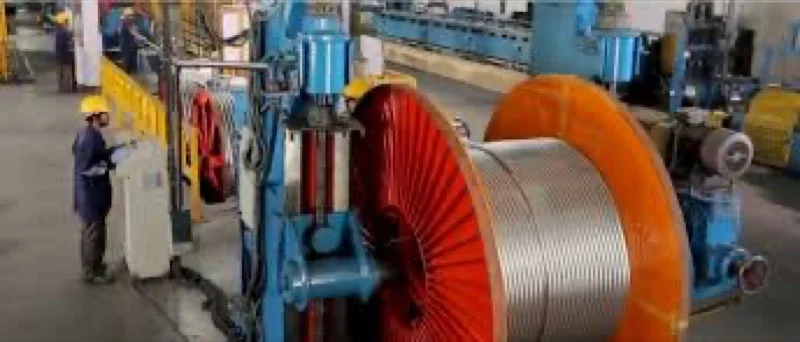
A battery storage plant being implemented under one contract: a project plan for the planning and design, battery containers and power conversion skids from any maker, an electrician laying cable from a drum into an open trench to the switchgear, concrete pads and a fenced site from Ingro's civil team, an engineer testing the controller with a tablet, and the O&M crew and van on site.O&M23456
The Ingro Approach

One partner, from site visit to earning plant

“We deliver a complete BESS plant, where hardware and software are designed to work together from day one.”

Turnkey means you buy a working plant, not a set of separate parts. Ingro sizes the plant against your load, tariff or tender, chooses cells, PCS and switchgear that suit each other, builds the site, writes the control software for that exact hardware, and stays on as the operator's partner once it is live.

Because the Ingro EMS is designed in from the first drawing, the plant is commissioned with its monitoring, dispatch and battery passport already running, rather than added afterwards.

The short answer

You bring

  • The site, with access for delivery
  • Your load data, tariff or tender requirements
  • Sign-off at each design gate

Ingro delivers

  • Sizing, design and the financial model
  • Every part, procured and factory tested
  • Civil, electrical and grid interconnection
  • EMS software live from commissioning
  • Long-term O&M with a performance guarantee

One contract, one SLA, one number to call for the life of the plant.

3-4 mo
Deployment time
1
Contract, 1 SLA
Long term
Performance guarantee
20-30%
Better performance
The Problem

Why Component Sourcing Falls Short

Most BESS projects are assembled from parts sourced from 4-6 different vendors. The usual result is delays, disputed responsibility and systems that do not reach their full potential.

Buying the plant in parts
O&M?????Vendor A · Cells + containerVendor B · PCSVendor C · EPC + BOSVendor D · EMSVendor E · O&M

5 contracts · 5 SLAs · 5 numbers to call · every interface yours to manage

Buying it turnkey from Ingro
O&MIngro · one scope, one SLA

1 contract · 1 SLA · 1 number to call · tested together before it ships

Contracts to manage
4-6 vendors, each with its own scope and warranty
One contract and one SLA for the whole plant
Integration
4-6 months of protocol, firmware and communication fixes on site
Designed as one system and tested at the factory before shipping
Time to energise
Integration timelines that stretch toward 18 months
3-4 months, with factory assembly and civil works in parallel
When something fails
BMS, container and EMS vendors each point to the others
One team owns the fault and the fix
Dispatch software
Generic strategies that do not account for your cells, PCS or cooling
Tuned to your cell chemistry, PCS efficiency map and thermal response
Monitoring
A portal per vendor, SCADA screens and a warranty spreadsheet
One live view of every cell, inverter and breaker

18 Month Integration Timelines

When you source containers from one vendor, inverters from another, and software from a third, integration testing alone takes 4-6 months. Protocol mismatches, firmware incompatibilities and communication gaps make commissioning a separate project in its own right.

Disputed Responsibility During Failures

When a cell over-temperature fault occurs, the BMS vendor may point to the cooling system, the container vendor to the dispatch algorithm and the EMS vendor to the BMS settings. Meanwhile, your plant is offline and losing revenue every hour.

Generic Algorithms, Suboptimal Results

Third-party EMS software runs generic dispatch strategies. It does not account for your cell chemistry's optimal C-rate curve, your PCS efficiency map or your cooling system's thermal response, and 20-30% of achievable performance can be lost.

Fragmented Monitoring and Support

One portal for the BMS, another for the inverter, a SCADA screen for the site, and a spreadsheet for warranties. There is no single view of plant health and no single number to call when something goes wrong.

Want an engineer to call you?

Leave your details. An Ingro engineer gets back to you within one business day, no obligation.

Or tell us about your site ↓
What You Get

Seven Parts.
One Turnkey Plant.

Every piece of the BESS plant, from battery cells to software to civil works, is specified, procured, integrated, and delivered by Ingro. Pick a part to see what it is and how it is specified.

Part 01
Tier-1 LFP · liquid cooled

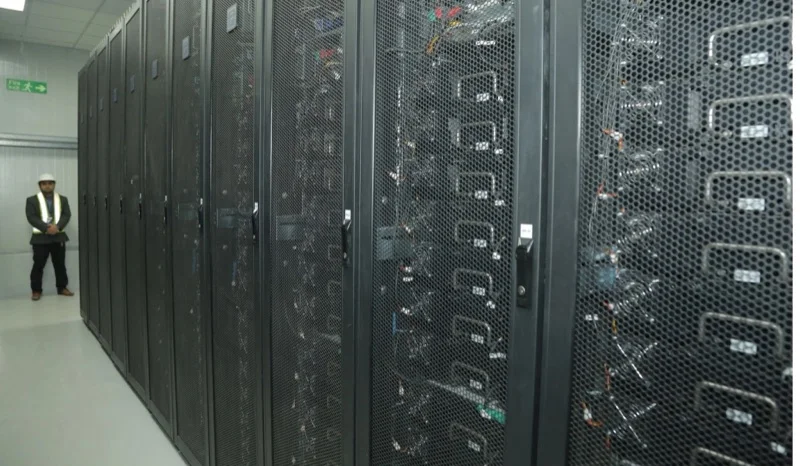
Battery Container

Tier-1 LFP cells from multiple cell manufacturers housed in IP55-rated steel containers with integrated liquid cooling and Novec 1230 fire suppression. Available in 20-foot and 40-foot ISO configurations.

Specification
  • Tier-1 LFP cells from multiple cell manufacturers
  • IP55 rated container enclosure
  • Liquid cooling thermal management system
  • Novec 1230 fire suppression
  • 20-foot or 40-foot ISO container options
Part 02
Bi-directional · grid-forming

Power Conversion System (PCS)

Bi-directional inverters from Sungrow, SMA, or Sineng with grid-forming and grid-following capability. Black start support for critical infrastructure deployments.

Specification
  • Bi-directional inverters (Sungrow / SMA / Sineng)
  • Grid-forming and grid-following modes
  • Black start capability
  • 98%+ round-trip conversion efficiency
  • Active/reactive power control
Part 03
Protection coordinated

Balance of System (BOS)

Complete AC/DC switchgear, step-up transformers, protection relays, grounding systems, and inter-rack cabling, all sized and coordinated for your specific site.

Specification
  • AC/DC switchgear and breakers
  • Step-up transformer (as required)
  • Protection relays and fault coordination
  • Grounding and earthing system
  • Inter-rack and site cabling
Part 04
Modbus · IEC 61850

EMS Hardware

Industrial-grade edge computing hardware with Modbus and IEC 61850 gateways, site networking and UPS backup: the physical foundation for site control.

Specification
  • Industrial-grade edge compute (fanless, -40 to 70C)
  • Modbus TCP/RTU gateways
  • IEC 61850 communication modules
  • Site networking and fibre backbone
  • UPS for uninterrupted EMS operation
Part 05
Ingro EMSCloud EMSIngro BrainPassport

EMS Software

Ingro EMS software, pre-installed and configured for your plant: monitoring, dispatch and reports, run on site or from the cloud. Ingro Brain and Battery Passport can be added as separate products.

Specification
  • Ingro EMS, real-time monitoring and dispatch, on site or from the cloud
  • Ingro Brain (optional), battery health and early warning
  • Battery Passport (optional), lifecycle record and compliance
  • Integrations, Modbus, IEC 61850, DNP3, REST APIs
  • Over-the-air (OTA) software updates
Part 06

Civil & Electrical Works

Complete site preparation, from foundation and fencing to earthing, grid interconnection and commissioning, so you receive a working plant rather than separate components.

Specification
  • Foundation design and construction
  • Perimeter fencing and security
  • Earthing and lightning protection
  • Grid interconnection and metering
  • Full commissioning and performance testing
Part 07
O&MWatched 24/7

O&M Support

12-year performance guarantee backed by 24/7 remote monitoring, scheduled field service, spare parts inventory, and continuous software optimisation.

Specification
  • 12-year performance guarantee
  • 24/7 remote monitoring and alert management
  • Scheduled preventive maintenance visits
  • Spare parts inventory and logistics
  • Continuous software optimisation via OTA
Capacity Ranges

From 50 kWh to 500+ MWh.
One Platform Scales.

Whether you need a microgrid for a remote community or a utility-scale plant for grid services, Ingro delivers the same integrated approach at each scale.

Utility-Scale

5 MWh to 500+ MWh

Grid-connected BESS plants for grid-scale BESS tenders, frequency regulation, energy arbitrage, and capacity markets. CERC ancillary services compliant. Designed for grid-scale revenue stacking.

  • Grid-forming / grid-following PCS
  • CERC / SERC compliance built in
  • Multi-market revenue stacking via Ingro EMS
  • IEC 61850 and DNP3 SCADA integration
  • Black start and islanding capability

C&I (Commercial & Industrial)

200 kWh to 10 MWh

Behind-the-meter deployments for demand charge management, ToD arbitrage, solar self-consumption, and backup power. Payback periods as low as 3-4 years.

  • Demand charge shaving and peak management
  • ToD tariff arbitrage automation
  • Solar-BESS hybrid coordination
  • DG runtime reduction and fuel savings
  • Net metering and open access optimisation

Microgrid

50 kWh to 2 MWh

Off-grid and weak-grid community power solutions. Solar+BESS coordination, load prioritisation and prepaid metering for reliable 24/7 power in remote locations.

  • Solar+BESS islanded operation
  • Load prioritisation and shedding
  • Prepaid metering integration
  • Community power management
  • Remote monitoring via satellite/4G
How It Works

From Assessment to Delivery

A 6-step delivery process with no multi-vendor coordination for you to manage. One team takes you from concept to commissioning.

01

Site Assessment & Sizing

Load profiling, grid interconnection study, regulatory review, and optimal system sizing using digital twin simulation. Financial modelling with 10-year IRR projections.

02

System Design & Engineering

Detailed electrical SLD, container layout, thermal modelling, protection coordination and BOS specification. All components are selected and procurement is finalised.

03

Factory Assembly & TestingIn parallel

Container assembly with Tier-1 cells, PCS integration, BMS configuration, and EMS hardware installation. Full FAT (Factory Acceptance Test) before shipping.

04

Civil Works & FoundationIn parallel

Site preparation, foundation construction, perimeter fencing, earthing grid, cable trenching, and transformer pad. Parallel with factory assembly for faster delivery.

05

Installation & Commissioning

Container placement, electrical interconnection, grid synchronisation, protection relay testing, EMS software configuration, and full performance validation.

06

Handover & Ongoing O&M

Operator training, documentation handover, remote monitoring activation, and the start of long-term O&M support. The plant is in commercial operation from handover.

Ongoing →
Steps 3 and 4 run in parallel: factory assembly and civil works happen at the same timeIndicative schedule for a C&I-size plant. Grid-scale plants and grid approvals can take longer.
FAQ

Turnkey BESS, answered

What owners and developers ask us before they sign.

Have a question that isn't here?

Tell us your site, load and target capacity, and an engineer will answer it.

What does turnkey BESS EPC include?

Everything needed for a working, earning plant: battery containers with Tier-1 LFP cells, the power conversion system (PCS), balance of system (switchgear, transformer, protection, earthing and cabling), the Ingro EMS controller hardware and software, civil and electrical works through grid interconnection and commissioning, and long-term O&M. Ingro designs, procures, integrates and tests it as one system under one contract.

How is turnkey different from buying the BESS components separately?

When containers, inverters, EPC and software come from four to six vendors, the owner manages every interface between them. Integration testing alone can take four to six months, and when a fault appears each vendor can point at another. Turnkey puts one team in charge of the whole plant: the parts are chosen to work together, tested together at the factory, and covered by a single SLA.

How long does a turnkey BESS plant take to deliver?

For a C&I-size plant, typically three to four months from design sign-off to commissioning, because factory assembly and civil works run in parallel. Grid-scale plants take longer, and the schedule also depends on grid connection approvals. Site assessment and sizing come first and set the final timeline.

What sizes of BESS plant does Ingro deliver?

From around 50 kWh for microgrids, through 200 kWh to 10 MWh behind-the-meter for commercial and industrial sites, up to utility-scale plants of 5 MWh to 500+ MWh for grid services and tenders. The same integrated approach and the same EMS platform are used at every size.

Which battery and inverter brands do you use?

Tier-1 LFP cells from multiple cell manufacturers, in IP55 containers with liquid cooling and fire suppression, and bi-directional PCS from makers such as Sungrow, SMA or Sineng. The final selection is made during system design for your site, use case and budget.

What happens after commissioning?

Ingro hands over documentation and trains your operators, then runs long-term O&M: 24/7 remote monitoring and alarm handling, scheduled preventive maintenance, spare parts, and continuous software optimisation delivered over the air. The plant's EMS keeps learning from its own data and from the wider fleet.

I only need the EMS, not the whole plant. Can Ingro help?

Yes. If you or your EPC are building the battery system, Ingro can supply the EMS controller and software on their own, or retrofit them onto a BESS that is already running. See the pages for BESS integrators and for smart EMS retrofits.

Get a Custom BESS Plant Proposal

Tell us your capacity needs, site location and use case. We come back with a complete system design, financial model and delivery timeline.

What are you looking for?

An engineer replies within one business day. Bills, drawings or data files can go in reply to that email, or to contact@ingroenergy.com. Privacy policy

Bidding a grid-scale tender? EMS for grid-scale BESS tenders. Building the battery system yourself and only need the EMS? How integrators and EPCs work with Ingro.
AI Powered BESS

The Hardware Is the Starting Point.
Software Runs the Plant.

A container of batteries needs control software to operate well. Ingro's software, pre-installed on every plant, monitors, dispatches and optimises the hardware as one revenue-generating energy asset.

Cloud EMS

Monitoring and control for every site.

Real-time fleet-wide monitoring of SoC, temperatures, power flows, and alarms. Push dispatch strategies, schedule changes, and mode overrides to any site, remotely and instantly.

Explore Cloud EMS

Ingro Brain

Battery health and dispatch analytics.

Reads every cell, identifies what is ageing the battery faster than it should, forecasts its health and recommends what to change. Works with any battery, with or without an EMS.

Explore Ingro Brain

Battery Passport

Track from factory to recycler.

Tamper-proof digital identity for every battery, from raw material sourcing through deployment, second-life assessment, and recycling. Meets EU Battery Regulation, BIS, and EPR requirements automatically.

Explore Battery Passport

Integrations

Connects to your hardware and grid systems.

Protocol-independent layer that supports Modbus TCP/RTU, IEC 61850, DNP3, OPC-UA and REST APIs. Connect every meter, SCADA, and third-party system without vendor lock-in.

Explore Integrations
Use Case Fit

One Plant Architecture.
Every Deployment Scenario.

The same integrated BESS plant serves grid-scale frequency regulation, industrial demand management, EV charging, and off-grid microgrids, configured for your specific requirements.

Grid-Scale Frequency Regulation

CERC-compliant BESS plant for ancillary services, energy arbitrage, and capacity markets. Revenue stacking via Ingro EMS increases earnings per MW.

View use case

Industrial Demand Charge Shaving

Behind-the-meter BESS that reduces demand penalties, automates ToD arbitrage and reduces DG runtime. Payback in 3-4 years.

View use case

Data Centre UPS Replacement

BESS-grade UPS with sub-4 ms failover, support for Tier IV uptime requirements and automated ESG reporting. A lithium-ion replacement for ageing lead-acid UPS batteries.

View use case

BESS-Buffered EV Charging

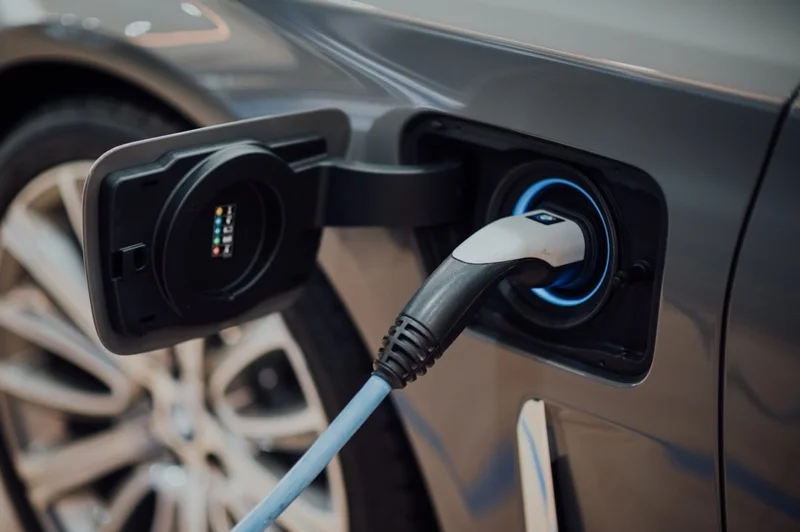
Fast charging on weak distribution grids without transformer upgrades. Smart charge scheduling prevents grid overloads during peak hours.

View use case

Solar+Storage Microgrid

Islanded solar+BESS for off-grid communities, with load prioritisation, prepaid metering and reliable 24/7 power where the grid does not reach.

View use case