AI-Powered RE + BESS Sizing Across 8,760 Hours
The most consequential decision in an RE + BESS project is not the tariff negotiation or the EPC contract — it is the sizing. And it is still being done with back-of-the-envelope math. Ingro's simulation platform runs configurations across all 8,760 hours of the year.
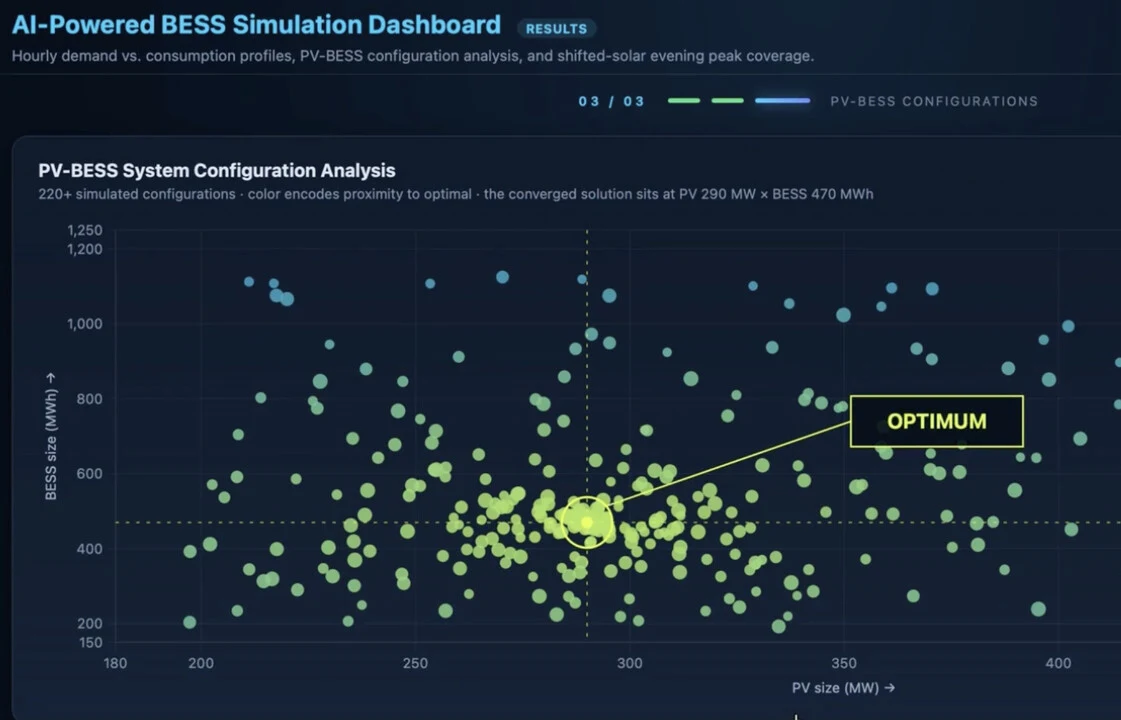
The most consequential decision in an RE + BESS project is not the tariff negotiation or the EPC contract. It is the sizing. And it is still being done with back-of-the-envelope math.
Ingro Energy has built an AI-powered RE + BESS simulation platform that runs system configurations across 8,760 hourly demand profiles — capturing seasonal load patterns, dispatch strategies and grid reliance in a single unified model.
What it does under the hood
- Loads historical demand data and computes hourly solar generation profiles
- Optimises RE–BESS configurations across the full solution space
- Models BESS dispatch, reducing DISCOM reliance where it costs the most
- Breaks down consumption by season and day type
- Runs a convergence analysis across multiple combinations and surfaces the single point where the system truly optimises
Why hourly resolution is the whole point
An annual energy balance will tell you that a given solar array covers a given load. It will not tell you that the coverage arrives at 11 a.m. and the load arrives at 8 p.m. Sizing done on annual or monthly averages systematically overstates renewable penetration and understates the storage required to actually capture it.
Running the full 8,760-hour year is what exposes the hours that break the case — the cloudy week in monsoon, the day type where the peak lands two hours later, the seasonal shift that leaves the battery short.
The output
A precise, defensible answer to the question every developer and lender eventually asks: what size do we actually build?
Getting it right with real demand and dispatch fidelity is the difference between a bankable project and an expensive assumption.
If you are a developer, IPP, DFI or investor evaluating utility-scale solar + storage, we would like to show you what this looks like on your project.
Opens the original post on LinkedIn — like, comment, or share it there.