More projects
Related work
More of our energy storage and optimisation work.
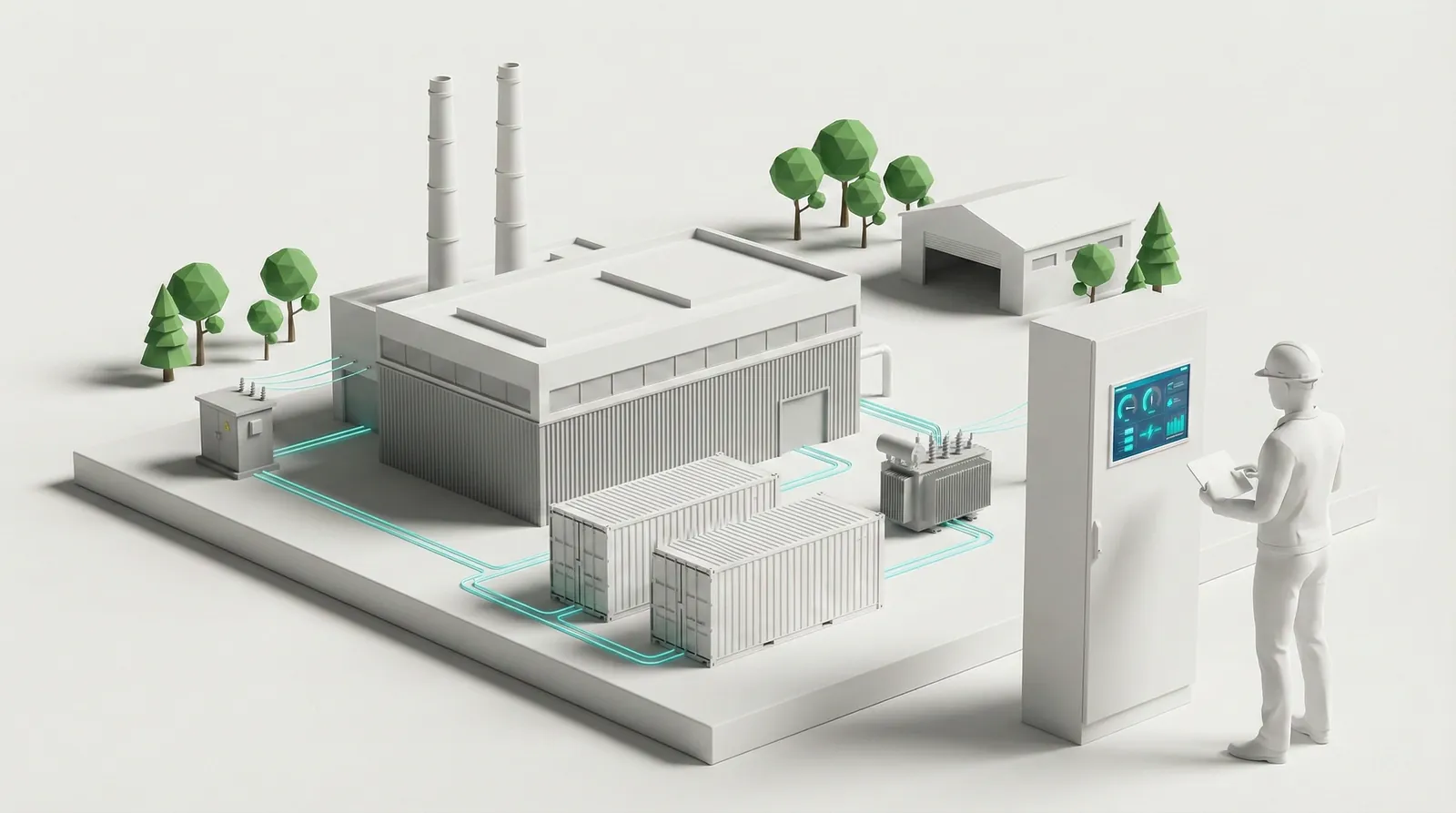
When the grid fails, the battery has to form the campus's own supply and carry the buildings on its own. At Invertis University that job falls to four battery cabinets with a combined 500 kW / 1.04 MWh, and they have to behave as one source, not four.
Run as four equal grid-forming sources, they did not. Under live load one cabinet took the whole load, overloaded and tripped. Ingro diagnosed the fault at register level and reconfigured the site as one lead source with three followers, run by Ingro EMS. The fault appeared only under live load and could not have been identified from the datasheets.
The cabinets have to form the campus supply themselves when the grid drops, with no grid to follow
Four cabinets have to carry the load together as one source, not as four separate ones
Run as four equal grid-forming sources, one cabinet took the whole load, overloaded and tripped
The fault appeared only under live loadnothing in the datasheets pointed to it
What Ingro put in place, step by step.
Ingro read the cabinets' behaviour under live load, register by register, to find why one cabinet was taking the whole load
the site was reconfigured so one cabinet forms the supply and the other three follow it and share the load
Ingro EMS runs the four cabinets as a single 500 kW / 1.04 MWh battery
More of our energy storage and optimisation work.
Tell us about your site and we will show how the approach used on Four Battery Cabinets, One Source would apply to it.