More fast chargers than your connection allows: when a battery is the answer at a charging hub
You run, or are planning, a public charging hub, a bus or fleet depot, or a fuel station adding DC chargers, and the sanctioned load will not carry every gun at once. The upgrade means HT, a transformer and a wait. This page works through the connection rules, the EV tariff and your charging pattern, so you can see when a battery lets you open on the connection you have and when it does not.
Reviewed 16 November 2026 by Ingro Energy's project team
The short answer
- Count your connection in chargers. An LT connection of 150 kW, the most the power ministry's guidelines ask utilities to give a charging station at LT, carries two 60 kW chargers at full power. A single 240 kW bus charger is already beyond it.
- A battery fills the gap between what the guns want and what the connection gives. It refills in the quiet hours and adds its power when several vehicles plug in together. That works when your busy spells have quiet gaps after them, which, with public chargers often in use only a few percent of the time, is the usual case.
- On a dedicated EV connection, most states now bill a single-part tariff with no demand charge, so the battery's value is the connection and transformer you do not have to take, plus cheaper solar-hour units used in the evening where your state has adopted that split. It is not a demand-charge saving.
- It is the wrong answer where the guns are busy at full power most of the day, or where your utility can give a bigger connection quickly and cheaply. The calculator below tells you which side you are on.
Your connection, counted in chargers
The power ministry's 2024 guidelines put chargers in four power levels. Most public chargers in India are still small (about 73% are rated below 30 kW, by a 2026 industry count), but the connection problem is at the DC end: the guidelines ask fast-charging stations for long-range and heavy vehicles to have at least two chargers of 240 kW each, and bus depots to use chargers of at least 240 kW. A charger also draws a little more from the grid than it delivers, because of its own losses.
| Charger | Power | Connector standard | Used for |
|---|---|---|---|
| Light EV AC or DC (power level 1) | up to 7 kW AC, 12 kW DC | IS 17017-2-6, 2-7 | 2- and 3-wheelers |
| AC parking-bay charger (level 2) | 11 or 22 kW | IS 17017-2-2 | cars and 3-wheelers, slow |
| DC fast, CCS2 (level 3) | 50 to 250 kW | IS 17017-2-3 | cars, buses, trucks |
| DC high power, CCS2 (level 4) | 250 to 500 kW | IS 17017-2-3 | e-bus and truck stations |
Add up the guns you want running together and compare that with your connection. 4 guns of 60 kW want 240 kW; a 150 kVA connection gives them about 135 kW once you leave room for power factor and the canopy lights. The difference is what a battery would have to add.
A battery adds power at the peak; it does not make energy. Every unit it hands to a vehicle was first taken from the grid (or solar), plus about 15% lost on the way. If your chargers sell more units in a day than your connection can supply in a day, no battery fixes that.
Getting the connection: LT, HT, the transformer, and who pays
The power ministry's guidelines (September 2024) set the time a utility has to give a charging station a new connection: 3 days in a metropolitan area, 7 in other municipal areas, 15 in rural areas and 30 in hilly rural areas. Where the mains must be extended or a new substation commissioned, the limit is 90 days. They also ask utilities to give an LT connection up to 150 kW when you apply for a separate LT connection for the charging station.
Above the LT limit you are usually into an HT connection with your own transformer, switchgear and civil work, and the cost and wait grow with it. The limit and the charges differ by utility. In Delhi, for example, LT goes up to 200 kW, and for sites under the PM E-DRIVE scheme the regulator ordered in July 2026 that the full upstream cost (distribution transformer, LT and HT cables, protection, fencing and civil work) goes into the demand note raised on the charge-point operator, instead of being recovered from all consumers.
For public charging stations, PM E-DRIVE pays part of that upstream cost: 80% at most sites, including OMC fuel outlets, STU bus stations, highway amenities and city locations (100% on government premises), worked out on the lower of the benchmark or the actual cost. Its list of upstream items does not name a battery, so check with your State Nodal Agency before counting on support for one.
Ask your utility in writing for three things: the largest LT load you can have at this address, what an HT connection would need (transformer size, cable route, deposit), and how long that would really take. Those numbers are what the battery is weighed against.
How a charging connection is billed, and what that means for a battery
The 2024 guidelines say the tariff for a charging station shall be single part and not exceed the average cost of supply until 31 March 2028, at 0.7 times that cost in solar hours (9 am to 4 pm) and 1.3 times in the rest of the day. Each station needs separate metering; behind an existing HT connection, the utility may provide a sub-meter for the chargers. States have adopted this in their own ways:
- Maharashtra, MSEDCL (MERC order, March 2025): single-part tariff for the EV category at HT and LT, with the fixed and demand charges removed and time-of-day benefits applying.
- Mumbai, Tata Power (MERC order, 2025): single-part EV tariff of about ₹8.07 per kVAh at LT and ₹8.24 at HT for 2025-26, billed in kVAh, with time-of-day rates for loads above 10 kW.
- Odisha, TPSODL (OERC order, March 2025): public charging stations under the general purpose category at a single-part ₹5.00 a unit.
So on a dedicated EV connection there is usually no demand charge for a battery to cut. Where your state uses the solar-hour split, a battery that fills between 9 and 4 and supplies the evening rush replaces units at 1.3 times the cost of supply with units bought at 0.7 times, less the 15% lost in storing them. If your chargers sit behind a fuel station's or depot's existing connection that does carry a demand charge, the calculator's optional demand field applies to you. The guidelines also cap the service charge you can add for DC charging, at ₹11 a unit in solar hours and ₹13 at other times, until March 2028, which limits how much a costly connection can be passed on to drivers.
Highway hub, city hub, fleet depot, fuel station: four different days
Low use is the operator's core problem: industry reports in 2026 put the utilisation of India's public chargers at only about 1 to 5%. A connection big enough for the busiest hour is paid for and waited for, then sits mostly idle. A battery lets a smaller connection serve the busy hours, but only if the day has quiet stretches in which to refill it. The shape of your day decides that.
| Site | When the guns are busy | The quiet gap | What decides the battery |
|---|---|---|---|
| Highway hub | Holiday weekends and long-distance traffic, a few cars arriving together | Long, often overnight | The longest queue you plan for |
| City hub or fuel station | Evening, and taxi and fleet shift changes | Mid-morning to afternoon, late night | The evening spell, and refilling in solar hours |
| Bus depot, overnight charging | Buses back from the last trips, all wanting charge before the first departures | Daytime, while buses run | Whether the night window is long enough for the connection alone |
| Bus depot, opportunity charging | Short top-ups between trips through the day | Short and frequent | Whether the gaps between top-ups can refill it at all |
- Bus depots: the guidelines require chargers of at least 240 kW, and PM E-DRIVE asks for at least 120 kW per gun for buses. Even a small fleet adds a large load to the local network, so the connection is often the slowest part of a depot project. If the night window is long, staggering the charging may be enough without a battery.
- Fuel stations: the guidelines name OMC fuel outlets as priority sites for public chargers, and a PESO approval is needed for a charger connection at a fuel or gas station. The connection usually belongs to the outlet, so its existing load and spare capacity are where the sum starts.
Sizing from the busy spell and the gap after it
Three numbers decide the battery. The power it must add: the guns you want running together, less what the connection gives. The energy it must hold: that power times the length of the busy spell (only about 90% of a battery's stated kWh is used day to day, so it is a little bigger). And the quiet gap: the battery must refill in it from whatever the connection has spare, or each busy spell starts emptier than the last.
An illustration, with these inputs: a 150 kVA connection, 4 DC chargers of 60 kW (240 kW) busy together for 2 hours in the evening, and 6 quiet hours before the next spell. The connection gives about 135 kW, so the battery adds 105 kW and hands out 210 kWh, which needs a battery of about 240 kWh. It refills in about 3.7 hours of the 6-hour gap, so it works. Installed, that is about ₹60 lakh to ₹91 lakh before GST. Without it, the site would need a connection of about 267 kVA, beyond the LT limits above, which means HT and a transformer.
Real charging tapers as vehicle batteries fill, and every gun is rarely busy at full power for the whole spell, so the battery needed is often smaller than this. A week of session data from your charger software makes the sizing much sharper.
Work it out from your connection and your guns
Four numbers you know, and one optional. Nothing is sent anywhere until you ask us to check it.
Enter your connection, the charging power you want, and the length of a busy spell and the gap after it.
How this is worked out
- About 90% of the connection's kVA is counted as usable kW for the chargers, leaving room for power factor, charger losses and the rest of the site.
- Through a busy spell, the guns are taken to draw the full power you entered for the whole spell. Real charging tapers, so this errs on the large side.
- In the quiet gap, only 50% of the connection's usable power is counted as free to refill the battery, because some vehicles still charge.
- A battery gives back about 85% of what it takes in, and about 90% of its stated kWh is used.
- Installed cost is taken as ₹25,000 to ₹38,000 per kWh for a battery under 250 kWh, and ₹20,000 to ₹30,000 per kWh above that, before GST. Small systems cost more per kWh. This is a working range, not a quote.
- The demand charge figure is the extra kVA a connection would need to carry the peak alone, times your rate, times 12. It only applies if your chargers are billed on a tariff with a demand charge.
- No payback is shown, because it depends on what a larger connection would cost at your address, which you know and we do not.
- This is a first estimate. Your charger session data and your tariff are checked before anyone gives you a price.
Get the exact figure for your site
Leave your name and number. We call back with the battery size, whether your connection can refill it, and how it compares with an upgrade.
Tell us about your charging site ↓Bigger connection, battery, or both
- Upgrade when the utility can give the load quickly and cheaply, or when the guns will be busy most of the day. A battery cannot make up for a connection too small for the units you sell.
- Add a battery when the upgrade means HT, a new transformer or the 90-day case, or when the site cannot take more load at all, and your charging comes in spells. It lets you open now on LT and decide on the upgrade once you see real utilisation.
- Do both when the site will grow: a modest upgrade with a battery on top carries a much bigger peak than either alone, and the battery can move or grow with the site.
Put the utility's figure for the larger connection, with its transformer, cabling, deposit and wait, beside the battery's installed cost before deciding.
When the grid goes, and where this is already running
With the right changeover and a PCS that can run on its own, the battery keeps the chargers going through a grid cut. For a depot, a night cut does not hold up the morning departures; for a public hub, vehicles already plugged in finish charging. How long depends on how full the battery is and how many guns are busy, so if backup matters, some charge is kept back instead of spent on every peak.
Ingro's Jio-BP project with Sanvaru works this way: a 260 kW / 580 kWh battery gives the hub 2.5 times the charging power from the same grid connection, and buses and cars keep charging off the battery when the grid is out. BESCOM and GIZ have also run a hub near Bengaluru airport with 45 kW of solar and 100 kWh of second-life battery storage. The 2024 guidelines say public charge-point operators may complement charging stations with storage, and describe a solar carport with a battery as one way to build a station.
Many cycles a day: battery wear, and what it costs
A charging hub works a battery harder than most sites: it may fill and empty two or three times on a busy day. These systems use LFP (lithium iron phosphate) cells, and the warranty states a life in years or in cycles or energy throughput, whichever runs out first. Work out roughly how many cycles your busy spells add up to in a year and read that line before comparing prices. Heat shortens life, so where the cabinet stands on a hot forecourt, and how it is cooled, matters.
As a working range, an installed system costs about ₹20,000 to ₹35,000 per kWh before GST, more per kWh for small ones. Our cost guide, linked below, explains what a turnkey price should include.
When a battery is not worth it
- Your guns are busy at full power most of the day. With no quiet gaps the battery never refills, and you need the bigger connection anyway.
- Your utility can give the extra load at LT, or an HT connection is quick and cheap at this address. Then the upgrade is simpler, unless you also want charging through grid cuts.
- Your chargers are used lightly and the connection already copes with the peaks you see. There is nothing for a battery to fix yet; revisit it when utilisation grows.
- You are counting on a demand-charge saving, but your chargers are on a single-part EV tariff. There is none to save.
In the first case a battery can still serve as a stopgap while the upgrade comes through, as long as everyone knows that is what it is.
What to ask before you sign
- How many guns, at what power, can run together with this battery, and for how long?
- How long does it take to refill from my connection, and what happens on a holiday weekend with back-to-back queues?
- What keeps my grid draw within the sanctioned load, and does the charger software or the battery controller decide how power is shared between guns?
- Is the battery on my EV meter or my site meter, and does it change my tariff category or need the utility's approval?
- Do the chargers keep running in a grid cut, and for how long with two guns busy?
- What is the warranty in years and in cycles or throughput, and what capacity is promised at the end?
- Does the price include the PCS, the panel, cabling, civil work and approvals, or only the battery?
We size from your connection, chargers and charging pattern before anyone visits the site; a site check (space, cable route, earthing, fire safety) comes only if the numbers work.
See the equipment
- The Jio-BP EV charging project
- EV chargers sold in India, with their specifications
- BESS cabinets, for a hub or fuel station
- BESS containers, for bus depots
- BESS by size, in kW and kWh
- PCS (battery inverters)
- Transformers, if you go HT
- What a battery system costs in India
- How Ingro builds a battery site end to end
Questions charge-point operators and depot managers ask
How many DC fast chargers can I run on an LT connection?
The 2024 guidelines ask utilities to give a charging station an LT connection up to 150 kW, though some utilities go higher (Delhi to 200 kW). 150 kW carries two 60 kW guns at full power. More guns than that at once means HT, or a battery to add power at the busy hours.
Does a battery cut my demand charge at a charging station?
On a dedicated EV connection, usually not: the guidelines call for a single-part tariff, and Maharashtra, for one, has removed the fixed and demand charges for EV stations. Where chargers sit behind a site connection that carries a demand charge, it can. Check your bill.
How long should a new connection for a charging station take?
Under the 2024 guidelines, 3 days in a metro, 7 in other municipal areas, 15 in rural areas and 30 in hilly rural areas, and up to 90 days where the mains must be extended or a substation commissioned. The 90-day case, and anything slower in practice, is where a battery lets you open sooner.
Does PM E-DRIVE pay for the battery?
The scheme pays a share of the upstream infrastructure (transformer, cables, protection, civil work) and, at some sites, the chargers. Its list of upstream items does not name a battery, so ask your State Nodal Agency before counting on it.
Does a bus depot that charges overnight need a battery?
Often not, if the night window is long enough for the connection to charge every bus with staggered starts. A battery helps when buses arrive together and leave early, when the depot also does daytime top-ups, or when the connection upgrade is years away.
Will the chargers keep working in a power cut?
Yes, with the right changeover equipment, for as long as the battery holds out. At the Jio-BP hub, buses and cars keep charging off the battery when the grid is out.
Sources
- Ministry of Power, Guidelines for Installation and Operation of Electric Vehicle Charging Infrastructure-2024 (17 September 2024; archived copy of the BEE file)
- Ministry of Heavy Industries, Operational Guidelines for EV Public Charging Stations under PM E-DRIVE
- DERC, Supply Code (Removal of Difficulty) Fourth Order, 2026: demand notes for PM E-DRIVE charging sites (1 July 2026)
- MERC, press note on MSEDCL's tariff from FY 2025-26 (order of 28 March 2025)
- MERC, press note on Tata Power (Mumbai distribution) tariff from 1 April 2025
- TP Southern Odisha Distribution, tariff notification from 1 April 2025 (OERC order of 24 March 2025)
- Autocar Professional, India's EV charging network surpasses 29,000 stations, but utilisation remains low (September 2026)
- Energetica India, Solar-powered EV charging hub with second-life batteries launched near Bengaluru airport (June 2025)
- CSTEP, Planning Tool for E-Bus Deployment (December 2021)
Sites that have benefited from battery storage
Different sites, same idea: use more of your own renewable power, cut the electricity bill, and keep running when the grid cannot keep up.
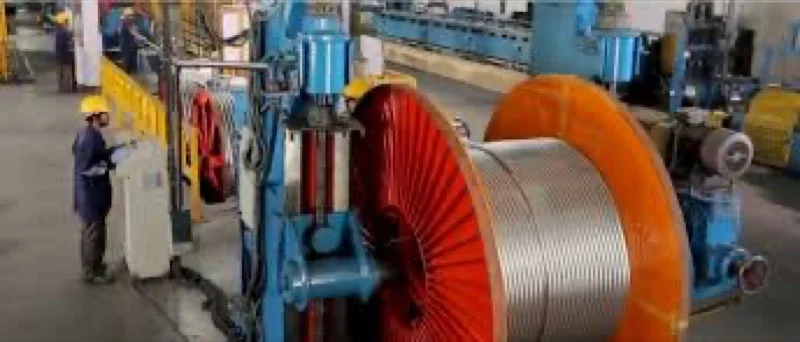 LiveAPAR Industries · Factory · 720 kW / 500 kWh battery
A factory whose process lines keep running through every dip in power.
- <1 ms
- response when the load jumps or the grid dips
- Zero
- gaps in power to the production lines
- End to end
- battery, PCS, controls and installation by one team
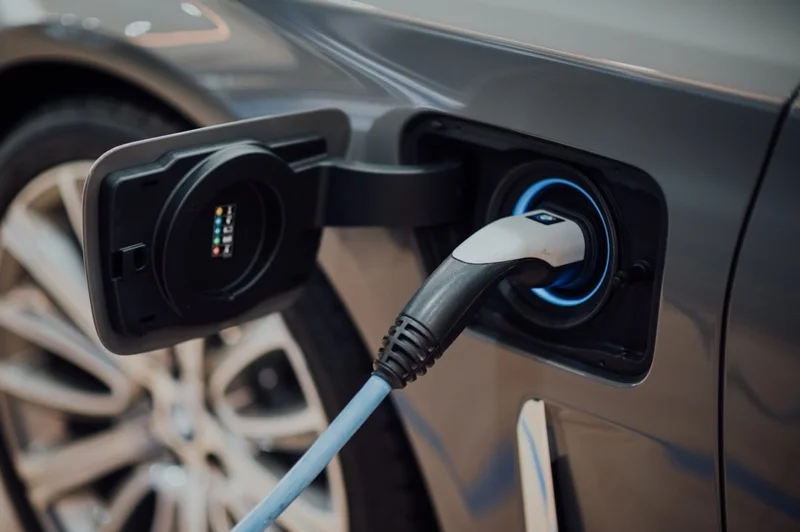 LiveEV charging hub · 260 kW / 580 kWh battery · India
Electric buses and cars keep charging, even when the grid is gone.
- 2.5×
- charging power from the same grid connection
- 1 s
- battery and PCS data, cell by cell
- Grid outage
- buses and cars still charge off the battery
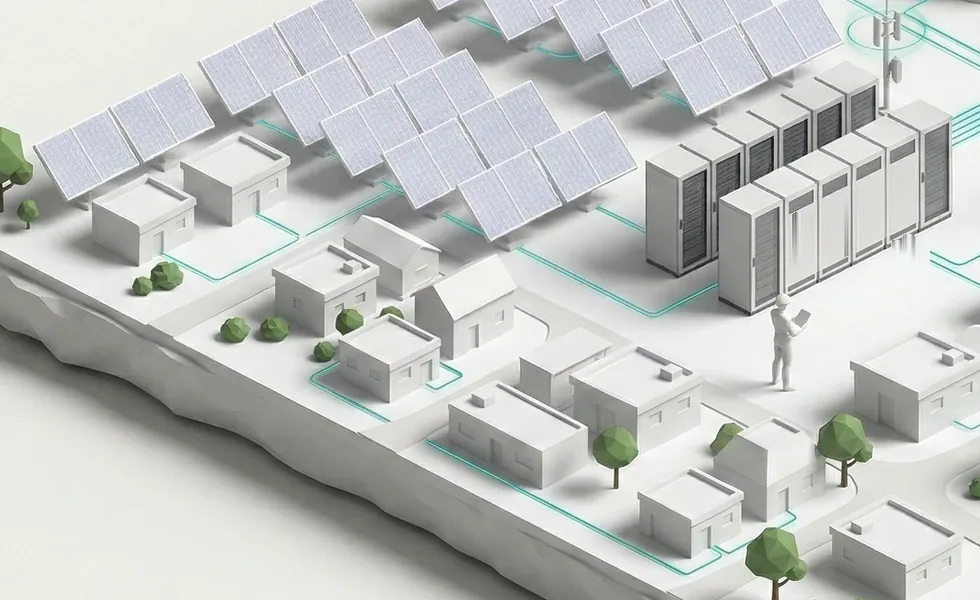 UnderwaySolar + battery micro-grid · Melghat, Maharashtra
A village without a grid. A solar and battery micro-grid that powers it.
- Village
- no grid connection
- Black start
- from standstill, no outside source
- 820
- homes on solar and battery
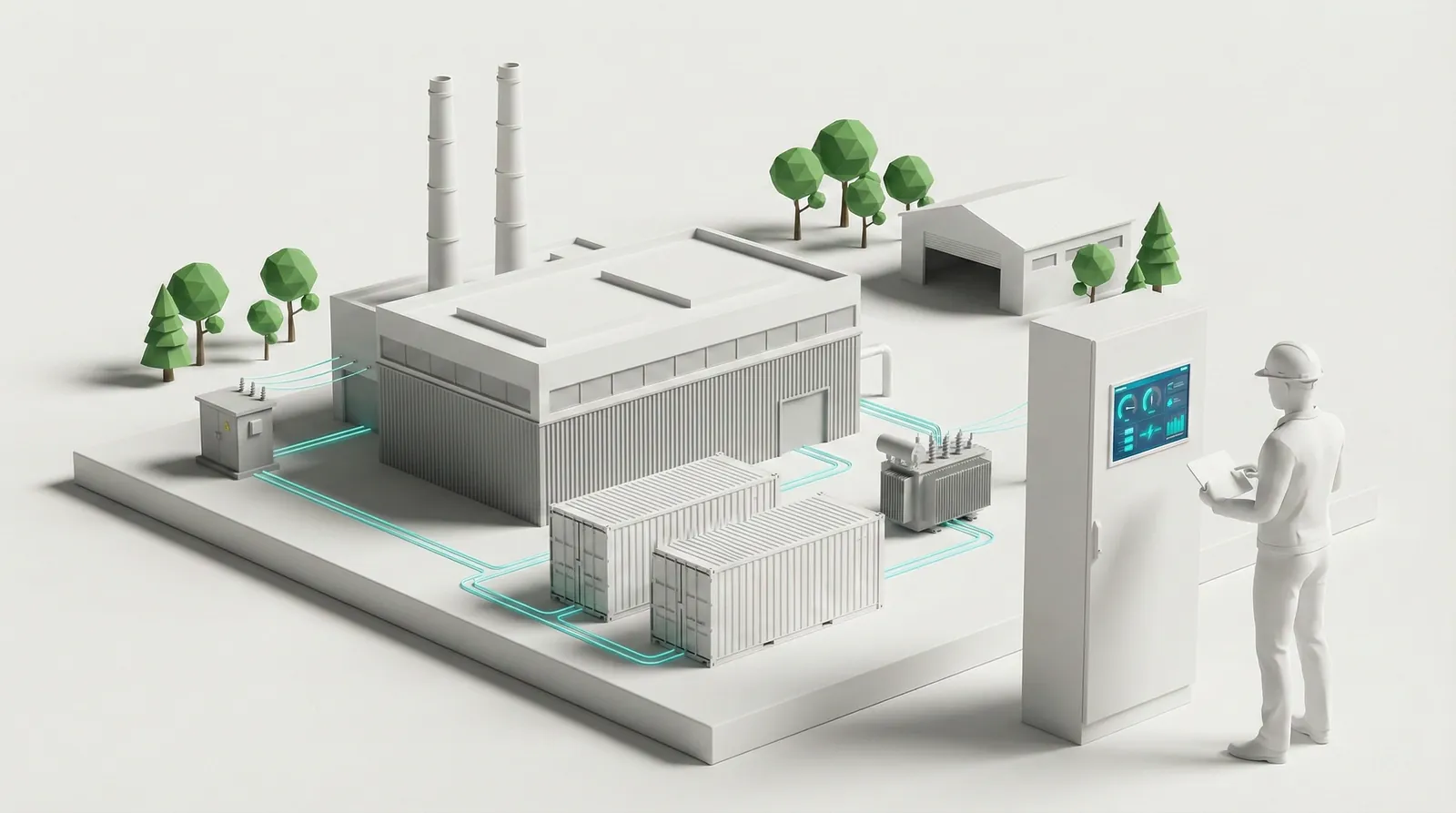 In testingIndustrial battery plant · Pune · 2.5 MW / 10 MWh
Two battery containers, two vendors, two languages. One EMS runs them as one plant.
- 2
- container makes, each with its own BMS protocol
- 1
- PCS and one EMS across both
- Hot-swap
- take a container out for service, plant keeps running
Tell us about your charging site
Send what you know. An Ingro engineer works out the battery size, whether your connection can keep it filled, and the cost against an upgrade, free.
What happens next: we reply within one working day, by phone or WhatsApp. No site visit is needed at this stage, and there is nothing to pay.