Rooftop solar on your factory, and part of it lost: where it goes, and when a battery is worth adding
On a clear day the inverter app shows a flat top from late morning to mid afternoon. The bill shows exported units credited at a fraction of what you pay, or lapsing. In a power cut the plant reads zero and the DG runs. On the weekly off the roof makes its best power for an empty shed. If you recognise one of these, this page shows where each loss comes from, what your state's rules do to it, which cheaper fixes to try first, and when a battery actually pays.
Reviewed 16 November 2026 by Ingro Energy's project team
The short answer
- A factory with solar loses units in four places: the zero-export controller holding the inverters back, export that is paid little or lapses, solar switched off while the DG runs, and solar that stops in a grid cut. Each shows up somewhere different: the inverter app, the bill, the DG log.
- A stored solar unit saves about ₹7.7 at a grid rate of ₹9, less whatever the export would have paid. At today's battery prices that alone gives a long payback: about 9.5 to 14 years in the worked example below, a 500 kWp plant on zero export.
- The sums work when a large surplus comes every working day and cannot be exported or lapses, when the solar sits idle while the DG runs through regular daytime cuts, or both. Surplus that comes only on the weekly off does not pay for a battery.
- Try the cheap fixes first: move flexible loads into solar hours, apply for net metering or net billing if your size and transformer allow it, and do not add panels while you are on zero export.
Four places your solar goes missing, and where to see each
When the surplus comes matters as much as how big it is. The weekly off and holidays waste the most, but only one day in seven. The lunch break and shift changes dip the load right at peak sun. Seasonal plants, like processing units that run a few months a year, waste for months at a time. A battery earns from the surplus that repeats every working day, so separate the two before you size anything. One published example: in 2026 Maruti Suzuki added a 1 MWh battery beside the 20 MW of on-site solar at its Kharkhoda plant, to store surplus from high-generation periods and facility holidays.
| The loss | What you see | Where to look |
|---|---|---|
| Zero export or export limit | Output flattens at midday on clear days, well below what the panels can make | Inverter or monitoring app, day graph |
| Export paid little or lapsing | Exported or banked units credited at a low rate, capped, or written off | Bill and net-meter readings |
| Solar off when the DG runs | Plant reads zero whenever the DG is on, even at noon | DG log against the inverter log; the changeover interlock |
| Solar off in a grid cut | Inverters show a grid-lost fault for the length of each cut | Inverter event log |
The zero-export loss never appears on the bill, which is why owners are often surprised by its size. Ten minutes with the monitoring app on a clear working day shows it.
Why so many factories end up on zero export
Exporting needs the DISCOM's approval under net metering or net billing, and that approval has limits. In Maharashtra the plant may not exceed your sanctioned load or contract demand, and all the net-metered plants on one distribution transformer may not exceed 70% of its rating without a load study (MERC regulations, 2019). Rajasthan set that transformer limit at 50% (RERC, 2021); Karnataka sets 80% for plants under 150 kW (KERC, 2026). Net-metering size caps also differ: 5 MW or your contract demand in Maharashtra (2023), 1,000 kW in Karnataka and Gujarat (2026). When the feeder is full or the paperwork stalls, many plants are connected behind the meter with no export at all.
Behind the meter is allowed after informing the DISCOM, but export is not. Karnataka's 2026 regulations require a reverse power flow relay on such plants and say any units that leak out are neither paid for nor adjusted, and may draw a penalty; Rajasthan's 2021 regulations treat them as inadvertent injection with a penalty.
So a meter at the incomer measures the power flow, and a controller lowers the inverters' output whenever the factory's load falls below what the panels are making. A separate relay or breaker trips the plant if export happens anyway, for example when a big machine stops suddenly. The panels could make more; the controller simply does not let them.
What your state does with exported solar: examples
These are examples from regulator documents and trade reports, with their year. Rules differ by state, by HT or LT supply and by when your plant was connected, and they change often. Your connection agreement and bill are what count.
| State and year | Rule | What it does to a stored unit's value |
|---|---|---|
| Maharashtra, 2019 and 2023 | Net-metered surplus is carried forward; what is left at year end is bought at the Commission's Generic Tariff. For ToD consumers, excess injection is counted as if made in off-peak hours. Net-billing exports are credited at the Generic Tariff. | Higher where your evening units cost more than your midday export earns |
| Maharashtra, 2025 tariff order | For C&I rooftop solar on ToD billing, units banked in solar hours (9 am to 5 pm) can be drawn back only in solar hours, not in the evening peak. | Noon surplus cannot cover the evening shift through the bill; a battery can |
| Gujarat, 2026 | For non-residential net metering, the adjustment is capped at 30% of the units drawn in the billing cycle, with banking charges; the excess lapses. | Units that would lapse are worth the full ₹7.7 when stored |
| Karnataka, 2026 | Net billing: exports credited at a tariff set by the Commission, monthly settlement. Behind the meter: no payment for any export. | Depends on the gap between the export tariff and your rate |
| Rajasthan, 2021 | For non-domestic net metering, surplus left at the end of the billing period lapses with no payment. | Lapsing surplus is worth the full ₹7.7 when stored |
What a stored solar unit is worth on your bill
A battery charges from the midday surplus and gives it back in the afternoon peak, the evening shift or early next morning. It returns about 85% of what goes in, so with grid power at about ₹9 a unit, each stored solar unit saves about ₹7.7. If that unit would otherwise have earned an export credit, take the credit off.
That makes your export arrangement the biggest number in the sum. Zero export, a lapsing credit or a banking rule that keeps noon units out of the evening peak leaves nothing to take off. A full credit at your own rate in the same time slot leaves almost nothing for the battery to earn.
| Your export arrangement | What a stored solar unit saves |
|---|---|
| Zero export, or surplus that lapses | about ₹7.7, the full value after losses |
| Surplus credited at a low rate | about ₹7.7 less that rate |
| Surplus credited at your full rate, usable at any hour | little or nothing: the grid already does the battery's job |
The calculator counts only the routine surplus on working days. It does not count solar kept running in grid cuts or with the DG, or the diesel that saves; at a site with regular daytime cuts the real benefit is higher.
Work it out from your solar plant
Five numbers from your inverter app and your bill. Nothing is sent anywhere until you ask us to check it.
Enter your plant size and the share of solar going waste to see the figures.
How this is worked out
- Solar makes about 4.25 units per kWp on an average day. Monsoon and cloudy days make less.
- The share you type is the routine surplus on a working day. Only working days are counted; weekly-off and holiday surplus is left out.
- The battery is sized to hold that surplus in one charge, using about 90% of its rated kWh, and is filled and emptied once each working day.
- A battery gives back about 85% of what it takes in. Each unit it gives back saves the grid rate you typed; the export credit you typed is taken off for every unit no longer exported.
- Installed cost is taken as ₹25,000 to ₹38,000 per kWh for a battery under 250 kWh, and ₹20,000 to ₹30,000 per kWh above that, before GST. Small systems cost more per kWh. This is a working range, not a quote.
- Not counted: solar kept running in grid cuts or with the DG, diesel saved, ToD peak rates, demand charges, and battery capacity fading over the years.
- This is a first estimate. Your load pattern, export rules and tariff are checked before anyone gives you a price.
Get the figure for your plant checked
Leave your name and number. We call back with what your solar is losing and whether a battery pays at your site.
Tell us about your factory and its solar ↓Worked example: a mid-size plant on zero export
An illustration, not a real site. Inputs: 500 kWp of panels, 20% of a working day's solar curtailed, 26 working days a month, zero export, grid power at ₹9 a unit. These are the calculator's own sums, so you can type the same numbers above and get the same result.
The plant makes about 2,125 units on an average day, and about 425 of them are curtailed. A 480 kWh battery holds that. It saves about ₹10 lakh a year, costs about ₹96 lakh to ₹1.44 crore installed, and pays back in about 9.5 to 14 years on stored solar alone.
If the same surplus could be exported at ₹3 a unit instead, the battery saves only about ₹6.2 lakh a year and the payback stretches to 16 to 23 years. So if export approval can be had, it is the cheaper first step: it earns from the same surplus with no battery to buy.
What could improve the zero-export case is not counted here: regular daytime cuts in which the battery keeps the solar running and the DG off, or an evening shift that pays peak rates. That is the next section.
When a battery pays at a solar factory, and when it does not
| Your plant | Verdict |
|---|---|
| Zero export or lapsing credit, and a large curtailment on every working day | Worth a proper sizing, especially with an evening or night shift |
| Regular daytime grid cuts, the DG running while the solar sits idle | Often the strongest case: the battery saves diesel and keeps the solar on |
| Both of the above together | The best case on this page |
| You want more panels than your sanctioned load allows | Storage may be required anyway: in Gujarat, above 100 kW contract demand, 2 hours for 50% of the extra capacity (2026) |
| Surplus mostly on the weekly off and holidays, working days balanced | Not worth it: a battery cycled once a week does not pay back |
| Export credited at your full rate in the same time slot | Not worth it for solar alone |
| Plant small next to your load, little surplus even at noon | Not worth it: add solar before storage |
If cuts and diesel are your real problem and solar is secondary, the diesel sums are in our guide for a factory with a DG set, linked at the foot of this page.
Cheaper fixes to try before a battery
- Move flexible loads into solar hours: compressors filling air receivers, chillers or ice banks, pumping to overhead tanks, batch ovens and heat treatment, forklift and EV charging.
- Stagger the lunch break across lines so the load does not drop all at once at peak sun.
- Check whether your plant and your transformer qualify for net metering or net billing now. Several states have rewritten their limits recently: Maharashtra in 2023, Karnataka and Gujarat in 2026.
- Ask whether the export controller's setpoint has more margin than it needs. Every kW of margin is curtailed all day.
- Do not add panels while you are on zero export. Each extra kWp adds mostly to the curtailment.
- If the solar is switched off whenever the DG runs, a PV-DG controller can let part of it run with the DG. See the next section.
Solar and the DG: why the plant is switched off, and what a battery changes
A diesel set should run at no less than about 30% of its rating; lightly loaded, it burns more fuel per unit and wears faster. If the solar makes more than the factory uses while only the DG is running, the power has nowhere to go and flows back into the DG, which can damage the engine (SMA, 2014). The simple answer many plants use is an interlock: DG on, solar off.
A PV-DG controller is the middle way. It reads the DG's load and lowers the solar inverters' output just enough to keep the DG above its minimum, so part of the solar runs through the cut.
A battery goes further. Its inverter (the PCS) can hold the factory's voltage and frequency itself, so the solar runs at full output, the battery absorbs any surplus, and the DG either stays off or starts only when the battery runs low. This is the case where a battery's sums improve most, and it is not in the calculator.
Why the plant reads zero in a grid cut
Regulators require every grid-connected plant to have anti-islanding protection, so that it cannot feed lines the DISCOM's staff may be working on (MERC regulations, 2019; Rajasthan names the IEC 62116 test). When the grid fails, your inverters stop within moments, even at noon.
To keep the solar running in a cut, the battery's PCS must form a local grid for the factory, and the site must be cut off from the outside grid first. Maharashtra's 2019 regulations allow solar with storage on that condition: the system must not push power into the grid when it is down, with an automatic and a manual isolation switch. The PCS must also handle the solar plant's full output and your motors' starting current, and the solar inverters must accept the battery as their grid. This is a design, not a setting.
Adding storage to the plant you already have: AC or DC coupled
AC coupled means the battery brings its own inverter and connects at your LT panel next to the solar; the two share only the connection point and each works on its own (NREL, 2017). It is the usual way to add storage to a running plant because your panels and inverters stay as they are.
DC coupled means the battery sits on the DC side and shares the solar inverter. It can also catch energy the inverter would otherwise clip, but on an existing plant it usually means replacing the inverters. Hybrid inverters with a battery are a DC-coupled option some regulations name, such as Karnataka's (2026).
Size the battery for the curtailed units on a normal working day, not the weekly off: units exported a month divided by working days, or the flat-topped area on the app's day graph, is a good start, and 15-minute meter data makes it exact. To check your site we need the solar inverters' make and model, the single-line diagram or a photo of the main LT panel, and the export controller's details.
Cost and battery life, briefly
As a working range, an installed system costs about ₹20,000 to ₹35,000 per kWh of battery before GST, which the calculator uses; what goes into that price is in our guide to battery costs in India, linked below. A solar battery cycles about once every working day, so read the warranty's cycle count as closely as its years, and keep the cabinet away from furnaces, ovens and compressor exhausts.
What to ask before you sign with anyone
- How many of my curtailed units will this catch on a normal working day, and from which data did you work it out?
- How does the battery controller share the job with my export controller and reverse power relay, so the relay never trips?
- Will my existing solar inverters keep running in a grid cut and with the DG on, and is that in writing?
- What happens to my net-metering or behind-the-meter approval when the battery is added, and who files the paperwork with the DISCOM?
- Is the payback worked out at my real export credit and ToD rates, or at the full grid rate?
- Does the price include the PCS, isolation and changeover panel, controls, cabling and approvals, or only the battery?
- What is the warranty in years and in cycles, and who comes when it stops?
See the equipment
- PCS (battery inverters) that can form a local grid
- Solar inverters sold in India
- BESS cabinets, with their specifications
- Container BESS for larger plants
- BESS by size, in kW and kWh
- Factory with a DG set: battery or diesel
- What a battery system costs in India
- How Ingro builds a battery site end to end
Questions factory owners with solar ask
My solar graph is flat at noon on sunny days. Is that zero export?
Usually, yes. The export controller lowers the inverters' output to match the factory's load, so the curve flattens instead of peaking. The area cut off above the flat top is the curtailed solar a battery could catch.
Why don't I just apply for net metering instead of a battery?
If your plant size, sanctioned load and transformer allow it, and the credit is close to your own rate, you should: it costs far less than a battery. A battery makes sense where net metering is refused, capped or credited low, or where surplus lapses.
Can I keep the solar running when the DG is on?
Partly, with a PV-DG controller that keeps the DG above its minimum load by holding the solar back. Fully, with a battery whose inverter holds the factory's voltage and frequency so the solar can run at full output.
Will my reverse power relay trip when a battery is added?
It should not, if the battery controller and the export controller are set up to work together and tested on your load. Ask the vendor to show how, and to test a sudden load drop before handover.
Do I need new solar inverters to add a battery?
Usually not. An AC-coupled battery brings its own inverter and connects at your LT panel. What gets checked is whether your solar inverters will follow the battery in a cut, and how the controls share the export limit.
Is a battery compulsory if I add more solar?
In some states, above certain sizes. Gujarat's 2026 regulations require storage for consumers above 100 kW contract demand who install beyond their contracted demand: 2 hours for 50% of the extra capacity. Check your state's current rules before you plan the extra panels.
Sources
- MERC (Grid Interactive Rooftop Renewable Energy Generating Systems) Regulations, 2019, Maharashtra
- MERC, Statement of Reasons, First Amendment to the rooftop regulations (2023): 5 MW net-metering cap, net billing at Generic Tariff
- Saur Energy (July 2025): Maharashtra tariff order, ToD banking rules for C&I rooftop solar
- Energetica India (2026): GERC Grid Interactive Distributed Renewable Energy Sources Regulations, 2026 (Notification No. 11 of 2026), Gujarat
- SolarQuarter (November 2026): GERC 2026 regulations, metering options and battery requirement
- KERC (Grid Interactive Distributed Solar Photovoltaic (DSPV) Plants) Regulations, 2026, Karnataka (notified 19.08.2026)
- CBIP summary of the RERC (Grid Interactive Distributed Renewable Energy Generating Systems) Regulations, 2021, Rajasthan
- SMA, "Off-grid 2.0" (SMA Sunny article, 2014): minimum DG load and why solar is curtailed when a DG runs
- meteocontrol blue'Log documentation: zero feed-in control and automatic grid disconnection
- NREL, Evaluating the Technical and Economic Performance of PV Plus Storage Power Plants (2017): AC- and DC-coupled storage
- Suzuki Global News (8 July 2026): 1 MWh battery with on-site solar at Maruti Suzuki's Kharkhoda plant
Sites that have benefited from battery storage
Different sites, same idea: use more of your own renewable power, cut the electricity bill, and keep running when the grid cannot keep up.
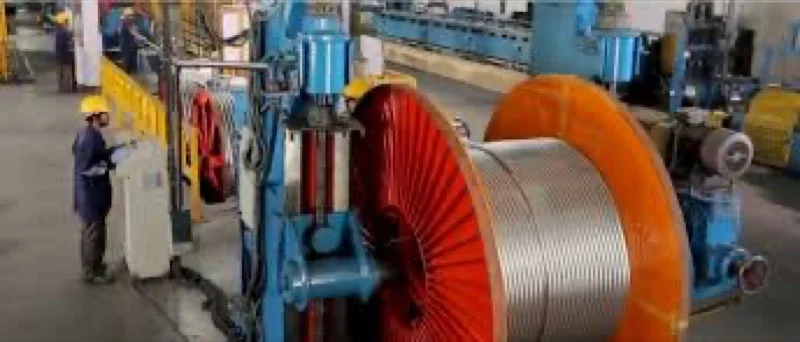 LiveAPAR Industries · Factory · 720 kW / 500 kWh battery
A factory whose process lines keep running through every dip in power.
- <1 ms
- response when the load jumps or the grid dips
- Zero
- gaps in power to the production lines
- End to end
- battery, PCS, controls and installation by one team
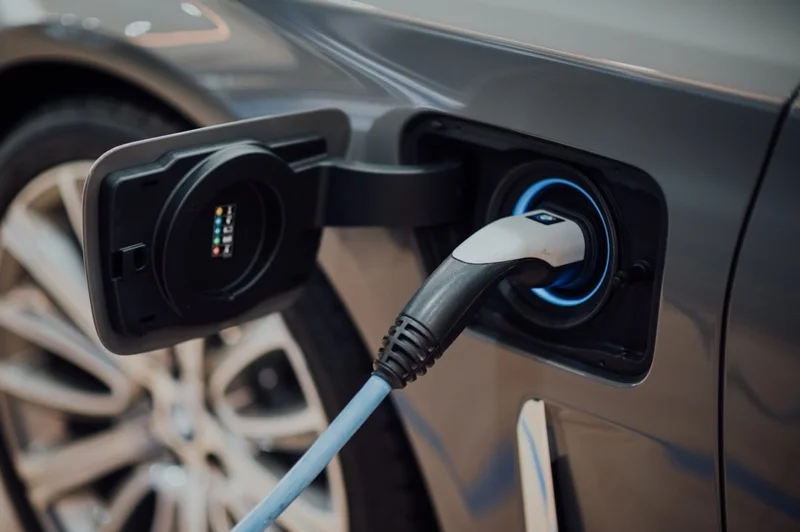 LiveEV charging hub · 260 kW / 580 kWh battery · India
Electric buses and cars keep charging, even when the grid is gone.
- 2.5×
- charging power from the same grid connection
- 1 s
- battery and PCS data, cell by cell
- Grid outage
- buses and cars still charge off the battery
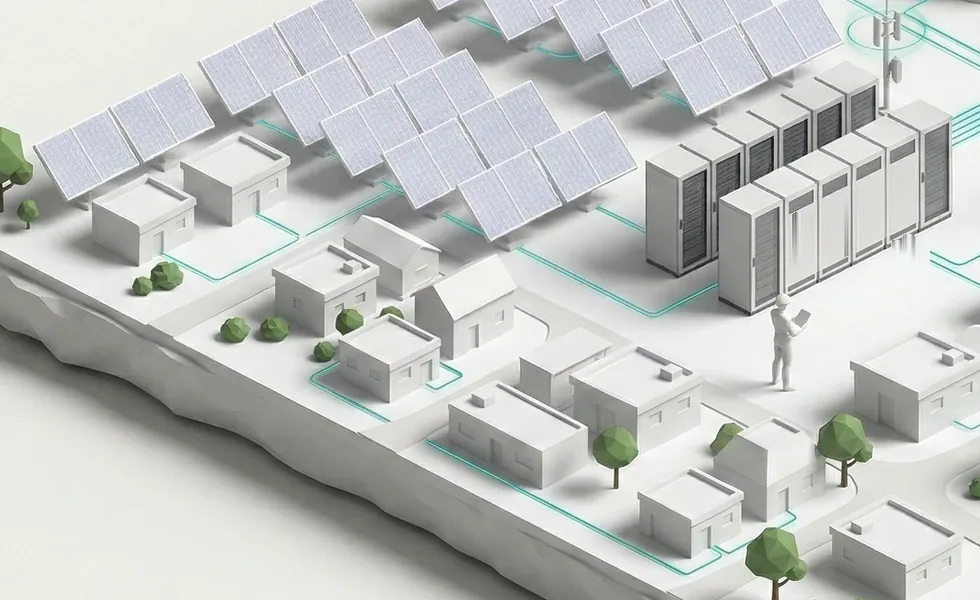 UnderwaySolar + battery micro-grid · Melghat, Maharashtra
A village without a grid. A solar and battery micro-grid that powers it.
- Village
- no grid connection
- Black start
- from standstill, no outside source
- 820
- homes on solar and battery
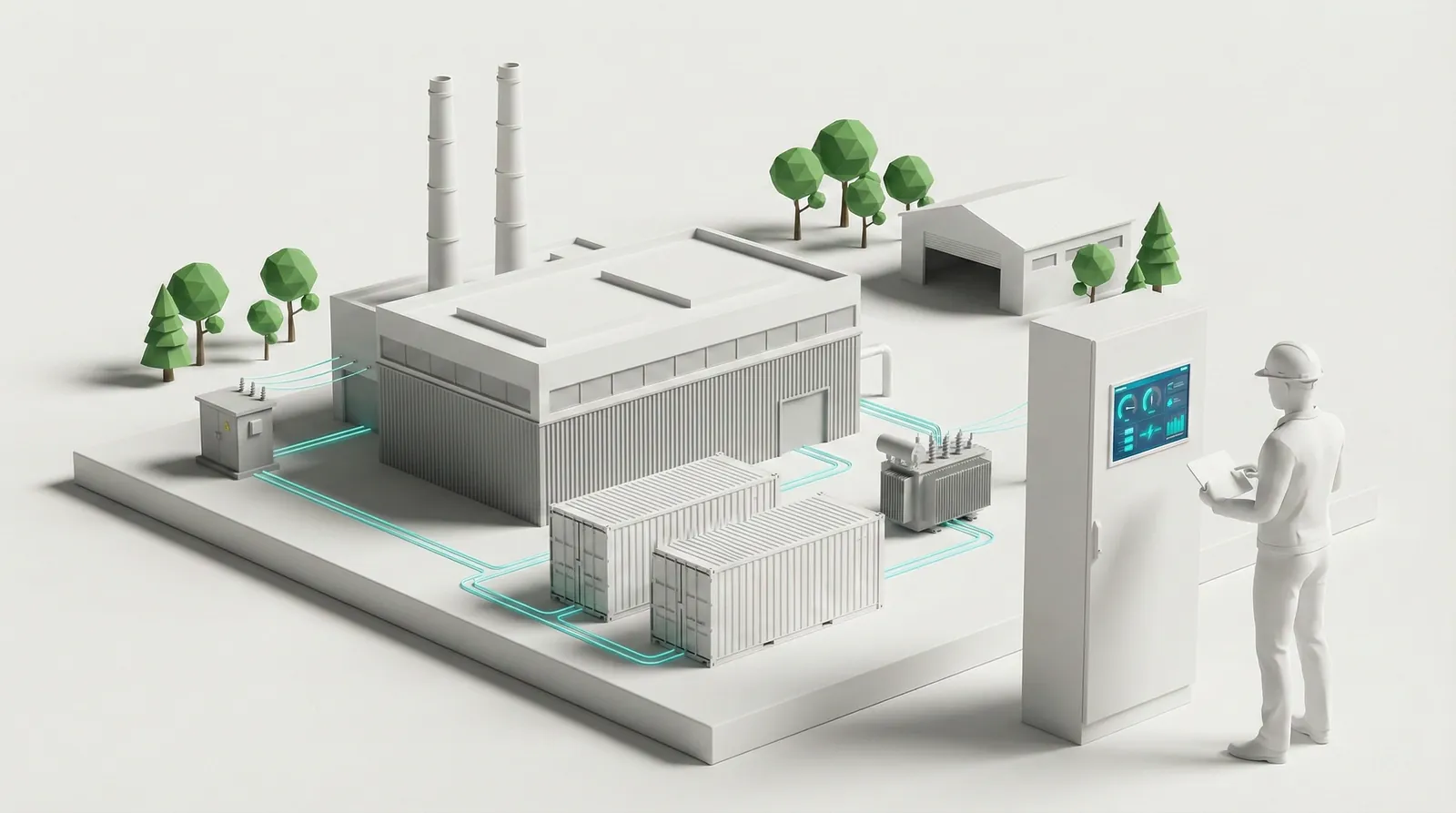 In testingIndustrial battery plant · Pune · 2.5 MW / 10 MWh
Two battery containers, two vendors, two languages. One EMS runs them as one plant.
- 2
- container makes, each with its own BMS protocol
- 1
- PCS and one EMS across both
- Hot-swap
- take a container out for service, plant keeps running
Tell us about your factory and its solar
Send what you know. An Ingro engineer works out where your solar is being lost, whether a battery or a cheaper fix suits your site, and the size, cost and payback, free.
What happens next: we reply within one working day, by phone or WhatsApp. No site visit is needed at this stage, and there is nothing to pay.