More rooftop solar than your sanctioned demand in Gujarat: the battery the GERC rule asks for, and the one that pays
You run a factory in Gujarat with a contract demand above 100 kW and a roof big enough for more solar than your connection. Your EPC has told you that under GERC's new rules, anything beyond your sanctioned demand now needs a battery, and that units you export above a cap will lapse. This page is for the owner or MD deciding with the EPC: what the rule actually says, the smallest battery it asks for, the size that makes money, which of the five metering options suits a factory, the approval steps and timeline, and when the cheaper answer is fewer panels or a higher contract demand.
Reviewed 16 November 2026 by Ingro Energy's project team
The short answer
- GERC's Distributed RE Regulations, 2026 (notified 30 October 2026) say a consumer with contract demand above 100 kW who installs solar beyond the contracted demand, under net metering, net billing or group net metering, must add a battery able to charge and discharge for at least 2 hours a day, for at least 50% of the excess capacity.
- So 300 kW beyond sanctioned demand means at least 150 kW for 2 hours: about 300 kWh the battery can deliver, roughly 340 kWh rated. At today's prices that is about ₹68 lakh to ₹1.02 crore installed.
- The rule sets the floor, not the right size. A battery earns only from solar that would otherwise lapse. Under net metering, a non-residential consumer can adjust exports only up to 30% of the units drawn in the billing cycle, with banking charges; the rest lapses. Size the battery for the units that lapse on a normal working day, and never below the rule's floor.
- On stored solar alone, a fully used battery pays back in about 9.5 to 14 years in our example. If little of your solar lapses, the rule's battery sits half idle and the payback stretches to 17 to 25 years. Then staying within your sanctioned demand is usually the better answer.
What your EPC is telling you, and why it changed in October 2026
On 30 October 2026 the Gujarat Electricity Regulatory Commission notified the GERC (Grid Interactive Distributed Renewable Energy Sources) Regulations, 2026, Notification No. 11 of 2026. They replace the 2016 net metering rooftop solar regulations and their amendments, and they apply to rooftop and other on-site renewable plants connected to your DISCOM: DGVCL, MGVCL, PGVCL, UGVCL, or Torrent Power in its licence areas.
Two things in them change a factory's solar plan. A plant bigger than your contracted demand now needs storage, if your contract demand is above 100 kW. And exported units no longer offset your bill freely: for non-residential consumers on net metering, the adjustment is capped at 30% of the units you draw in the billing cycle, banking charges apply, and the excess lapses.
If your plant stays within your sanctioned demand, the storage clause does not touch you, and the general picture for a factory with solar is in our guide for factories with rooftop solar. This page is about the factory that wants to go beyond it.
What the rule says, in plain words
From the trade reports of the notified text (Energetica India and SolarQuarter, November 2026). Read your DISCOM's procedure under the regulations before you sign: the details below are what was reported, not the gazette wording.
| The rule | In plain words | What it means for your factory |
|---|---|---|
| Storage beyond contracted demand | Contract demand above 100 kW, plant beyond the contracted demand, under net metering, net billing or group net metering: a battery with at least 2 hours of daily charge and discharge for at least 50% of the excess capacity | 300 kW of extra panels need at least a 150 kW, 2-hour battery |
| Virtual net metering | Non-residential consumers face a similar requirement when the plant exceeds the combined contracted demand of the connections sharing it | Spreading the plant across your units does not avoid it if the total is still over |
| 30% cap on net metering | Non-residential: exports adjusted only up to 30% of units drawn in the billing cycle, with banking charges; the excess lapses | Big noon surplus on a light-load day is lost unless stored or used |
| Net billing | Your own use first; exports credited at the generic tariff set by GERC | Every exported unit earns the generic tariff, not your bill rate |
| Size limits | Net metering and net billing 1 kW to 1,000 kW AC; group net metering 6 to 1,000 kW; gross and virtual net metering up to 4,000 kW, all subject to feasibility | Above 1,000 kW AC on your own roof, only gross or virtual net metering are open |
| Monitoring and meters | AMI meters; SIM-based remote monitoring below 1 MW, RTUs above | Budget for the meter and monitoring, and include the battery in it |
| Connectivity fee | ₹50,000 per connection above 100 kW | A small line in the project cost |
The 100 kW threshold is contract demand, not plant size. A factory below 100 kW contract demand is not caught by the storage clause, though the 30% cap still applies to it on net metering.
The minimum battery by rule, worked out
The arithmetic is short. Excess capacity is the plant size above your sanctioned or contracted demand. Take half of it: that is the battery's minimum power in kW. Multiply by 2 hours: that is the minimum energy it must be able to deliver.
| Excess beyond sanctioned demand | Minimum battery power | Minimum energy for 2 hours | Rated size, roughly |
|---|---|---|---|
| 50 kW | 25 kW | 50 kWh | 60 kWh |
| 300 kW | 150 kW | 300 kWh | 340 kWh |
The rated size allows for a battery using about 90% of its nameplate. Whether the DISCOM checks the 2 hours against the nameplate or the energy actually delivered, and whether contract demand in kVA is compared with the plant's kW AC as it stands, is worth confirming with your DISCOM before the design is frozen.
The five metering options, as they affect a factory
GERC 2026 offers five arrangements. For a factory that wants to go beyond its sanctioned demand, they differ in two ways: whether the storage clause applies, and what a surplus unit is worth, which decides what a stored unit is worth.
| Option | Size (AC) | What happens to surplus | For a factory going beyond sanctioned demand |
|---|---|---|---|
| Net metering | 1 to 1,000 kW | Adjusted up to 30% of units drawn, with banking charges; the rest lapses | Storage clause applies. The battery's job is the units that would lapse |
| Net billing | 1 to 1,000 kW | Credited at the GERC generic tariff | Storage clause applies. A stored unit is worth your grid rate less the generic tariff |
| Gross metering | 6 to 4,000 kW | All generation sold at the generic tariff; you buy all your power at the retail tariff | Not in the reported list for the storage clause, but you give up using your own solar at your bill rate |
| Group net metering | 6 to 1,000 kW | Shared across connections of the same entity and category, in 15-minute blocks; 30% cap and banking charges for non-residential | Storage clause applies beyond contracted demand. Useful if you have a second unit with daytime load |
| Virtual net metering | 10 to 4,000 kW | Shared across locations in the same DISCOM area, in 15-minute blocks; 30% cap and banking charges for non-residential | Similar storage requirement when the plant exceeds the combined contracted demand |
Whether gross metering is outside the storage clause should be read in the notified text before anyone plans around it. Even if it is, selling all your solar at the generic tariff and buying back at your bill rate rarely beats using it yourself.
What a stored unit is worth under the 30% cap
A battery returns about 85% of what goes in. With grid power at about ₹9 a unit, each stored solar unit that would otherwise have lapsed saves about ₹7.7. A unit that would have been adjusted inside the 30% cap was already worth nearly your bill rate, less the banking charge, so storing it earns little.
So the number that sizes the battery is the units that lapse on a normal working day: the surplus above what the factory uses at noon, after the 30% cap has been used up over the month. Weekly offs and holidays waste the most, but a battery cycled once a week does not pay. Count the working days.
| Where the surplus unit goes | What storing it saves |
|---|---|
| Lapses above the 30% cap (net metering) | about ₹7.7, the full value after losses |
| Adjusted inside the cap | little: the cap already gives it most of your bill rate |
| Credited at the generic tariff (net billing) | about ₹7.7 less the generic tariff |
Work out what the battery earns at your factory
Five numbers from your EPC's design and your bill. Nothing is sent anywhere until you ask us to check it.
Enter your plant size and the share of solar that would lapse to see the figures.
How this is worked out
- Solar makes about 4.25 units per kWp on an average day. Monsoon and cloudy days make less.
- The share you type is the routine surplus on a working day. Only working days are counted; weekly-off and holiday surplus is left out.
- The battery is sized to hold that surplus in one charge, using about 90% of its rated kWh, and is filled and emptied once each working day. It does not check the GERC minimum; work that out from the table above and use the larger of the two.
- A battery gives back about 85% of what it takes in. Each unit it gives back saves the grid rate you typed; the credit you typed is taken off for every unit no longer exported.
- Installed cost is taken as ₹25,000 to ₹38,000 per kWh for a battery under 250 kWh, and ₹20,000 to ₹30,000 per kWh above that, before GST. This is a working range, not a quote.
- Not counted: the extra panels' own units used directly, banking charges, solar kept running in grid cuts, diesel saved, ToD rates, demand charges and battery fade.
- This is a first estimate. Your load pattern, metering option and tariff are checked before anyone gives you a price.
Get free advice on your figures
Leave your name and number. We call back with the battery the rule needs, the one that pays at your factory, and the complete solution.
Ask about your factory's solar and the GERC battery rule ↓Worked example: minimum battery by rule vs right battery by economics
An illustration, not a real factory. Sanctioned demand taken as 500 kW, a planned plant of 800 kW, so 300 kW beyond it. Net metering, 26 working days a month, grid power at ₹9 a unit. The plant makes about 3,400 units on an average day, about 1,275 of them from the extra 300 kW. The savings come from the calculator's own sums, so you can type the same numbers above.
| Case | Battery | Saving a year | Installed cost | Payback |
|---|---|---|---|---|
| Rule's minimum, filled every working day with 300 units that would lapse | 340 kWh | ₹7.2 lakh | ₹68 lakh to ₹1.02 crore | 9.5 to 14 years |
| Sized for the real lapsing surplus: 20% of a working day's solar, 680 units | 760 kWh | ₹16 lakh | ₹1.52 crore to ₹2.28 crore | 9.4 to 14 years |
| Rule's minimum, but only 5% of the solar lapses (170 units) | 340 kWh | ₹4.1 lakh | ₹68 lakh to ₹1.02 crore | 17 to 25 years |
Read it this way. Where more solar lapses than the rule's floor, a bigger battery is not worse value: each kWh still cycles every working day, so the payback stays about the same and the saving grows. Where less lapses than the floor, the rule makes you buy a battery that is partly idle, and the payback stretches far beyond what most owners accept. That third row is the factory for which the extra panels are usually not worth it.
Not counted: the value of the extra panels' own units that the factory uses directly, solar kept running in grid cuts, DG diesel saved, ToD rates and demand charges, and battery fade. These move the answer both ways; an engineer works them from your 15-minute meter data.
Three ways to go: stay within sanctioned demand, raise contract demand, or add storage
Raising contract demand makes sense when the factory will grow into it anyway: a new line, more shifts. Raised only to fit panels, it buys a permanent monthly charge to avoid a one-time battery, and it does nothing about the lapsing surplus. Put the extra demand charge for ten years beside the battery's cost before deciding; your bill shows the rate per kVA.
| Option | What you gain | What it costs you |
|---|---|---|
| Stay within sanctioned demand | No storage clause, smallest investment, quickest approval | Part of the roof unused. Surplus above the 30% cap still lapses on light days |
| Raise the contract demand, then build to it | A bigger plant without the storage clause, if the new demand covers it | Higher fixed demand charges every month for as long as you hold it, whether you use it or not. The 30% cap still applies, so the extra solar may simply lapse |
| Go beyond sanctioned demand with storage | Full roof used; the battery also stores lapsing surplus and can carry the evening or a grid cut | The battery's cost, at least the rule's floor; space, safety and approvals |
When the battery is not worth it
- The excess is small. 50 kW beyond sanctioned demand needs about a 60 kWh battery at ₹15 lakh to ₹23 lakh, because small systems cost more per kWh. That is a lot to spend to add a few rows of panels.
- Your factory uses almost all its solar at noon and little lapses. The rule's battery would be mostly idle; build within your sanctioned demand instead.
- Most of the surplus comes on the weekly off and holidays. One cycle a week does not pay back.
- You are on net billing and the generic tariff is close to what a stored unit saves. The export already earns most of it.
- The factory will raise its contract demand within a year or two anyway. Then build the plant to the new demand and skip the storage clause.
Saying no is a fair outcome. A battery bought only to clear a rule, with nothing useful to store, is the most expensive way to add panels.
If you already have a plant under the old rules
The trade reports of the notified text do not describe how plants connected under the 2016 regulations are treated, and the draft said the new rules apply to applications received after notification. Until your DISCOM's procedure under the 2026 regulations is out, assume your existing agreement stands for the plant you have, and that any addition is a fresh application judged under the new rules, storage clause and 30% cap included.
Do not add panels quietly. The May 2026 draft proposed a charge of twice the energy charge for capacity added after commissioning without approval. Ask the DISCOM in writing before the EPC orders material.
If you already have a battery, or were planning one for cuts or the evening shift, it may count toward the rule. Ask whether its kW and hours can be declared for the extra capacity before buying a second one.
Approval steps and timeline
The regulations give the DISCOMs three months to set up an online application portal and to get their implementation guidelines and procedures approved. Until those are out, expect the steps below to be firmed up; the timelines are the ones reported from the notified text.
- Apply to your DISCOM (DGVCL, MGVCL, PGVCL, UGVCL or Torrent Power) on its portal, with the plant size, the metering option and the battery's kW and hours.
- Technical feasibility is processed in 3 days, and the field feasibility report in 10.
- Pay the connectivity fee (₹50,000 above 100 kW) and sign the connectivity agreement. Any strengthening of the DISCOM's network is to be done within 15 days of that.
- Electrical drawings: the May 2026 draft gave the Chief Electrical Inspector 10 days to approve them. A battery adds its own drawing and safety review, so submit it with the plant, not after.
- Build within six months of connectivity approval, then meter installation, inspection and commissioning.
- If the DISCOM delays without a valid reason, the regulations provide compensation of at least ₹500 a day.
A realistic plan for a factory is a few weeks of paperwork before work starts, then the build. The battery usually arrives later than the panels, so order it when the design is approved, not at the end.
What a turnkey project covers for you
Ingro designs, integrates, commissions and maintains battery systems with any maker's battery, runs them with Ingro EMS, and does not make batteries itself. For a Gujarat factory that means one team sizes the battery from your meter data against both the rule and the lapsing surplus, works alongside your solar EPC, commissions it with the solar plant and looks after it for the warranty period. You get one price and one number to call.
What to ask before you sign
- What is my excess capacity exactly, in the units the DISCOM uses, and how did you get the battery's minimum kW and hours from it?
- How many units will lapse above the 30% cap on a normal working day, from which data, and how much of the battery will they fill?
- Which metering option did you pick for me, and why that one over net billing or group net metering?
- Have you compared the battery with raising my contract demand, at my bill's demand charge, over ten years?
- Is the battery's 2 hours measured on energy it can deliver, and will it still meet the rule at the end of the warranty?
- Does the price include the PCS, panels and switchgear, monitoring, DISCOM and Electrical Inspector approvals, and the connectivity fee?
- What is the warranty in years and in cycles, and who comes to site when it stops?
Related guides and equipment
- Factory with rooftop solar: zero export, lapsed units and solar off in cuts
- For your EPC: adding a battery to a client's solar plant
- What a battery system costs in India, and what a quote should include
- Turnkey battery systems: design to O&M from one team
- BESS by size, in kW and kWh
- BESS cabinets, with their specifications
- PCS (battery inverters)
Questions Gujarat factory owners ask
Does the battery rule apply if my plant stays within my sanctioned demand?
No. As reported, it applies when a consumer with contract demand above 100 kW installs capacity beyond the contracted demand. The 30% cap on net-metered adjustment applies either way.
My contract demand is 90 kVA. Do I need a battery for a bigger plant?
The storage clause is reported for consumers above 100 kW contract demand. Below that it does not apply, but your DISCOM's feasibility check and the size limits still do. Confirm with the DISCOM before you design.
How big must the battery be?
At least half the excess capacity in kW, for at least 2 hours. 300 kW beyond sanctioned demand means at least 150 kW and about 300 kWh it can deliver. Size it larger if more solar than that lapses on a normal working day.
Is raising my contract demand cheaper than a battery?
Sometimes, if the factory will use the extra demand anyway. Raised only to fit panels, you pay the demand charge every month for years, and the 30% cap still lets surplus lapse. Compare ten years of the extra demand charge with the battery's cost.
What happens to my existing net-metered plant?
The reports of the notified text do not say. Assume your current agreement stands for the plant you have and any addition is a new application under the 2026 rules, and ask your DISCOM in writing.
Can I avoid the battery with gross metering?
Gross metering is not in the reported list of arrangements that need storage, but confirm it in the notified text. Under gross metering you sell all your solar at the generic tariff and buy all your power at your bill rate, which rarely suits a factory that uses its solar by day.
Sources
- GERC, Renewable Energy regulations list: GERC (Grid Interactive Distributed Renewable Energy Sources) Regulations, 2026, Notification No. 11 of 2026, dated 30-10-2026
- Energetica India (2 November 2026): GERC Distributed RE Regulations, 2026: metering options and sizes, storage clause, settlement, fees and timelines
- SolarQuarter (2 November 2026): GERC notifies 2026 Distributed RE Regulations, five metering options and BESS requirements
- SolarQuarter (19 May 2026): the draft GERC Distributed RE Regulations, 2026
- Reslink (2026): summary of the draft GERC DRES Regulations, 2026: application steps, Electrical Inspector, unapproved capacity
Sites that have benefited from battery storage
Different sites, same idea: use more of your own renewable power, cut the electricity bill, and keep running when the grid cannot keep up.
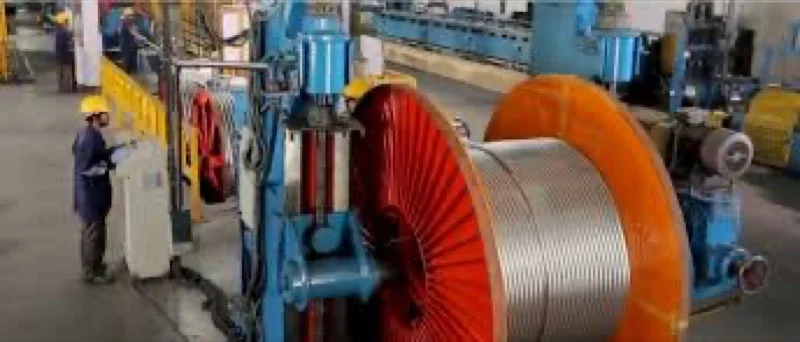 LiveAPAR Industries · Factory · 720 kW / 500 kWh battery
A factory whose process lines keep running through every dip in power.
- <1 ms
- response when the load jumps or the grid dips
- Zero
- gaps in power to the production lines
- End to end
- battery, PCS, controls and installation by one team
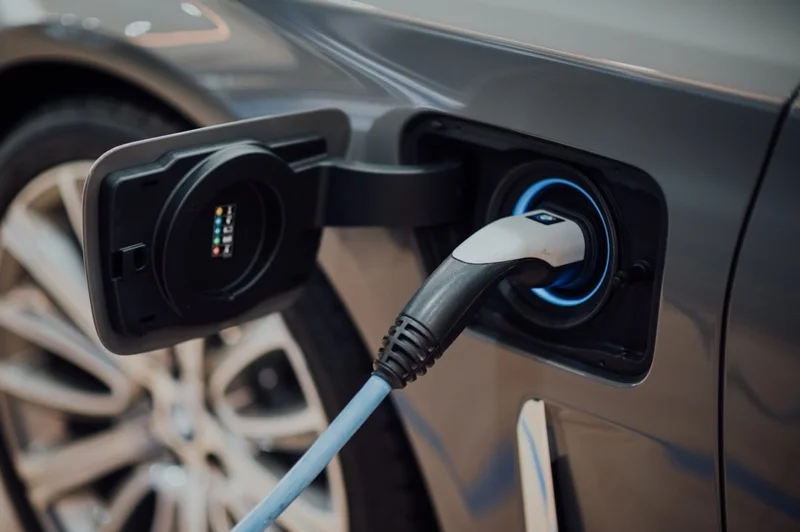 LiveEV charging hub · 260 kW / 580 kWh battery · India
Electric buses and cars keep charging, even when the grid is gone.
- 2.5×
- charging power from the same grid connection
- 1 s
- battery and PCS data, cell by cell
- Grid outage
- buses and cars still charge off the battery
 UnderwaySolar + battery micro-grid · Melghat, Maharashtra
A village without a grid. A solar and battery micro-grid that powers it.
- Village
- no grid connection
- Black start
- from standstill, no outside source
- 820
- homes on solar and battery
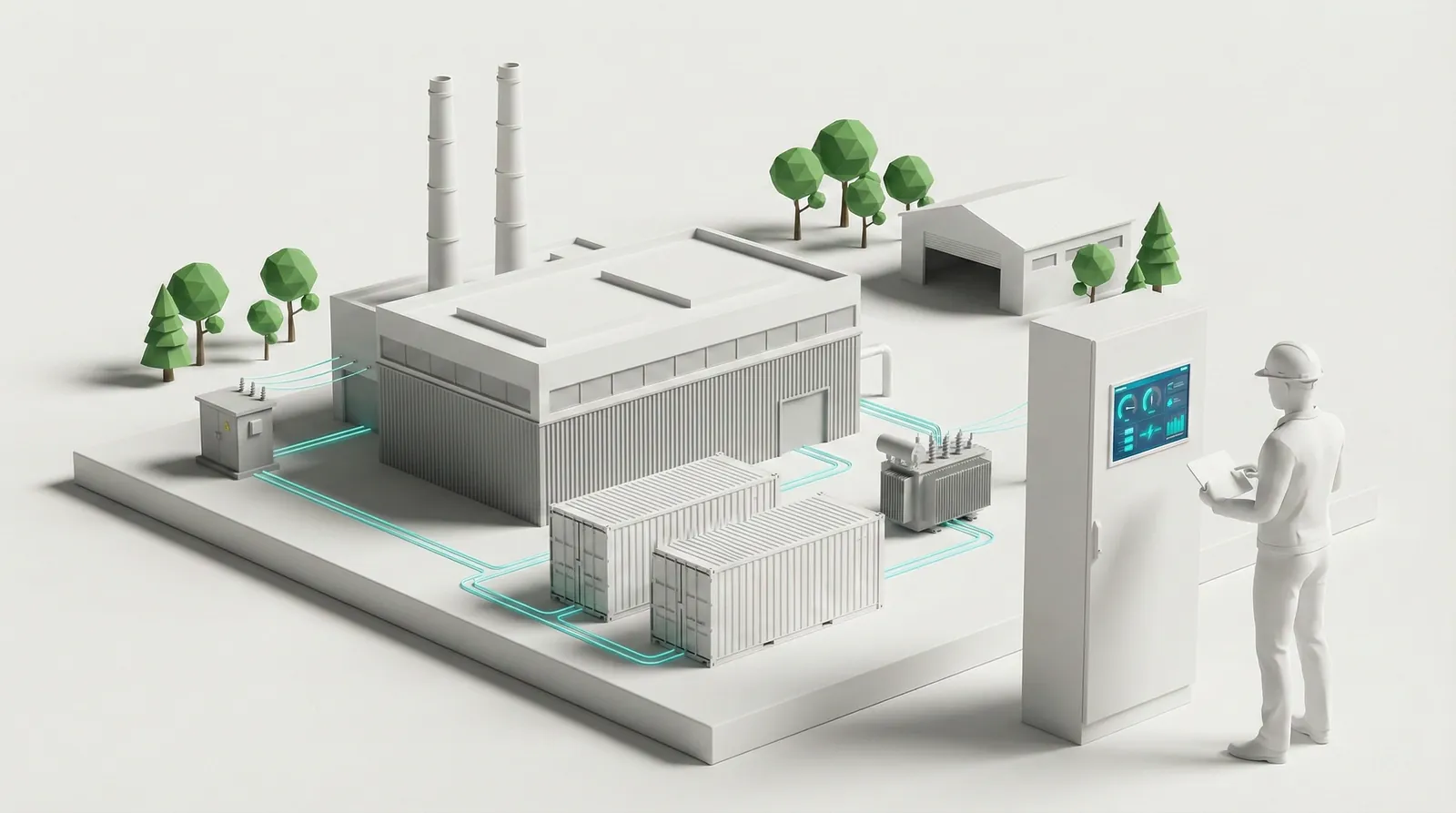 In testingIndustrial battery plant · Pune · 2.5 MW / 10 MWh
Two battery containers, two vendors, two languages. One EMS runs them as one plant.
- 2
- container makes, each with its own BMS protocol
- 1
- PCS and one EMS across both
- Hot-swap
- take a container out for service, plant keeps running
Ask about your factory's solar and the GERC battery rule
Tell us what your EPC has proposed. An Ingro engineer gives you free expert advice on your case: whether to go beyond your sanctioned demand, the battery the rule needs and the one that pays, and the metering option. If it makes sense, our team takes care of the rest as a turnkey project: sizing, design, equipment from any maker, installation, help with the approvals, commissioning, Ingro EMS and O&M.
What happens next: we reply within one working day, by phone or WhatsApp. No site visit is needed at this stage, and there is nothing to pay.