A battery for your milk chilling centre: the cut at collection time, and the diesel per litre of milk
Milk comes in twice a day, and it has to reach about 4 °C within hours or it is downgraded or sent back. The feeder in the village goes off without warning, sometimes right when the cans arrive, and the DG has to start at 5 am whether or not the operator is awake. This page is for the plant head, procurement head or the union's MD or GM, and for the private dairy owner, weighing a battery (BESS) for a chilling centre of roughly 10,000 to 50,000 litres a day, about 50 kW and up. It works in litres of milk, litres of diesel and rupees per 1,000 litres, and says plainly when an ice bank or the DG is the better answer. A single 1,000-litre village cooler is smaller than this page covers; there is a note on that below.
Reviewed 16 November 2026 by Ingro Energy's project team
The short answer
- The hours that matter are the two collection windows and the few hours after each, while warm milk is being pulled down to 4 °C. A cut then costs milk quality. A cut at 2 pm, with chilled milk sitting in an insulated tank, costs far less.
- A unit from your DG costs about ₹30 in diesel alone; a grid unit stored in a battery costs about ₹11. In our example centre of 40,000 litres a day, the DG's diesel works out to about ₹200 for every 1,000 litres of milk chilled.
- Back up the refrigeration compressors (or the ice-bank chiller), the milk pumps and the agitators first. CIP, the boiler and office loads can wait for the grid.
- The inverter has to start your largest compressor on a weak feeder. Ask for that in writing, with the compressor's kW and starter type named.
- If you already have an ice bank big enough for your cuts, or cuts run most of the day with no solar, a battery will not pay back. Keep the DG for the long cut either way.
The hours that matter: morning and evening collection
The food safety rules set the clock. Under Schedule 4 of the FSSAI licensing regulations, raw milk a farmer brings to a dairy plant must arrive within four hours of milking and be cooled as soon as practicable to 4 °C or lower; milk collected daily from producers must be cooled immediately to 4 to 6 °C or lower, and held there until it is processed. FSSAI's own inspection checklist asks whether milk reaches the collection centre within 4 hours and is immediately chilled to 4 °C or lower.
Coolers are built to that clock. NDDB's specification for village bulk milk coolers above 2,000 litres asks for milk to be cooled from 35 °C to 4 °C in not more than 3 hours for each milking, and in not more than 1.5 hours when the second milking is added. So the demanding hours at a chilling centre are the morning and evening collection windows and the 2 to 3 hours after each, while warm milk is being pulled down. In a study of a cooperative chilling centre in Barpeta, Assam, milk already took about two hours to arrive from villages more than 40 km away, which left little room for a late or slow chill.
The rest of the day is easier. The same NDDB specification asks for tank insulation good enough that, with the refrigeration off, milk at about 4 °C warms by no more than 1 °C in four hours even at 50 °C outside. A cut in the afternoon, with the tank full of chilled milk and the lid shut, is not the same problem as a cut at 6 am with warm cans queuing at the dock.
Look at your DG log against the clock. Many centres run the DG through every cut by habit. The battery's job is the collection windows and the pull-down after them; whether an afternoon cut needs any backup at all is a question for your QC and your tank's specification.
Diesel per litre of milk: the figure your board looks at
A DG makes roughly 3.2 units for every litre of diesel. At ₹95 a litre, every unit from the DG costs about ₹30, before oil, filters and the operator. A battery charged from the grid at about ₹9 gives back about 85% of what goes in, so a unit out of it costs about ₹11. Divide your monthly diesel bill by the milk chilled that month, in thousands of litres, and you have the figure procurement already tracks.
A chilling centre's DG often runs badly loaded. A study of milk coolers found DG sets oversized up to five times the compressor's rated power just to handle its starting surge, so between starts the set idles at part load and burns more diesel per unit. At night, with only lights, the agitator and a pump running, it is worse still. That makes your real diesel per unit higher than the figure above, and the battery's case better, not worse.
| Where the unit comes from | Cost per unit to the centre |
|---|---|
| DG set (diesel only) | about ₹30 |
| Battery, charged from the grid | about ₹11 |
| Battery, charged from roof solar | lower still |
For a real-world benchmark: the Barpeta cooperative, with 8,000 litres a day of bulk coolers and a 35 kVA DG as backup, chilled 97,963 litres of milk from May to December 2020 using 3,987 units of grid power and 366 litres of diesel, about ₹0.62 per litre of milk in energy.
What to back up: compressors, pumps, CIP, the lab
Getting this list right is most of the sizing. A chilling centre has a few loads that cannot stop during collection and several that can wait an hour.
| Load | On the battery? | Why |
|---|---|---|
| Refrigeration compressors, or the ice-bank chiller | Yes | This is the chilling. Size for the compressors that run during pull-down, not the standby. |
| Milk reception and transfer pumps, agitators | Yes | Milk has to move into the tank and be stirred to cool evenly. |
| Condenser fans or cooling-tower pump, chilled-water pump | Yes | The compressor trips without them. |
| Milk testing (fat/SNF analyser, weighing, collection software) | Yes, small | Collection stops without the test and the receipt. |
| CIP pumps and hot water or boiler | Usually no | Cleaning can move by an hour; heating water on a battery is expensive. |
| Office, yard lights, staff quarters | No, or lights only | Leave them to the grid or the DG. |
Write down each motor's kW and how it starts (direct-on-line, star-delta, soft starter or VFD) before asking anyone for a price. Two compressors and the transfer pump starting together set the inverter size; set them to start one after another and the inverter gets smaller.
Who chills the milk when the grid goes
The solid arrow is what is carrying the load. The dashed arrow is the DG waiting as backup.
A weak feeder: voltage dips and tripping compressors
Rural feeders do not just go off; they sag. NDDB's cooler specification asks for an automatic voltage stabiliser on the incoming supply that cuts the grid off entirely if any phase falls below 180 volts or rises above 280 volts, to protect the compressors. In practice that means the compressor stops on a bad-voltage evening even when the grid is technically on.
The national average is better than it was: the Ministry of Power puts average rural supply at 22.6 hours a day in 2025. An average does not tell you about your feeder at 6 am. Your own DG log and the stabiliser's trip record do.
- Changeover. When the grid fails or sags, the battery should take over fast enough that the compressor does not trip on low voltage or low oil pressure. Ask how many milliseconds, and whether it can also take over on a sag, not only a full cut.
- Starting surge. A compressor motor draws several times its running current for a few seconds at start. The battery's inverter (PCS) is chosen for that surge, not for the running kW. Ask what overload the inverter carries, and for how many seconds.
- Order of takeover. Grid, battery, then DG, all automatic, wired into your existing changeover so the operator does not have to be there.
Ice bank or battery: an honest comparison
An ice bank stores cooling instead of electricity. The chiller builds ice when power is available, and during collection the ice chills the milk with only a pump running. For the refrigeration load it does the same job a battery does.
Published Indian examples point the same way for small sites. At the Barpeta cooperative, a solar instant chiller with ice storage cooled milk from 35 °C to about 10 °C before the existing bulk coolers took it to 4 °C, halving the centre's energy cost per litre; the study's authors noted that powering the coolers themselves from solar at 5,000 litres a day and above would need more than 30 kWp of panels. For 200 to 500 litre coolers, an ice-backup design has been reported to ride through 24 hours without power and remove the need for a DG.
- If you already have an ice-bank chiller sized for your longest collection-time cut, you do not need a battery for chilling. A small battery for pumps, agitators and the testing desk may still make sense.
- An ice bank only stores cooling. Pumps, agitators, the lab and lights still need electricity in a cut, and a weak feeder still trips the chiller that builds the ice.
- A battery carries every electrical load you put on it and also steadies the voltage while it runs, but it costs more per unit of cooling stored.
For many centres the answer is both: ice for the bulk of the cooling, a smaller battery for everything that has to move and measure the milk.
Work it out from your DG log
The DG log or the diesel purchase register shows litres per month; that, the DG hours on a normal day and the months a year with cuts like these are all the calculator needs. Milk comes in every day, so count all twelve months unless cuts really stop in some seasons.
Work it out from your centre's diesel
Four numbers from the DG log or diesel register. Nothing is sent anywhere until you ask us to check it.
Enter the centre's diesel litres and DG hours to see the figures.
How this is worked out
- A DG set makes about 3.2 units per litre of diesel. A lightly loaded DG makes fewer, so your saving is probably higher.
- Grid power costs about ₹9 a unit, and a battery gives back about 85% of what it takes in. If your centre is on an agriculture or agro-industrial tariff, grid units cost less and the saving is higher.
- The battery is sized to carry one normal day's DG running on one charge.
- Installed cost is taken as ₹25,000 to ₹38,000 per kWh for a battery under 250 kWh, and ₹20,000 to ₹30,000 per kWh above that, before GST. Small systems cost more per kWh. This is a working range, not a quote.
- DG servicing saved, milk no longer downgraded and roof solar are not counted.
- This is a first estimate. Compressor starting current, your real tariff and when in the day your cuts fall are checked before anyone gives you a price.
Get the figure for your centre, per 1,000 litres
Leave your name and number. We call back with the size, cost and payback for your chilling centre.
Tell us about your chilling centre ↓An example centre, worked per 1,000 litres of milk
This is an illustration, not a real centre. Its inputs: 40,000 litres of milk a day; the DG covers about 5 hours of cuts on a normal day and burns 2,500 litres of diesel a month, 12 months a year; diesel at ₹95 a litre. The figures come from the same sums as the calculator above.
- Diesel today: about ₹2.4 lakh a month, or about 2.1 litres of diesel (₹200) for every 1,000 litres of milk chilled.
- Units from the DG: about 267 a day. Average load while it runs: about 53 kW. Battery to carry a normal day's DG running: about 300 kWh.
- Installed cost: about ₹60 lakh to ₹90 lakh before GST.
- Diesel saved: about ₹1,53,000 a month, ₹18 lakh a year, or about ₹125 per 1,000 litres of milk.
- Payback: about 3.3 to 4.9 years.
The average load hides the start. A centre this size may have compressors whose starting surge is well above 53 kW, and the inverter has to be sized for that, which can lift the price above this range. Get it checked against your compressor list.
What your grid unit costs: agriculture, agro-industrial or industrial
The battery charges from the grid, so your tariff category changes the saving. States do not put chilling centres in the same place. In Odisha, the supply code as amended in 2009 puts a chilling plant for milk in the Allied Agro-Industrial category, not with agriculture; in the FY 2026-27 tariff that category's LT energy charge is ₹3.10 a unit, against ₹6.20 for LT industrial supply. In Kerala, a 2025 tariff revision moved dairy farms with collection and chilling facilities and primary milk cooperatives from the commercial to the LT agriculture category.
The calculator assumes about ₹9 a unit. If your centre pays much less, each unit moved from the DG to the battery saves more than it shows. Check the category printed on your bill before anyone works out a payback.
Schemes and loans: what they actually fund
No central scheme we could find pays specifically for a battery at a chilling centre. What exists funds chilling and dairy infrastructure more broadly, and in one case energy projects:
- DIDF (Dairy Processing and Infrastructure Development Fund): loans through NDDB or NCDC with a 2.5% interest subvention, for milk unions, state federations, multi-state cooperatives, milk producer companies, NDDB subsidiaries and registered FPOs or SHGs that are profitable. Its eligible activities include milk chilling infrastructure and renewable energy or energy-efficiency infrastructure, where the energy generated or saved goes to the running cost of an existing plant, BMC or milk collection unit. A battery is not named; ask NDDB whether yours qualifies as part of a solar or energy-efficiency project.
- AHIDF: for private companies, MSMEs, individual entrepreneurs, dairy cooperatives and FPOs, a 3% interest subvention on loans for dairy processing and other animal husbandry infrastructure. Whether a battery at a chilling centre counts is for your bank to confirm.
- NPDD: the revised programme of March 2025 (₹2,790 crore for 2021-22 to 2025-26) funds dairy infrastructure such as milk chilling; by June 2026, 168 lakh litres a day of chilling capacity had been created under it. It pays for coolers and chilling, not batteries.
NDDB says it is putting new technology into milk collection centres to cut dependence on DG sets and grid power, and in 2024 it signed an MoU with Tata Power's microgrid arm to solarise village dairy societies, bulk milk coolers and chilling centres. Ask your federation what applies in your state before you budget.
Solar on the centre's roof
Most of the chilling happens before sunrise and after sunset, when panels give nothing. Solar on its own does not cover the morning collection. Solar with a battery does: the panels charge the battery through the day and run the plant through a daytime cut, and the stored units chill the evening and next morning's milk.
Village-scale solar chilling already runs in India. In August 2026 Down To Earth reported 100 solar bulk milk chillers of 250 litres each, with 3 kW of panels apiece, collecting about 13,500 litres a day across Latur and Dharashiv. A centre of 20,000 litres a day is a much bigger load, so check the roof area and the roof's strength before you plan panels.
Who signs: union board, federation, or the owner
In a cooperative union, the plant or engineering head usually builds the case, the MD or GM takes it to the board, and a spend of this size needs a board resolution. If you borrow under DIDF, the union approaches NDDB or NCDC with a project report, which they help prepare and appraise; a state-level committee screens it and a project sanctioning committee approves it, and a state guarantee may be asked for. Check your union's bye-laws and your federation's procurement rules for who may approve what.
For a private dairy or a franchisee, the owner decides, Put three figures in front of whoever signs, each traceable:
- The cost, from two or three turnkey quotations with the same scope: the same loads, the same hours, the same compressor start.
- The yearly diesel saved, from twelve months of the DG log, as in the calculator, and the same figure per 1,000 litres of milk.
- The milk side: litres downgraded or rejected in the last year for late or slow chilling, from your QC records. Do not count it as rupees saved unless the records show it.
When a battery is not worth it for a chilling centre
- Your cuts last most of the day and you have no solar. The battery cannot recharge between cuts and the DG runs anyway. Solar with a smaller battery, or an ice bank, fits better.
- You already have an ice-bank chiller sized for your collection-time cuts. The chilling is covered; at most, put a small battery on pumps and the testing desk.
- Your site is a single village cooler of 1,000 to 5,000 litres. NDDB's specification rates the whole electrical panel of a 5,000-litre cooler at 25 kVA, below this page's scope. Look at ice-backup coolers or a solar cooler; if you run hundreds of them, talk to us about the cluster as a whole.
- The DG mostly runs outside collection hours, with chilled milk in an insulated tank. Check with your QC whether those runs are needed at all before buying anything.
- The compressors are old, the stabiliser trips daily and the tank insulation is poor. Fix the plant first; a battery will not save a cooler that cannot meet its cooling time on good power.
Keep the DG in every case. The battery takes the daily cuts at collection time and the DG starts only when a cut outlasts it, so it runs far fewer hours and at a proper load when it does.
Cost and battery life, in brief
As a working range, an installed system costs about ₹20,000 to ₹35,000 per kWh of battery before GST, more per kWh for small systems; what is in a turnkey price is in the battery cost guide. Use lithium iron phosphate (LFP) cabinets with their own battery management, cooling and fire detection, and compare warranties in years, cycles and capacity left at the end. Heat shortens battery life: keep the cabinet away from the condensers and the boiler, out of direct sun, ventilated and on a plinth above wash-down water.
Turnkey: one team from the first check to the last service visit
You do not need to find a battery maker, an inverter supplier, an electrician and a maintenance firm and make them agree. Ingro takes the centre's project end to end: it works out from your DG log and compressor data what the battery should carry, designs it for the compressor's starting surge and your collection hours, supplies the battery from any maker with Ingro EMS, installs and commissions it, carries out the civil and electrical works, helps you with the DISCOM and electrical inspector approvals, and maintains it for the long term.
It starts with the form below: tell us about the centre, and an engineer comes back with free advice on your case. If an ice bank or the DG you have already is the better answer, we say so.
What to ask before you sign
- Will it start my largest compressor, of this kW and with this starter, on battery alone, with the transfer pump running? In writing.
- Does it take over on a voltage sag as well as a full cut, and fast enough that the compressor does not trip?
- Which loads exactly does it carry (compressors, pumps, agitators, condenser, testing desk), and for how many minutes of collection-time cut?
- How does it tie into my existing stabiliser and DG changeover, so grid, battery and DG take over by themselves at 5 am with nobody there?
- If I already have, or add, an ice bank, how does that change the battery size you are quoting?
- Where will the cabinet stand, away from condenser heat, the boiler and wash-down water?
- What is the warranty in years and cycles, who comes when it stops during the flush season, and how fast?
Useful next
- Cold storage: the same question for potato and multi-commodity stores
- Battery or diesel generator: the full comparison
- What a battery system costs in India
- Factory with rooftop solar: using the units you waste
- BESS cabinets sold in India, with their specifications
- PCS (battery inverters): check the overload rating
- DG sets, to compare against
- Turnkey battery systems: design to O&M from one team
Questions plant heads and union managers ask
Will a battery keep my milk at 4 °C through a cut at collection time?
It can, if it is sized for the compressors that run during pull-down and its inverter can start them. Ask for the cut length it covers at collection time, in minutes, in writing.
Can a battery start a refrigeration compressor?
Yes, if the inverter is chosen for that motor's starting current, not just its running kW. A soft starter or VFD on the compressor, and starting motors one after another, make it easier and cheaper.
We already have an ice-bank chiller. Do we need a battery?
Not for the chilling, if the ice bank is big enough for your longest collection-time cut. You may still want a small battery for the pumps, agitators and testing desk, which an ice bank does not run.
How much diesel will we save per 1,000 litres of milk?
In our illustration of a 40,000-litre-a-day centre, about ₹125 per 1,000 litres. Put your own litres into the calculator and divide by the milk you chill a month.
Is there a subsidy for a battery at a milk chilling centre?
We found no central scheme that pays specifically for one. DIDF offers cooperative unions and producer companies loans with a 2.5% interest subvention for chilling and energy-efficiency or renewable energy projects, and AHIDF offers private dairies a 3% subvention on dairy infrastructure loans. Ask NDDB or your bank whether your project qualifies.
Will we still need the DG?
Yes. The battery covers the daily cuts at collection time; the DG stays for the long cut and runs far fewer hours.
Sources
- FSSAI: Food Safety and Standards (Licensing and Registration) Regulations, 2011, compendium (version II, 9 Nov 2017), Schedule 4 Part III for dairy
- FSSAI: inspection checklist, Milk and Milk Product Processing
- NDDB Anand: Specification 01.13.005.00 R1 (2009), direct expansion bulk milk cooling system above 2,000 L
- Shell Foundation learning brief, March 2022: solar instant milk chiller at a cooperative chilling centre, Barpeta (Assam)
- Shell Foundation learning brief, December 2021: bulk milk cooler with ice backup
- DAHD: administrative approval for DIDF, 20 Jan 2022 (copy hosted by GADVASU)
- SBI: Animal Husbandry Infrastructure Development Fund (AHIDF)
- Dairy News 7x7, 20 Mar 2025: Cabinet approves revised NPDD
- PIB backgrounder, 12 Aug 2026: The New Era of Indian Agriculture and Allied Sectors (NPDD chilling capacity)
- NDDB: Sustainability (solar at milk collection centres)
- pv magazine India, 25 Jul 2024: Tata Power's microgrid arm and NDDB to solarise BMCs and chilling centres
- Down To Earth, 6 Aug 2026: solar bulk milk chillers in 100 Marathwada villages
- OERC order, Case 38/2009 and others: supply code clause 80(5), chilling plant for milk in Allied Agro-Industrial
- OERC: retail supply tariff notification for FY 2026-27, 24 Mar 2026
- Agri Times, 16 Jul 2025: Milma hails KSEB decision to bring dairy enterprises into the agriculture category
- IANS, 22 Feb 2025: average rural supply up to 22.6 hours
Sites that have benefited from battery storage
Different sites, same idea: use more of your own renewable power, cut the electricity bill, and keep running when the grid cannot keep up.
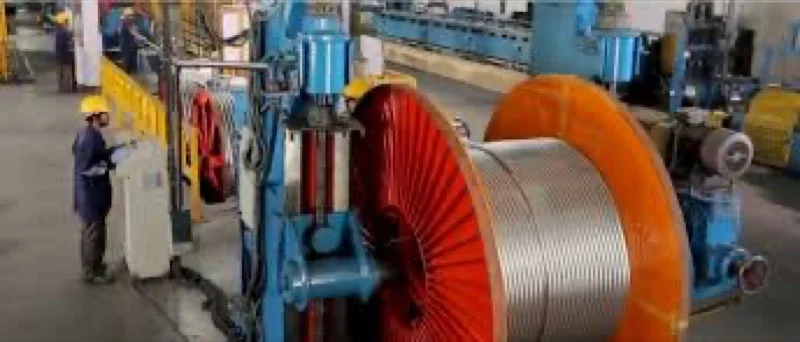 LiveAPAR Industries · Factory · 720 kW / 500 kWh battery
A factory whose process lines keep running through every dip in power.
- <1 ms
- response when the load jumps or the grid dips
- Zero
- gaps in power to the production lines
- End to end
- battery, PCS, controls and installation by one team
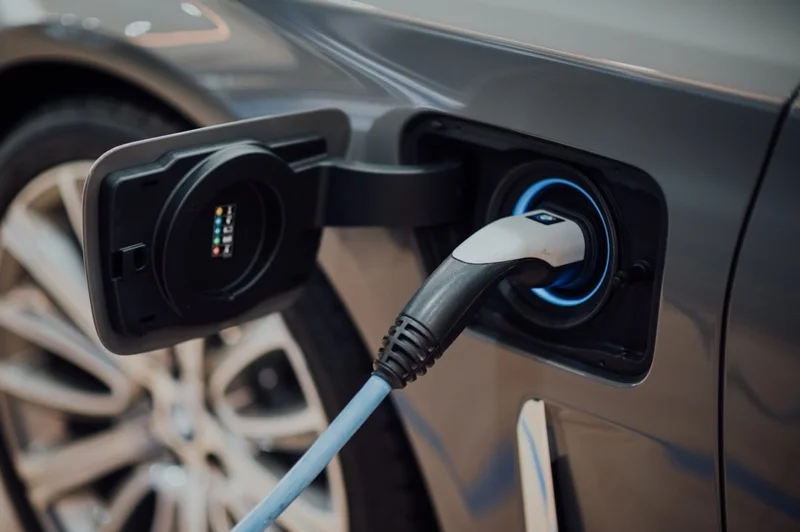 LiveEV charging hub · 260 kW / 580 kWh battery · India
Electric buses and cars keep charging, even when the grid is gone.
- 2.5×
- charging power from the same grid connection
- 1 s
- battery and PCS data, cell by cell
- Grid outage
- buses and cars still charge off the battery
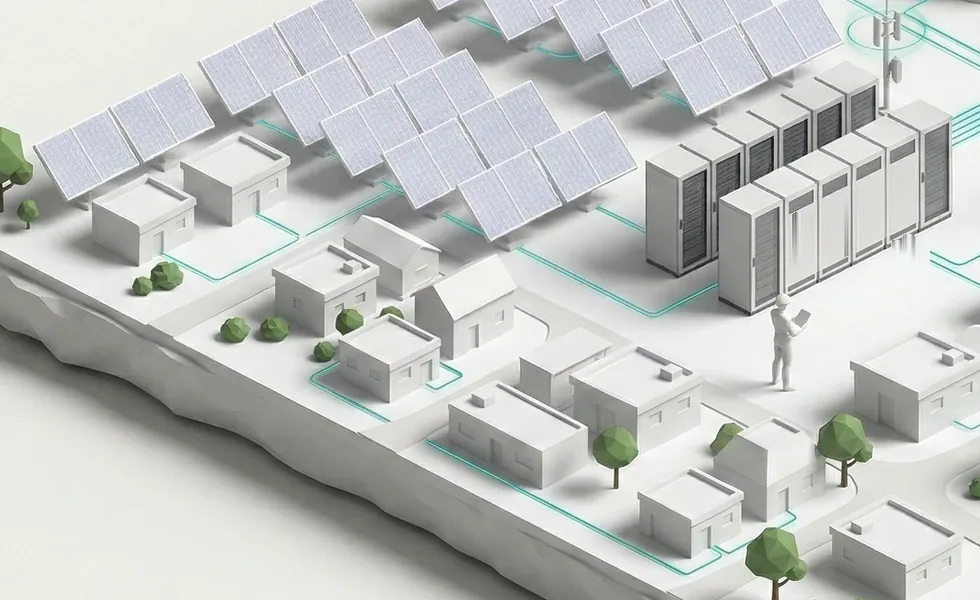 UnderwaySolar + battery micro-grid · Melghat, Maharashtra
A village without a grid. A solar and battery micro-grid that powers it.
- Village
- no grid connection
- Black start
- from standstill, no outside source
- 820
- homes on solar and battery
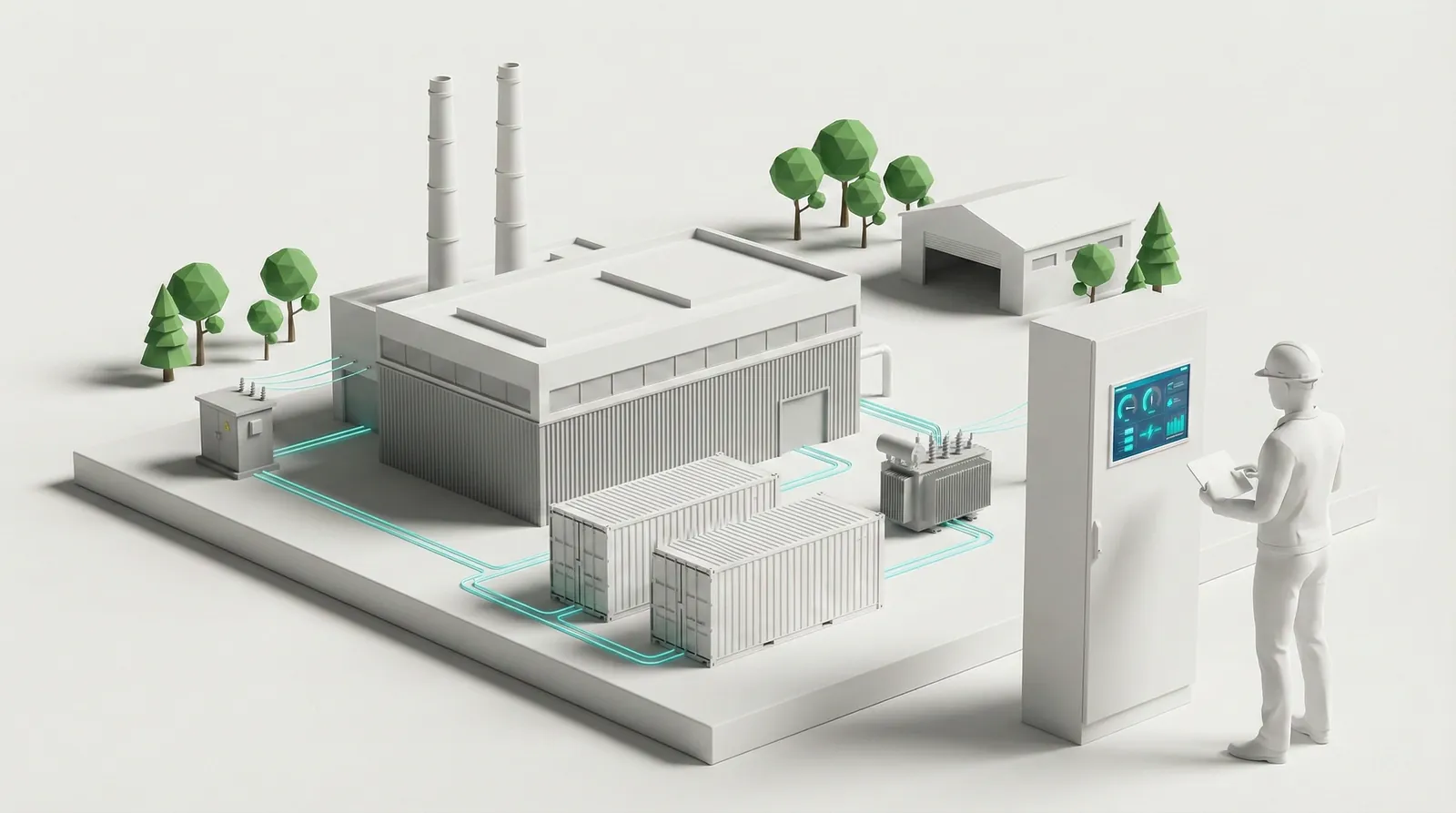 In testingIndustrial battery plant · Pune · 2.5 MW / 10 MWh
Two battery containers, two vendors, two languages. One EMS runs them as one plant.
- 2
- container makes, each with its own BMS protocol
- 1
- PCS and one EMS across both
- Hot-swap
- take a container out for service, plant keeps running
Tell us about your chilling centre
Send what you know. An Ingro engineer gives you free advice on your centre: the battery size, the cost, the payback and the diesel per 1,000 litres of milk, in a form you can take to the board or the owner. If you go ahead, our team takes care of the rest, from site assessment and design to installation, help with the approvals, commissioning and O&M.
What happens next: we reply within one working day, by phone or WhatsApp. No site visit is needed at this stage, and there is nothing to pay.