Power backup for an MRI and diagnostic centre: the helium, the scans and the diesel
Your centre has a 1.5T or 3T MRI, a CT, X-ray and a path lab, probably on two floors of a commercial building in a Tier-2 city. When the grid goes, the CT and the lab stop, patients wait in reception, and somebody checks whether the DG has picked up the MRI's compressor and chiller. This page is for the owner radiologist and the operations head of a chain. It explains what an MRI needs in a cut, what a battery (BESS) can carry and what stays on the scanner's own UPS, what it saves in diesel, how it fits a rented building, and when it is not worth the money.
Reviewed 16 November 2026 by Ingro Energy's project team
The short answer
- In a cut the MRI magnet keeps its field. What it needs is cooling: the cryo compressor, and the chiller that cools it. If they stop and stay stopped, helium boils off, and the worst case is a quench. Philips treats a stopped compressor or chiller as a high-priority alert to be dealt with within four hours. A quench refill was costed at about ₹33 lakh at 2022 helium prices.
- A battery can carry the compressor, the chiller and the technical-room AC through every cut without waiting for the DG, and, if sized for it, keep scanning too. The scanner's own UPS stays as the maker specified.
- On diesel, a DG unit costs about ₹30 and a unit stored from the grid about ₹11. In the worked example, a centre burning 2,000 litres a month saves about ₹12 lakh a year and pays back in about 4.9 to 7.5 years.
- It is not worth it if your building's DG is reliable, shared and fairly billed, or if your centre has no MRI and only short cuts. The calculator shows which side you are on.
What a power cut costs an imaging centre
A hospital loses comfort and some services in a cut. An imaging centre loses its revenue for that hour. Count it in three lines before you think about equipment:
- Scans lost. Take the MRI and CT scans you would have done in the hour of a cut, times your average bill per scan, times the hours of cuts in a month. Add the patients who reschedule and do not come back.
- Helium risk. Not a monthly cost, but the one bill that can wipe out a year's margin on the MRI: a refill and recovery after a quench, plus the days the scanner is down.
- Diesel. Litres from your DG log or, if the building runs the DG, the backup charge on your monthly bill.
Most owners know the third line exactly and the first only roughly. Write all three down; they decide what the battery should carry.
The MRI in a cut: compressor, chiller and magnet
The magnet. A superconducting MRI magnet sits in liquid helium; conventional scanners hold up to about 1,500 litres of it. When the power goes, the magnet does not switch off. It stays at field, because no power is needed to keep the current flowing in its coils. Siemens notes that, unlike CT and X-ray, a resting MRI still draws significant power to keep the helium and the magnet cool.
The cryo compressor and cold head. The compressor drives the cold head, which re-liquefies the helium that warms up. Philips describes the two together as the cryo system, and names a power disconnection as one reason its compressor alert fires. If the environment around the scanner, including its power supply and cooling water, is not kept within the maker's specification, Philips says helium will boil off unnecessarily.
The chiller. The compressor and the gradient coils are cooled by chilled water from an external chiller. A chiller on the normal supply that trips in a cut stops the compressor just as surely as a cut to the compressor itself. Philips rates a non-functioning chiller and a non-functioning cryo compressor as high-criticality alerts, with a required response "as soon as possible within 4 hours".
The quench. If the helium level falls far enough, the magnet can lose superconductivity suddenly and vent a large quantity of helium: a quench. The magnet then has to be refilled and recovered. Siemens put a helium refill after a quench at about ₹33 lakh, at the 2022 peak price of ₹2,200 a litre.
Who keeps the MRI cold, minute by minute
The solid arrow is what carries the load. The dashed arrow is the DG waiting as backup. The scanner's own UPS stays in place either way.
How long your particular magnet can go without its compressor depends on the model, the helium level on the day and the room conditions. Ask your scanner's service engineer for that figure in writing; do not rely on a general number from the internet, including ours.
What goes on the battery, and what stays on the scanner's own UPS
The scanner maker sets the power requirements for the scanner itself, including any UPS for the console and reconstruction computer, and the CT usually has its own UPS too. A building battery does not replace those. It sits a level above them, on the panels the DG carries today.
| Load | Where it belongs |
|---|---|
| MRI console, reconstruction computer, CT's own UPS | Stays on the UPS the maker specified |
| MRI cryo compressor | Battery, so it never waits for the DG |
| MRI chiller and its pumps | Battery, on the same supply as the compressor |
| Technical-room and magnet-room AC | Battery: Philips alerts on room temperature and humidity too |
| Path lab analysers (with their own small UPS), lab fridges | Battery behind their UPS, so the UPS is not drained in a long cut |
| Reception, billing, PACS and network | Battery, or their existing UPS |
| Waiting-area and office AC | Battery if sized for it, otherwise DG or off |
WHO's laboratory guidance draws the same line for the lab: a UPS for equipment that must never shut down, a generator for the rest, and fridges and incubators need not be on a UPS because short breaks do not harm them. For how the UPS and essential panels are layered in a full hospital, see our hospitals guide.
Two choices: keep the magnet safe, or keep scanning
Keeping the magnet safe means carrying the compressor, the chiller and the technical-room AC. That is a steady load, round the clock, and it is the part where a failure costs lakhs. A battery for this alone is modest in power (kW) but should hold enough energy (kWh) for your longest normal cut.
Keeping scanning means carrying the MRI and CT while they scan, plus the AC and the lab. Siemens notes that some MRI systems draw peaks as high as 200 kVA in use. That needs a much larger inverter, even if the battery's energy grows less. Most centres decide by comparing the scans lost in a month's cuts with the extra cost of the bigger inverter.
Which of the two suits you is the first question in the free check below. The answer changes the size and price more than anything else on this page.
If the building's DG backs you up
Many centres in commercial buildings do not own a DG. The landlord or maintenance agency runs one for the whole building and bills tenants a rate per DG unit, often read off a separate meter. Three things follow:
- The changeover is not yours. The building's AMF and DG decide when your compressor and chiller get power back, and whether the DG is serviced and fuelled. Ask the agency for its DG log and how long the changeover takes.
- Your load competes. In a long cut, the building may shed tenants or cap each one's backup kW. Find out where the MRI sits in that order.
- The saving lands on your DG bill. If a battery carries your floor through short cuts, you draw fewer DG units and pay less at the building's DG rate, which carries the landlord's costs on top of the diesel. Settle with the landlord how that is metered before you count it.
How tenant metering and DG billing work in commercial buildings is set out in our commercial buildings guide.
Your tariff category, in two states
A unit stored from the grid costs your grid rate divided by the battery's round-trip efficiency, so your category matters. States do not bill diagnostic centres alike:
- Maharashtra: MSEDCL's Public Services (Others) category, LT-X(B), names private hospitals, dispensaries and pathology laboratories, under MERC's 2015 tariff order; a 2019 grievance forum order records a nursing home moved into it from the commercial tariff. Whether a standalone imaging centre is billed here or as commercial depends on the DISCOM's inspection of its activity.
- Rajasthan: private hospitals pay the non-domestic tariff; in 2023 RERC refused the IMA's plea for a special rate. The reported non-domestic energy charge for 2023-24 was ₹7.55 a unit for the first 100 units, rising to ₹8.95 above 500 units, with higher fixed charges.
Your own bill shows your category and rate. Use that rate, with fixed and demand charges spread over your units, rather than the calculator's default, when you look at the figures below.
What it saves in diesel
A DG set makes roughly 3.2 units per litre, so at ₹95 a litre every unit costs about ₹30 in diesel alone. A battery charged from the grid gives back about 85% of what goes in; with grid power at about ₹9 a unit, a battery unit costs about ₹11. An imaging centre's DG is often sized for the MRI's scanning peak and spends the night carrying only the compressor and chiller, lightly loaded, so it makes fewer units per litre than the figure above. That makes the battery look better, not worse.
| Where the unit comes from | Cost per unit |
|---|---|
| DG set (diesel only) | about ₹30 |
| Battery, charged from the grid | about ₹11 |
| Building DG, billed to you by the landlord | the rate on your bill |
Work it out from your DG log
Four numbers from your DG log and diesel bills. If the building runs the DG, work out litres from the DG units on your bill (the assumptions under the calculator give the units per litre). Nothing is sent anywhere until you ask us.
Enter your diesel litres and DG hours to see the figures.
How this is worked out
- A DG set makes about 3.2 units per litre of diesel.
- Grid power costs about ₹9 a unit, and a battery gives back about 85% of what it takes in.
- The battery is sized to carry one normal day's DG running on one charge.
- Installed cost is taken as ₹25,000 to ₹38,000 per kWh for a battery under 250 kWh, and ₹20,000 to ₹30,000 per kWh above that, before GST. This is a working range, not a quote.
- Scans no longer lost, helium risk, DG servicing and a building's DG markup are not counted.
- This is a first estimate. What the battery carries, the MRI's and CT's peaks, the maker's requirements and your real tariff are checked before anyone gives you a price.
Get free advice for your centre
Leave your name and number. We call back with what a battery should carry for your MRI, its size, cost and payback.
Tell us about your centre ↓Worked example: a Tier-2 centre with one MRI and one CT
This is an illustration, not a real centre. It has a 1.5T MRI, a CT, X-ray, a path lab and central AC, and its own DG. While the DG runs it carries about 70 kW on average: the MRI's compressor and chiller all the time, scanning, the lab and the AC in the day. Cuts add up to about 3 hours on a normal day, 10 months a year. That is about 213 units a day from the DG and about 2,000 litres of diesel a month, roughly ₹1.9 lakh.
- Battery to carry a normal day's cuts on one charge: about 240 kWh.
- Diesel saved: about ₹1.2 lakh a month in the cut months, about ₹12 lakh a year.
- Installed cost: about ₹60 lakh to ₹91 lakh before GST.
- Payback on diesel alone: about 4.9 to 7.5 years.
The example counts diesel only. It does not count scans that are no longer lost in the minutes before the DG takes load, or the helium risk taken off the table. If either matters to you, it shortens the payback, but count it from your own records, not from a vendor's estimate.
Space in a commercial building: landlord, structure and fire NOC
A battery for a centre this size is one or two cabinets. In a rented building, three people have to agree before anything is ordered:
- The landlord. A lease that never mentioned batteries may still restrict changes to the electrical room, the terrace or the parking. Siemens notes that landlords already refuse quench pipes in some rented MRI sites; get the battery's location written into a letter or a lease addendum.
- The structure. A cabinet is heavy. On a terrace or an upper floor, the building's structural engineer should confirm the slab takes the load.
- The fire NOC holder, usually the building owner or society. The cabinet should be LFP with its own battery management, cooling and fire detection, away from staircases, exits and the MRI's quench pipe outlet, and placed where the fire brigade can reach it. Settle it with whoever holds the building's fire NOC.
Ground-floor parking or a corner of the DG yard is often easier than a terrace. Keep the cabinet out of the sun and away from the chiller's hot air, because heat shortens battery life.
When a battery is not worth it for an imaging centre
- Your building's DG is reliable, picks up fast, gives the MRI priority, and bills a fair rate. There is little to save and little risk to remove.
- You have no MRI. A CT, X-ray and lab with short, rare cuts are usually better served by correctly sized UPS units on each machine.
- Your MRI has a sealed, low-helium magnet. Siemens's DryCool design, for example, holds 0.7 litres of helium sealed for life, so the quench-refill risk this page describes largely falls away; the case rests on diesel and scans alone.
- Your cuts last most of the day. The battery cannot recharge and the DG runs anyway; keep the battery for the compressor and chiller only, or not at all.
- The landlord will not agree to any location, or the only space is next to an exit. Solve that first.
In any of these cases we will say so, and what we would do instead.
What a turnkey project covers for you
You do not need to find a battery maker, an inverter supplier, an electrician and a maintenance firm and make them work around your MRI. Ingro takes the project end to end: it works out from your DG log and your scanner maker's requirements what the battery should carry, designs it around the compressor, the chiller and, if you want, the scanning peak, supplies the battery from any maker with Ingro EMS, helps you with the landlord and fire paperwork, installs and commissions it without putting the magnet at risk, and maintains it.
It starts with the form below: tell us about the centre, and an engineer comes back with free advice on your case. If a UPS or your building's DG is the better answer, we say so.
What to ask before you sign with anyone
- Does it carry the cryo compressor, the chiller and the technical-room AC with no break at all, and for how many hours? In writing.
- Have you checked the design against our MRI maker's site requirements, and will our scanner service engineer be present at commissioning?
- Can it carry the MRI and CT while they scan, or only the cooling? What inverter power is that based on?
- How is it connected without leaving the compressor and chiller unpowered on the day of installation?
- What happens if the battery system itself faults: does the compressor go straight back to the grid or the DG?
- Where will it stand, and have the landlord, the structural engineer and the building's fire NOC holder agreed?
- Who comes when it alarms at night, and how fast?
- Does the price include the panel changes, cabling, civil work and approvals, or only the battery?
Read next, and see the equipment
- Hospitals: UPS, essential panels and the DG gap
- Commercial buildings: tenants, sub-meters and DG billing
- What a battery system costs in India
- Battery or diesel generator: how they compare
- Online UPS systems sold in India
- BESS cabinets, with their specifications
- Turnkey battery systems: design to O&M from one team
Questions imaging centre owners ask
Does the MRI magnet switch off in a power cut?
No. A superconducting magnet stays at field without power. What stops is its cooling: the cryo compressor and the chiller. If they stay off long enough, helium boils off, and a very low level risks a quench.
How long can the compressor be off before we lose helium?
It depends on the magnet, the helium level that day and the room. Philips treats a stopped compressor or chiller as a high-priority alert needing a response within four hours. Ask your scanner's service engineer for your model's figure in writing.
Can a battery replace the MRI's UPS?
No. The UPS your scanner maker specified for the console and computers stays. The battery carries the compressor, chiller, room AC and the rest of the centre, and keeps the UPS from being drained in a long cut.
Our building's DG covers us. Do we still need a battery?
Only if that DG is slow, unreliable, sheds your load in long cuts, or bills a high rate per unit. If it is fast, fuelled and fairly billed, a battery adds little.
Can the battery keep the MRI and CT scanning through a cut?
Yes, if it is sized for their peaks, which needs a much larger inverter than cooling alone. Compare that extra cost with the scans you lose in a month's cuts.
Do we need the landlord's permission?
In practice, yes. Agree the location in writing with the landlord, and the fire arrangements with whoever holds the building's fire NOC, before anything is ordered.
Sources
- Philips, "Information about types of alerts of Philips e-Alert" (March 2025): chiller, cryo compressor, coldhead, helium level, magnet field and mains power alerts, with criticality and response times
- Siemens Healthineers, MAGNETOM Free.Star white paper (India): up to 1,500 litres of helium, ₹2,200 a litre in 2022 and about ₹33 lakh for a refill after a quench, resting MRI power, peaks up to 200 kVA, landlords and quench pipes, 0.7-litre sealed DryCool magnet
- WHO Laboratory Quality Stepwise Implementation tool, "Ensure uninterrupted supply of electricity": generator for the lab, UPS for equipment that must never shut down
- MSEDCL Consumer Grievance Redressal Forum, Bhandup, Case 252 of 2018 (order of 14 Nov 2019): LT-X(B) Public Services (Others) applies to private hospitals, dispensaries and pathology laboratories
- Saur Energy (18 July 2023): RERC declines lower tariffs for private hospitals in Rajasthan; billed as non-domestic
Sites that have benefited from battery storage
Different sites, same idea: use more of your own renewable power, cut the electricity bill, and keep running when the grid cannot keep up.
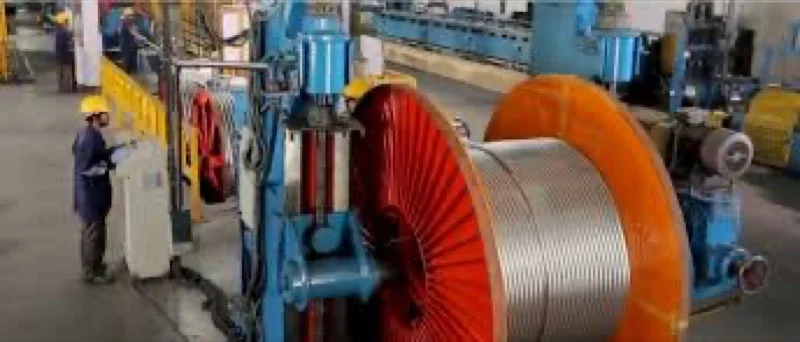 LiveAPAR Industries · Factory · 720 kW / 500 kWh battery
A factory whose process lines keep running through every dip in power.
- <1 ms
- response when the load jumps or the grid dips
- Zero
- gaps in power to the production lines
- End to end
- battery, PCS, controls and installation by one team
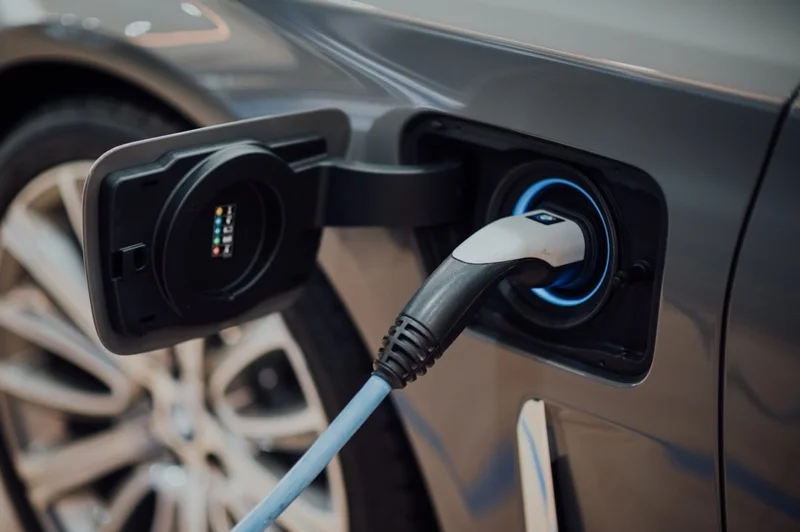 LiveEV charging hub · 260 kW / 580 kWh battery · India
Electric buses and cars keep charging, even when the grid is gone.
- 2.5×
- charging power from the same grid connection
- 1 s
- battery and PCS data, cell by cell
- Grid outage
- buses and cars still charge off the battery
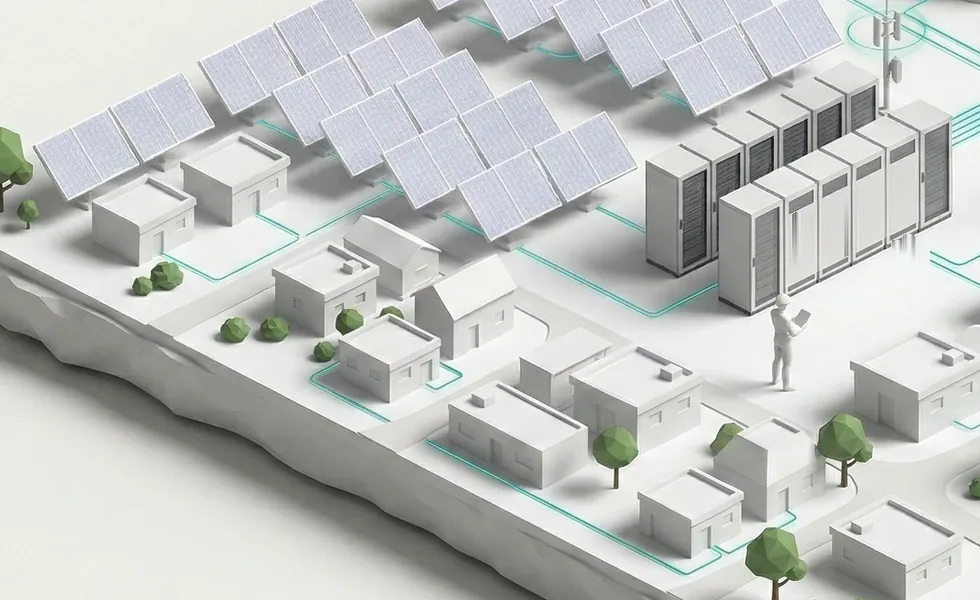 UnderwaySolar + battery micro-grid · Melghat, Maharashtra
A village without a grid. A solar and battery micro-grid that powers it.
- Village
- no grid connection
- Black start
- from standstill, no outside source
- 820
- homes on solar and battery
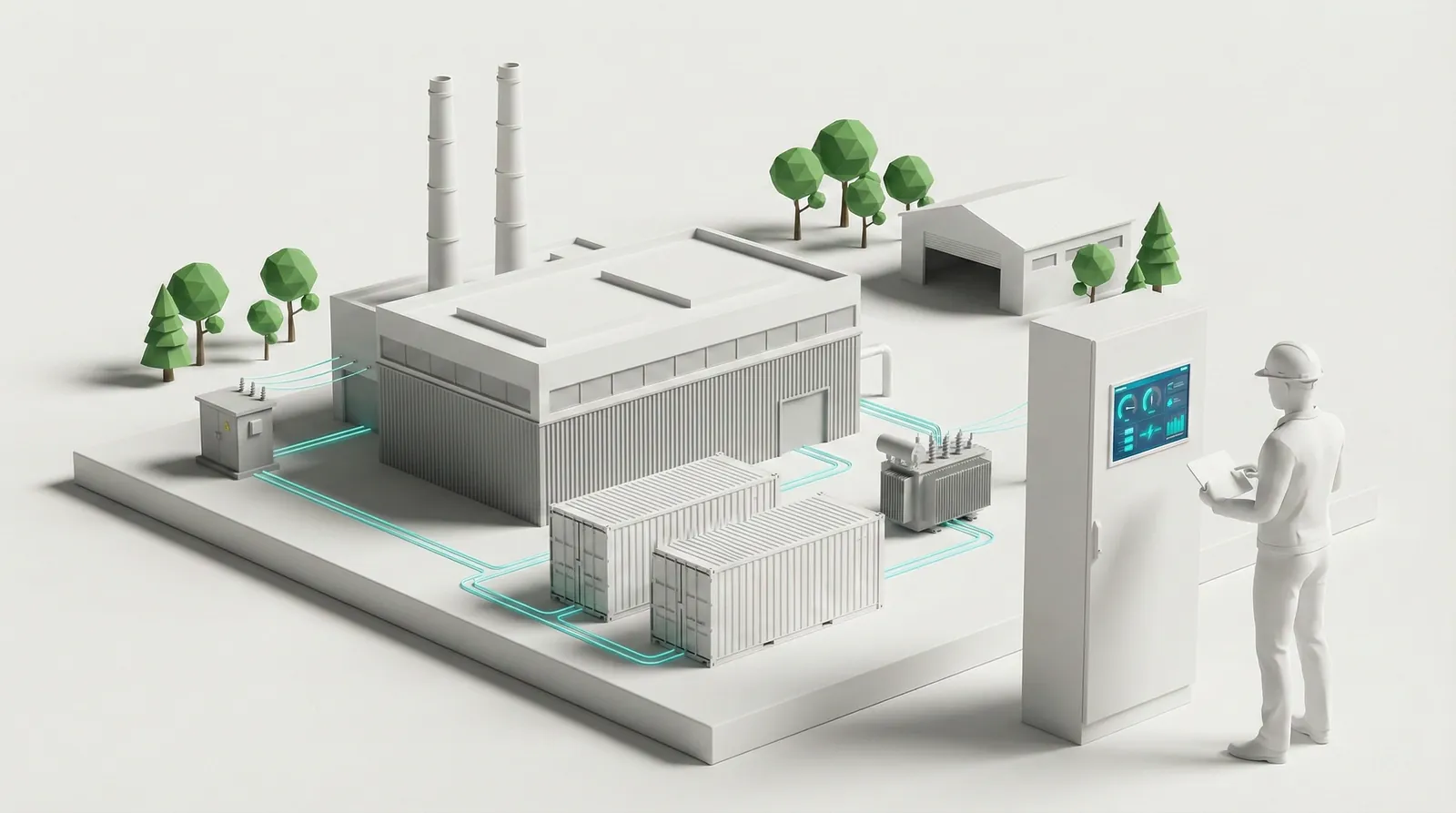 In testingIndustrial battery plant · Pune · 2.5 MW / 10 MWh
Two battery containers, two vendors, two languages. One EMS runs them as one plant.
- 2
- container makes, each with its own BMS protocol
- 1
- PCS and one EMS across both
- Hot-swap
- take a container out for service, plant keeps running
Tell us about your centre
Send what you know. An Ingro engineer gives you free advice on your centre: what the battery should carry for the MRI and the rest, its size, the cost and the payback. If you go ahead, our team takes care of the rest, from design and equipment from any maker to installation, help with the approvals, commissioning, Ingro EMS and O&M.
What happens next: we reply within one working day, by phone or WhatsApp. No site visit is needed at this stage, and there is nothing to pay.