Your hospital has rooftop solar, so why does it stop in every power cut?
You put 100 to 500 kWp of panels on the roof or over the car park, and the bill came down. Then the administrator noticed two things. In a grid cut the solar app reads zero, even at noon, while the DG burns diesel. And when the DG runs, the solar is switched off or held back. This page is for the owner-doctor, the managing director or the trust board of a 50 to 300 bed private or trust hospital, with the administrator and the maintenance engineer. It explains why both happen, what your state does with the solar you export, what a battery changes, and when it is not worth the money.
Reviewed 16 November 2026 by Ingro Energy's project team
The short answer
- Your solar stops in a cut because the rules require it to. Every grid-connected plant must disconnect when the grid fails, so it cannot feed a line someone is repairing. It is a safety feature, not a fault.
- A battery whose inverter can hold the hospital's own supply lets the solar keep running through the cut, once the hospital is cut off from the outside grid. Each solar unit in that hour is a DG unit not made, worth about ₹30 in diesel.
- Storing solar that would otherwise be wasted is worth about ₹7.7 a unit at a grid rate of ₹9. A hospital uses almost all its solar on weekdays, so that alone rarely pays: in the worked example below, Sunday and holiday surplus on its own gives a payback of 49 to 74 years.
- The case for a battery at a hospital with solar rests on daytime cuts and diesel. If your cuts are short and rare and your solar is on full net metering, the battery has little to do; read the main hospitals guide for the DG side instead.
Why your solar reads zero in a cut
The Central Electricity Authority's connectivity standards for distributed generation (2013, amended 2019) require every plant running in parallel with the grid to sense when the grid has gone, stop energising it within two seconds, and not reconnect until voltage and frequency have been back and stable for at least sixty seconds (regulation 11(6)). This is anti-islanding. State rules repeat it: Rajasthan's 2021 regulations name the IEC 62116 test for it and make the consumer responsible for any accident caused by back-feeding when the grid is off.
So the moment the grid fails, your solar inverters see no grid and stop. The DG starts and takes the essential panels, and the solar inverters do not treat the DG as a grid they may join unless they have been set up for it. Most hospitals then find the DG carrying the load at noon under a roof full of idle panels.
It is also why the solar comes back a minute or more after the grid returns, not at once. That is the sixty-second wait in the rule.
Do not ask anyone to disable the anti-islanding protection. It protects the DISCOM's line staff, and it is a condition of your connection. The legal way to keep the solar running is to cut the hospital off from the grid first and give the solar a local supply to follow, which is what a grid-forming battery does.
Solar and the DG: why the plant is switched off when the DG runs
A diesel set should run at no less than about 30% of its rating. Lightly loaded, it burns more fuel per unit and wears faster. If the solar makes more than the load while only the DG is running, the extra power has nowhere to go and flows back into the DG, which can damage it (SMA, 2014). The simple answer most installers use is an interlock: DG on, solar off. Some fit a zero-export or PV-DG controller that holds the solar back so the DG never drops below its minimum.
A hospital's essential board at night or on a Sunday can be a light load for a DG sized for the whole building, so this curtailment bites hardest exactly when the DG is already inefficient.
A battery changes the arrangement. Its inverter (the PCS) holds the hospital's voltage and frequency, the solar follows it at full output, and the battery absorbs any surplus and covers any shortfall. The DG stays off for a short cut, and for a long one starts only when the battery runs low, then runs well loaded. This is a design decision on your single-line diagram, not a setting on the existing inverters.
What happens in the seconds after a cut, which panels the DG carries, and why the UPS stays as it is are covered in our main hospitals guide. This page only adds what changes because you have solar.
Which tariff your hospital pays, in three states
A stored unit of solar is worth what you would otherwise pay for a grid unit, so your tariff category matters. States do not treat hospitals alike:
- Maharashtra: hospitals are billed under Public Services, not commercial. MSEDCL has put private hospitals, dispensaries, pathology labs and nursing homes in the Public Services (Others) sub-category since 2012; a 2019 grievance forum order records a nursing home moved from the commercial LT-II tariff to LT-X(B). For Tata Power's Mumbai supply, MERC merged the government and other Public Services categories into one from April 2025.
- Karnataka: there are separate LT and HT categories for private hospitals and educational institutions. KERC cut their energy charges for 2024-25 (50 paise a unit at LT, 40 paise at HT), and in its March 2025 order cut HT hospitals and educational institutions by a further 90 paise a unit.
- Rajasthan: private hospitals pay the non-domestic tariff. In 2023 RERC rejected the IMA's plea for a special tariff for private hospitals; the reported non-domestic rate for 2023-24 was ₹7.55 a unit for the first 100 units, rising to ₹8.95 above 500 units, with higher fixed charges.
Your own bill shows your category and your rate per unit. Use that rate, including fixed and demand charges spread over your units, in the calculator below, not the default.
What happens to the solar you export
Under ordinary net metering, units you export on a Sunday, when the OPD and offices are shut, are set off against units you import later in the billing period. If your hospital imports more than it exports over the month, nothing is lost and a battery adds nothing on that score. The problems come from rules that limit the set-off:
| State and year | Rule | What it means for a hospital |
|---|---|---|
| Rajasthan, 2021 | For consumers other than domestic, net surplus left at the end of the billing period lapses with no payment. | Matters only if a month's exports exceed imports, which is rare for a hospital; check your bill |
| Maharashtra, 2019 | Net-metered surplus is carried forward and the year-end balance bought at the Commission's Generic Tariff; solar with storage is allowed if the system cannot feed the grid when it is down, with automatic and manual isolation. | The isolation condition is exactly what lets solar run in a cut with a battery |
| Maharashtra, 2025 tariff order | For C&I rooftop solar on ToD billing, units banked in solar hours (9 am to 5 pm) can be drawn back only in solar hours. | Noon surplus cannot cover the ward and ICU load after sunset through the bill. Check whether your Public Services connection is on ToD billing |
| Gujarat, 2026 | Non-residential net metering: the set-off is capped at 30% of the units imported in each billing cycle, with banking charges; the excess lapses. | A large plant against a hospital's load can hit the cap; units that lapse are worth the full ₹7.7 when stored |
Many hospital plants were connected behind the meter, with zero export, because the net-metering application stalled or the plant was larger than the limit allowed. If yours is one, any unused solar is simply curtailed and a stored unit is worth the full ₹7.7.
What a stored solar unit is worth for a hospital
A hospital's load is unusual among solar sites: it never stops. Wards, ICU air handling, labs and lifts run at night, and the evening is often heavier than the afternoon. So on weekdays nearly every solar unit is used as it is made, and the surplus comes mainly on Sundays and holidays, when the OPD, offices and some theatres are shut.
A battery returns about 85% of what goes in, so at ₹9 a grid unit each stored solar unit saves about ₹7.7, less any export credit it would have earned. A battery filled only on Sundays and holidays earns on five or six days a month, which is too few to pay for it.
The bigger number is diesel. A unit from your DG costs about ₹30 in diesel alone, at ₹95 a litre and about 3.2 units a litre. Every solar unit that keeps flowing during a daytime cut instead of going dark replaces one of those. That is worth several times a stored Sunday unit.
| Where the solar unit goes | What it is worth |
|---|---|
| Used as it is made, on a weekday | Your full grid rate, already in your bill savings |
| Exported under net metering, set off within the month | Close to your grid rate; a battery adds little |
| Curtailed on zero export, or lapsing (Sundays, holidays) | about ₹7.7 if stored |
| Lost in a daytime cut, while the DG runs | about ₹30 in diesel, if a battery keeps the solar running |
The calculator below counts only the third row. It does not count the fourth, the diesel saved by solar running through cuts, which for most hospitals with solar is the larger part. The worked example shows both, separately.
Work out the stored-solar part
Five numbers from your solar app and your bill. This counts only solar a battery could store; diesel saved in cuts is extra (see the worked example). Nothing is sent anywhere until you ask us to check it.
Enter your plant size and the share of solar going unused to see the figures.
How this is worked out
- Solar makes about 4.25 units per kWp on an average day. Monsoon and cloudy days make less.
- The share you type is the surplus on a surplus day, and only the surplus days you type are counted.
- The battery is sized to hold that surplus in one charge, using about 90% of its rated kWh.
- A battery gives back about 85% of what it takes in. Each unit it gives back saves the grid rate you typed; the export credit you typed is taken off for every unit no longer exported.
- Installed cost is taken as ₹25,000 to ₹38,000 per kWh for a battery under 250 kWh, and ₹20,000 to ₹30,000 per kWh above that, before GST. This is a working range, not a quote.
- Not counted: diesel saved when solar keeps running through cuts, DG servicing, demand charges, charging from the grid at night, and capacity fading over the years.
- This is a first estimate. Your load pattern, export rules, tariff category and cut hours are checked before anyone gives you a price.
Get your hospital's figures checked
Leave your name and number. We call back with what your solar and DG could save with a battery.
Tell us about your hospital and its solar ↓Worked example: a 250 kWp hospital plant on zero export
An illustration, not a real hospital. It has 250 kWp on the roof and car park, connected behind the meter with zero export, and grid power at ₹9 a unit. On weekdays the hospital uses all its solar. On Sundays and holidays, taken as 5 days a month, about 35% of the day's solar is curtailed. So in the calculator the "working days" are those 5 surplus days, not the 30 days the hospital is open: type the same numbers above and you get the same result.
Stored solar alone: the plant makes about 1,063 units on an average day, and about 372 of them are curtailed on a surplus day. A 420 kWh battery holds that. It saves about ₹1.7 lakh a year, costs about ₹84 lakh to ₹1.26 crore installed, and on stored solar alone pays back in 49 to 74 years. On that basis, do not buy it.
Now add the cuts, which the calculator does not count. Say the grid fails for 1.5 hours in solar hours on an average day, 8 months a year, and the plant would give about 140 kW in those hours. That is about 210 units a day the DG makes today and the solar could make instead, about 1,970 litres of diesel a month, or ₹1.9 lakh a month and about ₹15 lakh a year.
Put the two together and the same battery is set against about ₹17 lakh a year, a payback of about 5.0 to 7.6 years. The diesel figure assumes the battery's inverter is designed to carry the hospital with the solar through each cut; it does not count DG servicing saved or grid charging at night.
Your cut hours in the daytime decide this, so check them in the DG log book before anything else. With few daytime cuts the diesel line shrinks and the example falls back towards the stored-solar payback.
What the battery must not carry
The UPS on OT lights and equipment, ICU and NICU, imaging and servers stays exactly as your electrical consultant specified, and the building battery does not replace it. The Indian Public Health Standards ask for a properly rated UPS on sensitive equipment and, separately, backup from another source such as a DG or solar. A solar-and-battery system is the second kind, never the first. Our main hospitals guide sets out which panels a battery can and cannot carry.
When a battery is not worth it for a hospital with solar
- You are on full net metering, the credit is close to your own rate and the month's exports never exceed imports, and your cuts are short and rare. The battery's solar value is small; any case rests on the DG gap, which the main hospitals guide covers.
- Your cuts mostly come at night. The solar cannot help then, so the diesel line in the example disappears.
- Your roof is small next to your load. If solar never exceeds the daytime load, there is no surplus to store and only the cut-hour value remains.
- Someone proposes putting OT, ICU or imaging loads on the building battery in place of their UPS. Do not.
- There is no place for the battery cabinet that the fire authority will accept, away from wards, oxygen storage and escape routes. Settle that first.
In these cases the cheaper steps come first: apply for net metering if you are behind the meter and qualify, move laundry, water pumping and the like into solar hours, and see the main hospitals guide for the DG side.
Who has to approve it
- The owner or managing director, or for a charitable hospital the trust board, approves the spend. Put the cut hours from the DG log, the diesel bills and the solar app's day graph in front of them, not a brochure figure.
- The DISCOM, for any change to how your solar is connected: adding storage, changing the export arrangement or the meter. Ask the vendor who files it and what happens to your net-metering or behind-the-meter approval.
- The state electrical inspectorate, for the new equipment and the changeover and isolation arrangement, as your state's procedure requires.
- The fire authority that issued your fire NOC, for where the battery stands, before anything is ordered. Your accreditation records (for example NABH's facility management chapter) should list the battery as an alternate source with its tests.
Cost and battery life, briefly
As a working range, an installed system costs about ₹20,000 to ₹35,000 per kWh of battery before GST; the battery cost guide explains what is in a turnkey price. For a hospital with solar the PCS and the changeover and isolation panel matter as much as the battery, because they are what let the solar run in a cut. Compare warranties in years and cycles, with the capacity promised at the end.
Turnkey: one team from the first check to the last service visit
You do not need to find a battery maker, an inverter supplier, an electrician and a maintenance firm and make them agree. Ingro takes the hospital's project end to end: it works out from your DG log, solar data and single-line diagram which panels the battery and solar should carry through a cut, designs it so the UPS and clinical supplies stay as they are, supplies the battery from any maker with Ingro EMS, installs and commissions it, carries out the civil and electrical works, helps you with the DISCOM and electrical inspector approvals, and maintains it for the long term.
It starts with the form below: tell us about the hospital, and an engineer comes back with free advice on your case. If a battery is not worth it for you, we say so.
What to ask before you sign
- Will my existing solar inverters keep running in a grid cut and with the DG on, and is that in writing with the inverter make and model named?
- How is the hospital isolated from the grid in a cut, automatically and manually, so the anti-islanding rule is still met?
- How does the battery work with my DG, its minimum load and its changeover, and what happens if the battery system itself faults?
- What happens to my net-metering or behind-the-meter approval, and who files the paperwork with the DISCOM?
- Is the payback worked out from my daytime cut hours and my real tariff category, or from a default rate?
- Which panels does it carry, and can you confirm in writing that no UPS load moves to it?
- Where will it stand, and has the fire authority that issued our NOC seen the location?
- Who comes when it alarms at night, and how fast?
Read next, and see the equipment
- Hospitals: the UPS, essential panels, the DG gap, diesel rules and where a battery can stand
- Factory with rooftop solar: zero export and lapsed units in detail
- Battery or diesel generator: how they compare
- What a battery system costs in India
- PCS (battery inverters) that can form a local grid
- Solar inverters sold in India
- BESS cabinets, with their specifications
- Turnkey battery systems: design to O&M from one team
Questions hospital owners with solar ask
Our solar shows zero in every power cut. Is the plant faulty?
No. CEA's connectivity standards require a grid-connected plant to stop within two seconds of the grid failing and to wait at least sixty seconds after it returns. That protects the DISCOM's line staff. Keeping the solar running needs a battery that holds the hospital's own supply after it is cut off from the grid.
Can't the installer just let the solar run with the DG?
Partly. A PV-DG controller can let some solar run while keeping the DG above its minimum load, typically about 30% of its rating. Full solar output with the DG needs a battery to absorb the surplus, or the power flows back into the DG.
We are on net metering. Do we need a battery for Sunday surplus?
Usually not. Under ordinary net metering Sunday exports are set off against later imports in the billing period. It matters if your state caps or limits the set-off (Gujarat's 30% cap from 2026, Maharashtra's solar-hours banking for ToD consumers) or if you are on zero export.
Can the battery replace the UPS on our OT and ICU?
No. Those UPS units stay as your electrical consultant specified. The battery works alongside the DG on the essential panels; see our main hospitals guide.
Is a hospital billed at the commercial rate?
It depends on the state. Maharashtra bills hospitals under Public Services, Karnataka has its own private-hospital categories, and Rajasthan bills private hospitals as non-domestic. Your bill shows your category; use its rate in the calculator.
How big a battery does a hospital with 250 kWp of solar need?
For running through cuts, it is sized to the hospital's essential load and the solar's output in those hours, more than to storing surplus. In the worked example, holding a Sunday's surplus needs about 420 kWh; the cut-hour design is checked against your DG log and single-line diagram.
Sources
- CEA (Technical Standards for Connectivity of the Distributed Generation Resources) Regulations, 2013, as amended 2019: regulation 11(6), anti-islanding and no re-connection for 60 seconds
- CBIP summary of the RERC (Grid Interactive Distributed Renewable Energy Generating Systems) Regulations, 2021, Rajasthan: storage allowed, IEC 62116 islanding test, non-domestic surplus lapses
- Saur Energy (18 July 2023): RERC declines lower tariffs for private hospitals; billed as non-domestic
- MSEDCL Consumer Grievance Redressal Forum, Bhandup, Case 252 of 2018 (order of 14 Nov 2019): nursing home moved from LT-II to LT-X(B) Public Services; applicability of the category
- MERC press note, Tata Power (Mumbai) tariff from 1 April 2025, Case 210 of 2024: Public Services (Govt.) and (Others) merged into one category
- MERC (Grid Interactive Rooftop Renewable Energy Generating Systems) Regulations, 2019, Maharashtra
- Saur Energy (1 July 2025): Maharashtra tariff order, units banked in solar hours drawn back only in solar hours (C&I on ToD billing)
- KERC press note, revision of electricity tariff for FY2024-25: separate LT and HT categories for private hospitals and educational institutions
- The Week / PTI (March 2025): KERC tariff order, energy charges for HT hospitals and educational institutions cut by 90 paise a unit
- SolarQuarter (2 November 2026): GERC 2026 distributed RE regulations, non-residential net metering capped at 30% of imports, excess lapses
- SMA, "Off-grid 2.0" (SMA Sunny article, 2014): minimum DG load and why solar is curtailed when a DG runs
- NABH 6th edition, Facility Management and Safety chapter: alternate sources of electricity and their testing (hospital accreditation training notes)
- Ministry of Health and Family Welfare, Indian Public Health Standards 2022, Volume I: Sub District and District Hospitals (power supply)
Sites that have benefited from battery storage
Different sites, same idea: use more of your own renewable power, cut the electricity bill, and keep running when the grid cannot keep up.
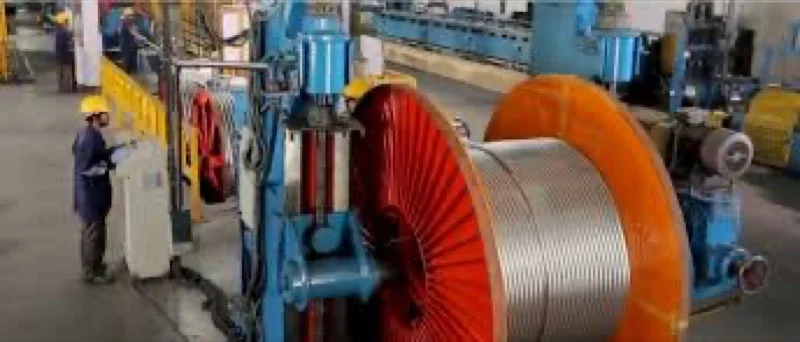 LiveAPAR Industries · Factory · 720 kW / 500 kWh battery
A factory whose process lines keep running through every dip in power.
- <1 ms
- response when the load jumps or the grid dips
- Zero
- gaps in power to the production lines
- End to end
- battery, PCS, controls and installation by one team
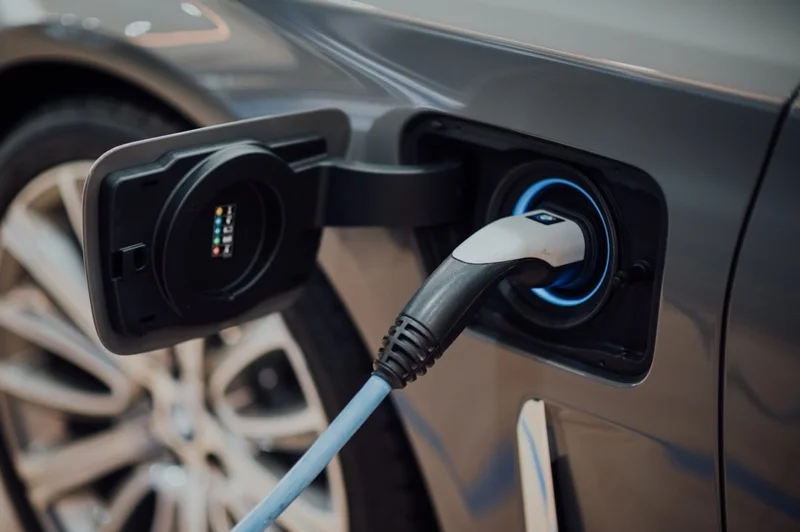 LiveEV charging hub · 260 kW / 580 kWh battery · India
Electric buses and cars keep charging, even when the grid is gone.
- 2.5×
- charging power from the same grid connection
- 1 s
- battery and PCS data, cell by cell
- Grid outage
- buses and cars still charge off the battery
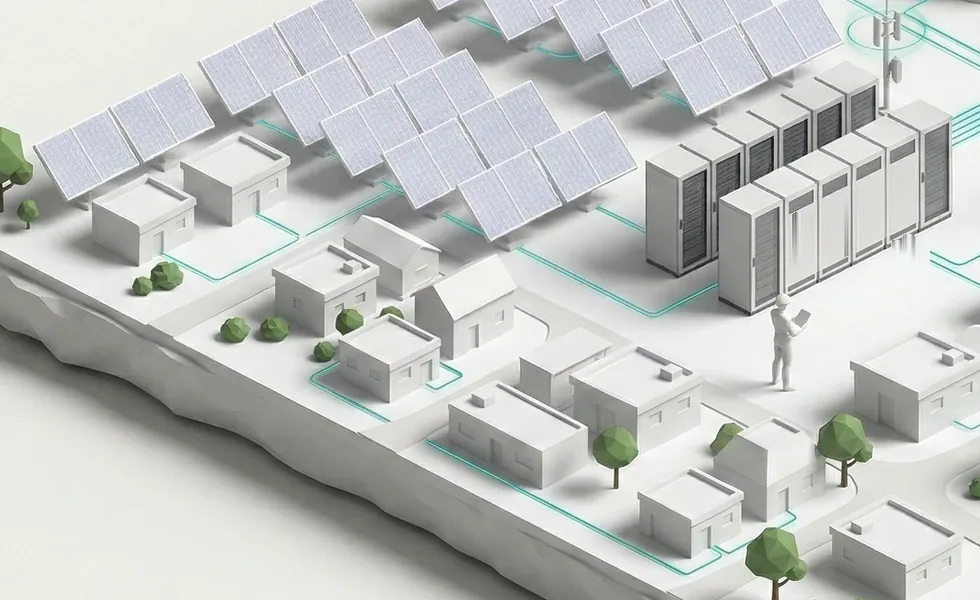 UnderwaySolar + battery micro-grid · Melghat, Maharashtra
A village without a grid. A solar and battery micro-grid that powers it.
- Village
- no grid connection
- Black start
- from standstill, no outside source
- 820
- homes on solar and battery
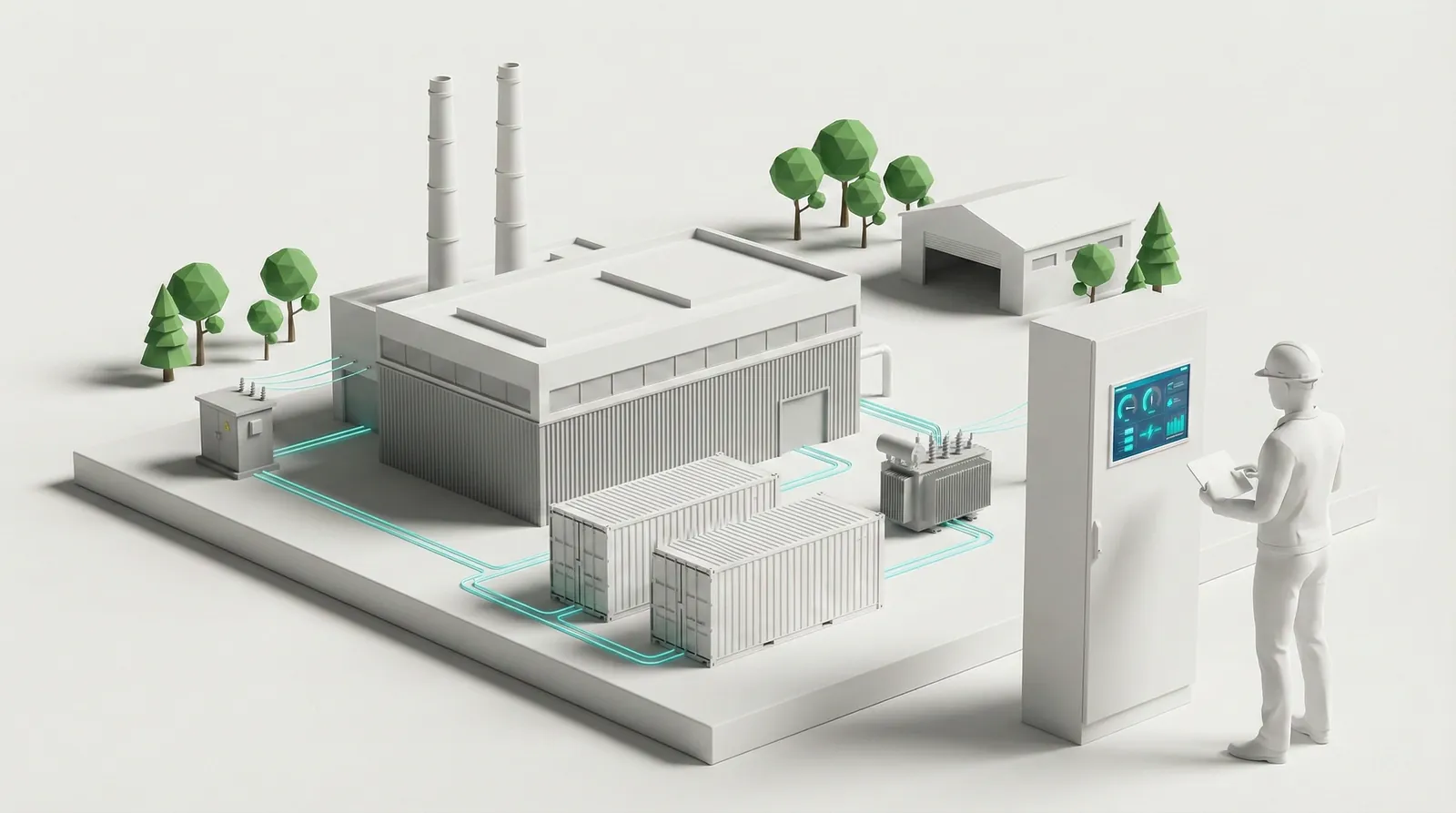 In testingIndustrial battery plant · Pune · 2.5 MW / 10 MWh
Two battery containers, two vendors, two languages. One EMS runs them as one plant.
- 2
- container makes, each with its own BMS protocol
- 1
- PCS and one EMS across both
- Hot-swap
- take a container out for service, plant keeps running
Tell us about your hospital and its solar
Send what you know. An Ingro engineer gives you free advice on your hospital: whether your solar can run through cuts, what that saves in diesel, what stored solar adds, and the size, cost and payback. If you go ahead, our team takes care of the rest, from site assessment and design to installation, help with the approvals, commissioning and O&M.
What happens next: we reply within one working day, by phone or WhatsApp. No site visit is needed at this stage, and there is nothing to pay.