More rooftop solar than your sanctioned load in Karnataka: what KERC's 2026 rule allows, and what the battery must do
You run a mall, an office or tech park block, or a hotel in Bengaluru, Mysuru or Hubballi on an HT commercial connection. The roof and the car-park canopies could take more solar than your contract demand, the CFO wants the energy bill down, and the ESG report wants more renewable units. KERC's new regulations, notified in August 2026, cap net metering and net billing at the sanctioned load, and let you go beyond it behind the meter only if storage, a DG or a grid-forming inverter gives the solar inverters their voltage reference. This page says what the rule allows in plain words, works through one building's numbers, lists the approval steps, and says when staying inside the cap is the better answer.
Reviewed 16 November 2026 by Ingro Energy's project team
The short answer
- Under the KERC DSPV Regulations, 2026, net metering is capped at your sanctioned load or contract demand or 1,000 kW, whichever is lower; net billing, gross metering and behind the meter are capped at the sanctioned load. Beyond that, only behind the meter is allowed, and only with a battery, a DG or a grid-forming inverter setting the voltage reference.
- Behind the meter, nothing may flow out: a reverse power relay is compulsory and any unit that leaks out is neither paid for nor adjusted, and can draw a penalty. So every unit the building cannot use at midday must be stored or is lost. The battery's job is to hold that surplus for the afternoon and evening.
- In the worked example, a mall with an 800 kVA contract demand adds 400 kWp beyond it. The battery needed is about 1,140 kWh. On stored units alone it pays back in 11 to 16 years; counted together with the extra panels' directly used units, 8.8 to 12 years.
- If your plant fits inside the cap and the building uses more units in a month than the solar makes, net metering already does most of a battery's work for free. Do that first.
What KERC 2026 allows, in plain words
The KERC (Grid Interactive Distributed Solar Photovoltaic (DSPV) Plants) Regulations, 2026 replaced the 2016 rooftop regulations from 24 August 2026. They let every consumer category choose how its solar is metered, and set a size limit for each choice. Agreements signed before then continue on their own terms.
| How the solar is connected | Largest plant allowed | What happens to surplus units |
|---|---|---|
| Net metering | Sanctioned load or contract demand, or 1,000 kW, whichever is lower | Set off against your consumption in the month, time block by time block; any leftover bought by the ESCOM at the KERC tariff |
| Net billing | Sanctioned load or contract demand | Exported units credited at the KERC tariff, imported units billed at your retail tariff, settled monthly |
| Gross metering | Sanctioned load or contract demand | All generation sold to the ESCOM; you buy your power as usual |
| Behind the meter | Sanctioned load or contract demand, or more with storage, a DG or a grid-forming inverter | Nothing may be exported: a reverse power relay is required, and leaked units are not paid for and can be penalised |
- The extra capacity is allowed only behind the meter, "by installing suitable capacity generator/storage for providing voltage reference to the inverter or by installing suitable inverter which sets its own voltage and frequency reference and operates in islanding mode" (Regulation 4.6.2).
- Hybrid inverters with a battery are allowed under any option, and the stored energy is for your own use (Regulations 3.3 and 15.2).
- You are responsible for making sure battery, DG or backup power does not reach the ESCOM's network when its supply fails (Regulation 9.6).
- You can switch from one metering option to another only once in the plant's life (Regulations 4.1.3, 4.2.4 and 4.6.3).
- These limits are not permanent. Net-metering caps hold until the state's net-metered, VNM and GNM solar together reach 3 GW, and KERC will review whether prosumers need storage after two years or at 3 GW, whichever comes first (Regulations 3.3 and 3.6).
The regulation defines contract demand in kW, kVA or HP, while HT bills state it in kVA. How BESCOM converts your kVA into an allowed plant size, and whether one premises can run part of its solar on net metering and the rest behind the meter, are questions to settle with your ESCOM before you design.
What a solar unit is worth to an HT commercial building in Karnataka
KERC's revised tariff of March 2026 puts HT-2(b) commercial at ₹6.90 a unit in energy charges and ₹390 per kVA a month in demand charges, as reported at the time. BESCOM consumers also pay a true-up of 56 paise a unit on power used from May 2026 to April 2027. Duty and taxes come on top. Read your own category's rates off your bill.
A solar unit the building uses as it is made saves the full energy charge. What a surplus unit earns depends on how the plant is connected:
| How the plant is connected | What a surplus unit earns |
|---|---|
| Net metering | Offsets a unit you would have bought in the same month. Units in excess of a time block's consumption are counted as if injected off-peak. Only what is left after all that is bought at the KERC tariff |
| Net billing | ₹2.34 a unit for non-DCR panels, ₹3.11 for DCR panels (KERC tariff from 25 August 2026 to 30 June 2029) |
| Behind the meter | Nothing. It must be used, stored or curtailed |
So behind the meter the battery is not an add-on. It is what turns the extra panels' midday surplus into units worth the full energy charge, instead of units the controller throws away.
Inside the cap, net metering may be all you need
A mall, office or hotel usually buys far more units in a month than its roof makes. On net metering, the midday surplus is set off against the month's consumption, block by block, and excess in one block is counted against off-peak consumption. For such a building almost every solar unit ends up worth close to the retail rate, without a battery. That is a hard deal for a battery to beat.
Net metering also comes with an ESCOM-signed agreement and fixed timelines. For a plant above 150 kW the ESCOM must acknowledge the application in 3 working days, check feasibility and issue the letter of approval in 10, sign the agreement in 5, and inspect within 5 working days of your work completion report (Regulation 12). The demand charge is still billed in full whatever the solar makes (Regulation 5.1.7).
If your plant fits inside the sanctioned load and your monthly consumption is well above the solar's output, apply for net metering first. A battery can still earn on the demand charge, but that is a different case, covered in our guide for commercial buildings.
Beyond the cap: battery, DG or grid-forming inverter
The extra plant needs something other than the grid to set its voltage and frequency. The rule names three ways. They are not equal for a building that wants solar every day.
| Voltage reference | What it means day to day | Fits a building when |
|---|---|---|
| Battery | The battery's inverter holds the reference and the battery soaks up the midday surplus, giving it back in the afternoon and evening | The building runs into the evening: malls, hotels, offices with late shifts |
| DG set | The DG must run, at least about 30% loaded, and surplus solar may not flow into it; a zero-export controller holds the solar back. CEIG safety approval is needed before commissioning (Regulation 15.2) | Rarely, for daily use: you burn diesel to use solar. It suits backup in grid cuts |
| Grid-forming inverter | An inverter that sets its own voltage and frequency and can run as an island. In practice this is usually a battery inverter | Together with storage; without it there is nowhere for the surplus to go |
So for a building, the practical route beyond the sanctioned load is solar with a battery behind the meter, with the reverse power relay, isolation and controls designed together. How it is wired at your HT panel is an engineering question for your site, and the ESCOM's inspection checks it.
What the battery earns on each stored unit
A battery gives back about 85% of what goes in. At the HT-2(b) energy charge of ₹6.90, each stored solar unit is worth about ₹5.87 behind the meter, where the alternative is losing it. If the same unit could earn the ₹2.34 net-billing credit instead, the battery adds only about ₹3.53.
The battery has to be sized for the routine surplus, not the best day. A mall open every day has a steady surplus. An office block also wastes most of its weekend output behind the meter, and a battery cycled for that alone does not pay.
The calculator below counts only stored units. It does not count the extra panels' units used as they are made, the demand charge, or backup in grid cuts. The worked example adds the first of these.
Work out the stored-solar part for your building
Five numbers from your solar plan and your HT bill. This counts only the surplus a battery would store; units the building uses as they are made, and the demand charge, are extra. Nothing is sent anywhere until you ask us to check it.
Enter your plant size and the share of solar the building cannot use at midday to see the figures.
How this is worked out
- Solar makes about 4.25 units per kWp on an average day. Monsoon and cloudy days make less.
- The share you type is the routine midday surplus on a normal day. Only the days you type are counted.
- The battery is sized to hold that surplus in one charge, using about 90% of its rated kWh, and is filled and emptied once a day.
- A battery gives back about 85% of what it takes in. Each unit it gives back saves the energy charge you typed; the export credit you typed is taken off for every unit no longer exported.
- Installed cost is taken as ₹25,000 to ₹38,000 per kWh for a battery under 250 kWh, and ₹20,000 to ₹30,000 per kWh above that, before GST. This is a working range, not a quote.
- Not counted: solar units used directly, demand charges, ToD differences, duty and taxes, backup in grid cuts, any grid support charge, and battery capacity fading over the years.
- This is a first estimate. Your load data, sanctioned load and the ESCOM's conditions are checked before anyone gives you a price.
Get free advice on your building
Leave your name and number. We call back with the solar the rule allows, the battery it needs and whether it pays, and our team can take care of the rest.
Tell us about your building and its solar plan ↓Worked example: a Bengaluru mall going beyond its contract demand
An illustration, not a real building. A mall on HT-2(b), open every day, with a contract demand of 800 kVA. Its roof and car-park canopies have room for 1,200 kWp. We take the sanctioned load as allowing 800 kW of solar without storage, so the 2026 rule lets it add about 400 kWp beyond that with a battery. The figures come from the same sums as the calculator.
The full plant makes about 5,100 units on an average day, 1,700 of them from the extra panels. An 800 kWp plant alone roughly matches the mall's midday load, so the surplus comes mostly from the extra panels: taken as 20% of the day's output, about 1,020 units. The remaining 680 units from the extra panels are used as they are made.
| Figure | |
|---|---|
| Solar added beyond the contract demand | 400 kWp |
| Midday surplus to store on a normal day | about 1,020 units |
| Battery to hold it | about 1,140 kWh |
| Battery installed cost, before GST | ₹2.28 crore to ₹3.42 crore |
| Saving from stored units, at ₹6.90 a unit | about ₹22 lakh a year |
| Payback on stored units alone | 11 to 16 years |
| Saving from the extra panels' directly used units | about ₹17 lakh a year |
| Extra panels at KERC's benchmark of ₹27,090 per kW | about ₹1.08 crore |
| Payback on battery and extra panels together | 8.8 to 12 years |
Two things to read from this. On stored units alone the battery pays back slowly; the case rests on what it makes possible, the extra panels. And if the same surplus could be credited at the ₹2.34 net-billing rate, the battery would save only about ₹13 lakh a year and pay back in 18 to 26 years, so inside the cap a battery bought for solar alone rarely makes sense. The rates used leave out duty, taxes and the true-up, so the real saving is somewhat higher; the demand charge and backup are not counted at all.
The demand charge and grid cuts: what else the same battery can do
Solar lowers the units on the bill but not reliably the demand charge, because a cloud during the afternoon peak still shows on the meter. A battery that is already on site can be told to hold the incomer below a set kVA as well, if it is sized for both jobs. How that works on an HT commercial bill is in our guide for offices, malls and IT parks.
In a grid cut the solar inverters stop, as anti-islanding requires. With a battery holding the reference, and the building isolated from the grid first as Regulation 9.6 demands, the solar can keep running for the common areas, lifts or chillers. Whatever charge is kept for that is charge not used on the evening load, so the reserve has to be agreed up front.
Approval steps with BESCOM or your ESCOM
- Clear any arrears. Consumers with pending dues are not eligible, except where a disputed amount has been deposited (Regulation 3.4).
- Behind the meter: inform the ESCOM before connecting (Regulation 5.6.2). A plant connected without notice must be reported within three months, or it attracts a one-time penalty of ₹1,000 per kW.
- Install the reverse power relay so no unit flows out (Regulation 5.6.4), and the safety measures that keep battery or DG power off the network in a grid failure (Regulation 9.6). The ESCOM may also ask for a lockable manual isolating switch its staff can reach at any hour (Regulation 9.9).
- Meet the CEA safety and connectivity regulations, with inverters to the relevant IEC, IEEE or IS standards (Regulation 9.1).
- Electrical Inspectorate: solar above 1 MW is inspected before commissioning (Government of Karnataka notification, 2018), and a plant working with a DG needs CEIG safety approval before commissioning (Regulation 15.2).
- For the part on net metering or net billing above 150 kW: online application on the ESCOM's portal, acknowledgment in 3 working days, letter of approval in 10, agreement in 5, works completion within 150 days of the agreement, inspection within 5 working days, billing within 30 days of commissioning (Regulation 12).
Generation and bidirectional meters are installed by the ESCOM at your cost and must be smart meters with ToD recording where you are on a ToD tariff (Regulations 10.4, 10.6 and 10.9). KERC may also set a grid support charge on solar generation by order (Regulation 6); ask whether one applies when you plan.
When storage is not worth it for your building
- Your plant fits inside the sanctioned load, and net metering sets the surplus off against a month's consumption that is larger. Apply for net metering and stop there.
- The extra you could add beyond the sanctioned load is small. A few tens of kWp rarely justify the battery, controls and approvals that come with going behind the meter.
- The surplus comes only on Sundays and holidays, as in many office blocks. A battery cycled once a week does not pay back.
- Your building is empty in the evening and early morning, so there is nowhere for the stored units to go.
- You are already on net metering with an agreement on good terms. Switching to behind the meter can be done only once, and gives up the credit for surplus units.
In these cases, solar up to the sanctioned load on net metering gives the bill and the ESG report most of the benefit for far less money.
What a turnkey project covers for your building
You do not need to make a solar EPC, a battery supplier and an electrical contractor agree on who handles the reverse power relay, the isolation and the ESCOM. Ingro works out from your bills, load data and single-line diagram how much solar the rule lets you add and what the battery must hold, then designs, supplies the battery from any maker with Ingro EMS, installs, helps you through the ESCOM and Electrical Inspectorate approvals, commissions and maintains it. It works alongside your solar installer if you already have one.
It starts with the form below: free advice on your building. If staying inside the cap is the better answer, we say so.
What to ask before you sign with anyone
- How much solar does my sanctioned load allow, how much more beyond it, and has BESCOM confirmed how my kVA contract demand is counted?
- What happens to my existing net-metering agreement? Can it stay, or does the whole plant move behind the meter, and is that switch my one allowed change?
- How much midday surplus will the battery catch on a normal day, worked out from my 15-minute meter data, and what is curtailed on Sundays and holidays?
- How do the battery controller, the solar inverters and the reverse power relay work together so the relay never trips on a sudden load drop?
- In a grid cut, does the solar keep running, and how is the building isolated first so no power reaches BESCOM's lines?
- Is the payback worked out at my real HT-2(b) energy charge and ToD rates, and does it count the demand charge, backup and grid support charge, or leave them out?
- Does the price include the PCS, relay, isolation panel, controls, approvals and Electrical Inspectorate fees, and what is the warranty in years and cycles?
Related guides and equipment
- Office, mall or IT park: the HT bill and peak shaving
- Factory with rooftop solar: zero export and lost units
- Hotel or resort with a DG set
- What a battery system costs in India
- PCS (battery inverters) that can form a local grid
- Solar inverters sold in India
- Container BESS for larger buildings
- Turnkey battery systems: design to O&M from one team
Questions Karnataka facility heads and CFOs ask
Is a battery compulsory for rooftop solar in Karnataka now?
No. Under the 2026 regulations a battery is optional within your sanctioned load. It, or a DG or a grid-forming inverter, becomes necessary only if you want solar beyond the sanctioned load, and then only behind the meter. KERC will review storage for prosumers after two years or when state-wide net-metered solar reaches 3 GW.
Can I net-meter more than my contract demand?
No. Net metering is capped at the sanctioned load or contract demand, or 1,000 kW, whichever is lower. Net billing and gross metering are capped at the sanctioned load. Only behind the meter can go beyond it.
What is the export tariff now?
For plants under net metering, net billing or gross metering from 25 August 2026 to 30 June 2029, KERC set ₹2.34 a unit for non-DCR panels and ₹3.11 for DCR panels, for the life of the agreement. Behind the meter, exported units earn nothing.
Could we use our DG instead of a battery as the voltage reference?
The rule allows it, but the DG has to run at around 30% load or more and surplus solar may not flow into it, so the solar is held back. For daily use that means burning diesel to use solar. It suits backup in grid cuts, with CEIG approval, more than everyday operation.
Does solar lower our demand charge?
Not reliably. A cloud in the afternoon peak still shows on the meter, and the demand charge is billed whatever the solar makes. A battery sized for it can hold the peak down. Our guide for offices, malls and IT parks covers that.
We already have a net-metered plant. Can we add more behind the meter?
The regulations do not spell out how one premises mixes the two, and each plant may switch its metering option only once. Ask BESCOM or your ESCOM in writing before designing, and check what happens to your existing agreement.
Sources
- KERC (Grid Interactive Distributed Solar Photovoltaic (DSPV) Plants) Regulations, 2026, Notification No. KERC/F-34/V-38/2026-27/2395 dated 19.08.2026 (Karnataka Gazette, 24.08.2026): metering options and caps, behind the meter beyond the sanctioned load with storage, DG or a grid-forming inverter, reverse power relay, safety, timelines
- KERC, Order dated 25.08.2026: tariff for DSPV plants under net metering, net billing and gross metering, 25.08.2026 to 30.06.2029 (₹2.34 a unit non-DCR, ₹3.11 DCR; capital cost ₹27,090 per kW non-DCR)
- ThePrint / PTI (March 2026): KERC revised tariffs, HT-2(b) commercial at ₹390 per kVA demand charge and ₹6.90 per unit energy charge
- Asianet Newsable (April 2026): KERC true-up order, BESCOM consumers to pay 56 paise more per unit for power used 1 May 2026 to 30 April 2027
- Government of Karnataka, Energy Department, Notification No. EN 135 EBS 2018 (27.08.2018): solar rooftop units above 1 MW inspected by the Electrical Inspector before commissioning
- BESCOM DSPV / solar rooftop portal: online applications, procedures, standard agreements
- Ministry of Power (PIB), time-of-day tariff under the Electricity (Rights of Consumers) Amendment Rules, 23 June 2023
Sites that have benefited from battery storage
Different sites, same idea: use more of your own renewable power, cut the electricity bill, and keep running when the grid cannot keep up.
 LiveAPAR Industries · Factory · 720 kW / 500 kWh battery
A factory whose process lines keep running through every dip in power.
- <1 ms
- response when the load jumps or the grid dips
- Zero
- gaps in power to the production lines
- End to end
- battery, PCS, controls and installation by one team
 LiveEV charging hub · 260 kW / 580 kWh battery · India
Electric buses and cars keep charging, even when the grid is gone.
- 2.5×
- charging power from the same grid connection
- 1 s
- battery and PCS data, cell by cell
- Grid outage
- buses and cars still charge off the battery
 UnderwaySolar + battery micro-grid · Melghat, Maharashtra
A village without a grid. A solar and battery micro-grid that powers it.
- Village
- no grid connection
- Black start
- from standstill, no outside source
- 820
- homes on solar and battery
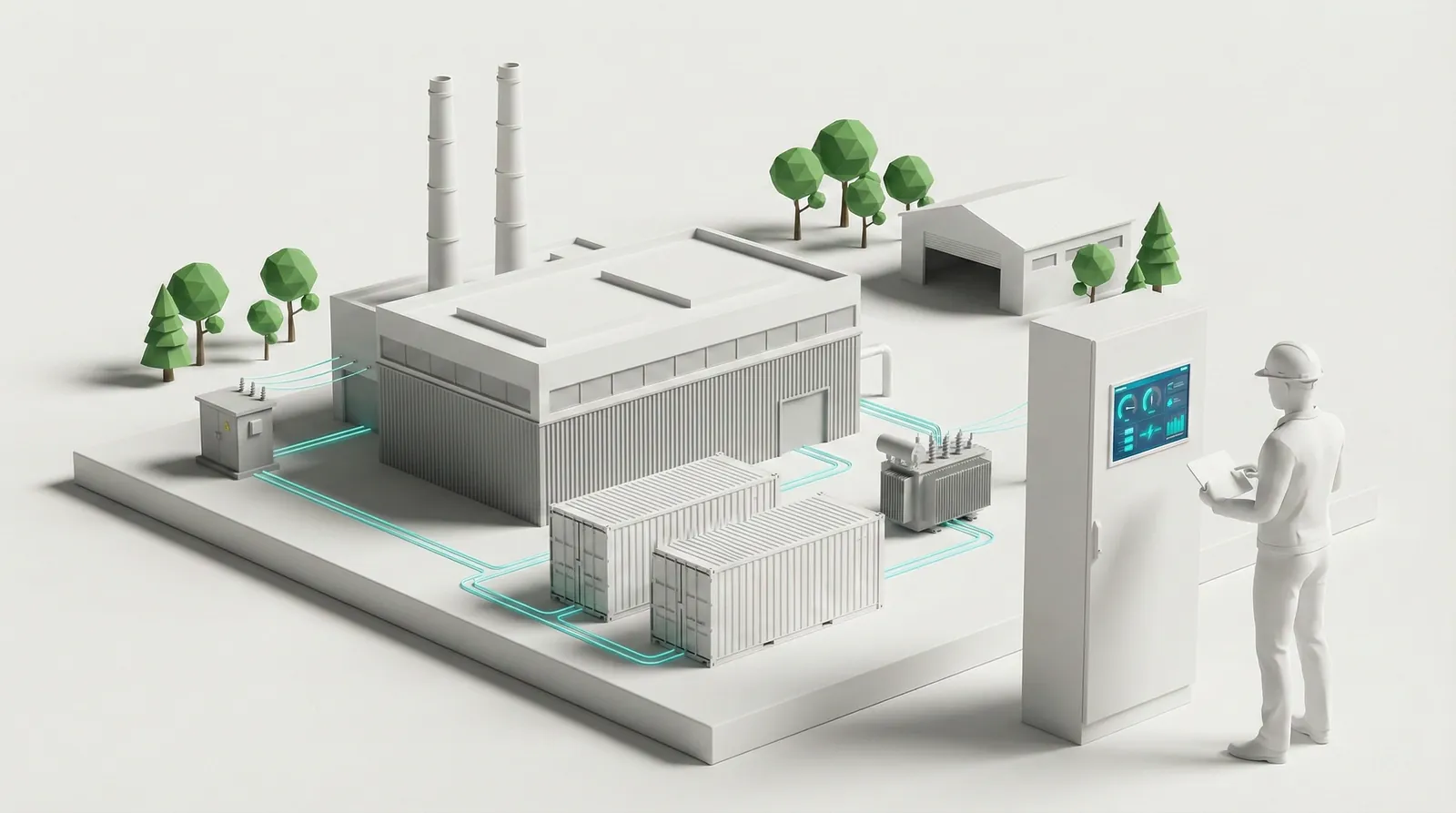 In testingIndustrial battery plant · Pune · 2.5 MW / 10 MWh
Two battery containers, two vendors, two languages. One EMS runs them as one plant.
- 2
- container makes, each with its own BMS protocol
- 1
- PCS and one EMS across both
- Hot-swap
- take a container out for service, plant keeps running
Tell us about your building and its solar plan
Send what you know. An Ingro engineer gives you free advice on your building: how much solar KERC's 2026 rule lets you add, whether net metering inside the cap or solar with a battery behind the meter suits you, and the size, cost and payback. If you go ahead, our team takes care of the rest: design, equipment from any maker, installation, help with the ESCOM and inspectorate approvals, commissioning, Ingro EMS and O&M.
What happens next: we reply within one working day, by phone or WhatsApp. No site visit is needed at this stage, and there is nothing to pay.