Solar and battery for a mine, quarry or project site camp that runs on diesel
Your site is far from the grid, or the line that reaches it is too weak to trust, so DG sets run most of the day and all night. The diesel tanker is a fixed line in the monthly accounts, the DG hour meters climb towards the next overhaul, and in three to five years the site may close and the whole set-up moves. This page is for the mine or quarry owner, the contractor's project manager and the procurement team weighing solar panels with a battery (BESS) for the camp, office and workshop, roughly 50 kW and up. It works in litres a day, DG running hours and rupees, and says plainly which loads should stay on the DG.
Reviewed 16 November 2026 by Ingro Energy's project team
The short answer
- Split your diesel by where it goes: crusher, workshop and batching, camp and office. The battery's best job is usually the camp DG that runs all night at a light load, not the crusher.
- A DG unit costs about ₹30 in diesel alone, and more when the set idles at night. Solar by day and a battery by night can keep that DG off for most of the hours it runs today.
- Off-grid, the battery is filled by solar panels, not the grid. The calculator below charges each battery unit at a grid price, so for an off-grid site its saving is the cautious figure.
- Keep the DG for the crusher's heavy motors, for cloudy and monsoon days, and as backup. It runs far fewer hours, and at a proper load when it does.
- If your site moves every few months, a battery will not pay back. For a three to five year site, containerised kit that moves with you to the next job changes the sum.
Where your diesel goes: crusher, workshop, camp
Most sites buy diesel as one figure: tankers a month, litres a month. Behind that figure are very different loads, and they do not all suit a battery. Before anyone sizes anything, split the litres by DG set, from the log books or the fuel issue register.
| Where the diesel goes | When it runs | Battery and solar? |
|---|---|---|
| Crusher, screens and conveyors | Daytime shifts, heavy motors starting under load | Usually stays on its DG. Solar can trim its daytime diesel; a battery big enough for the crusher rarely pays. |
| Workshop, batching plant, site office | Daytime, uneven load | Good for solar directly, with the battery smoothing the gaps. |
| Labour colony, staff quarters, mess, lights, pumps, security | Evening and all night | The battery's main job: charged by the day's solar, run through the night. |
| Weighbridge, CCTV, communication | Round the clock, small | On the battery with the camp. |
On many sites the camp DG burns fewer litres than the crusher DG but runs twice as many hours. Those hours, and the overhauls they bring forward, are where the battery earns its place.
The camp DG at night: a big set carrying a small load
The camp DG is usually sized for the daytime: the workshop, the welding sets, the batching plant pumps, the office air conditioners. At night most of that is off. The same set then runs for twelve hours carrying lights, fans, coolers, the water pumps and the security post, often at a quarter of its rating or less.
That is the worst way to run a diesel engine. SMA, which builds solar-diesel controllers for mines, puts it in numbers: a DG running at 30% of its rated power burns about 20% more fuel per unit than one at full load, and light loading means more engine wear and deposits from incomplete combustion. Its advice is to keep sets at 30% load or more. A camp DG idling through the night is below that on most nights.
A battery takes that night load over. The DG stops at dusk, the battery runs the camp till morning, and the panels fill it again the next day.
Who powers the camp, day and night
The solid arrow is what is carrying the load. The dashed arrow is the DG waiting as backup.
This also means your real diesel per unit at night is higher than the ₹30 above, which is worked from a set at a healthy load. The saving from switching the night run to a battery is probably larger than our figures show.
Solar by day, battery by night, DG for cloudy spells
At an off-grid site the three work as a team. In daylight the panels run the camp and workshop and charge the battery. After sunset the battery runs the camp. The DG starts by itself only when the battery runs low: after a run of cloudy days, in the monsoon, or when the load spikes. The controller decides, not the operator.
Solar without a battery helps less than people expect. With a DG holding the site's voltage, the panels can only cover part of the load, because the DG must stay above its minimum load; SMA puts the diesel saving from solar without batteries at up to about 30%. The battery is what lets the DG switch off completely for hours.
This is also why the calculator below is cautious for you. It assumes each unit the battery gives back was bought from the grid at about ₹9, costing about ₹11 after losses. At an off-grid site the battery is filled from your own panels, so there is no grid bill: the panels cost money once, up front, instead. If your site does have a grid line, even a weak one that is off half the night, the calculator's sum fits you as it is.
Work it out from the camp DG's log
Enter the camp DG only, not the whole site's diesel: the litres it burns in a month during the hours you want the battery to carry (the night run, for most sites), the hours it runs then, and the months a year the site works. For the price, use what a litre costs you delivered to site. Bulk and retail diesel are priced separately: in June 2026 Business Today reported retail diesel about ₹40 a litre cheaper than bulk, and industrial buyers were barred from retail pumps until 1 July.
Work it out from the camp DG's diesel
Four numbers from the camp DG's log book. Nothing is sent anywhere until you ask us to check it.
Enter the camp DG's litres and hours to see the figures.
How this is worked out
- A DG set makes about 3.2 units per litre of diesel at a healthy load. A camp DG idling at night makes fewer, so your saving is probably higher.
- Each unit from the battery is charged as if bought from the grid at about ₹9, with 85% coming back. Off-grid, solar fills the battery instead, so this saving is cautious; the panels' cost is not included either.
- The battery is sized to carry the hours you entered on one charge.
- Installed cost is taken as ₹25,000 to ₹38,000 per kWh for a battery under 250 kWh, and ₹20,000 to ₹30,000 per kWh above that, before GST. This is a working range, not a quote.
- DG servicing, overhauls put off and diesel no longer lost on site are not counted.
- This is a first estimate. Cloudy days, the load at each hour and the life of the site are checked before anyone gives you a price.
Get free expert advice for your site
Leave your name and number. We call back with the size, cost and payback for your site, and what the complete system would involve.
Tell us about your site ↓An example quarry camp: the night run on battery
This is an illustration, not a real site. A stone quarry and crusher with no grid connection. The crusher has its own large DG and stays on it. The camp, office and workshop run on a 250 kVA DG, which at night carries only the colony, quarters, lights, pumps and security. That night run lasts about 12 hours and burns about 6,000 litres a month (200 litres a night). The site works 10 months a year; diesel at ₹95 a litre.
- The night load: about 640 units a night, an average of about 53 kW, or about 27% of the DG's rating. Well below SMA's 30%.
- Diesel for the night run today: about ₹5.7 lakh a month, 60,000 litres a year.
- Battery to carry the whole night: about 720 kWh. Installed cost about ₹1.44 crore to ₹2.16 crore before GST.
- Calculator's figure, as if charged at the grid price: about ₹37 lakh a year saved, payback about 3.9 to 5.9 years.
- Charged by solar instead, the night run's diesel stops altogether: about ₹57 lakh a year. That needs about 180 kWp of panels on top of what runs the camp by day, and those panels cost money that this figure does not include.
- DG running hours saved on the camp set: about 3,600 a year.
The true answer for this site lies between the two figures, and depends on what the panels cost and how many cloudy days the DG still has to cover. That is the part an engineer prices for your site and your weather.
DG hours, overhauls and diesel that goes missing
Every hour the camp DG does not run is an hour off its oil changes, filters and the countdown to its next top overhaul. In our example that is thousands of hours a year on one set. Ask your DG service provider what an hour of running costs you in servicing, and put it next to the diesel figure; the calculator does not count it.
Every litre not bought is also a litre not delivered, stored, dispensed and accounted for at a remote site. Owners know that diesel at a far-off camp has a way of going missing between the tanker and the tank. Fewer litres on site, and a controller that logs when each DG ran and for how long, leave less room for it.
When the contract ends: equipment that moves with you
A road package, a tunnel or a dam is built in a few years and then the camp is struck. A quarry lease or a mine's pit plan moves too. Equipment that has to be written off at one site rarely pays back; equipment that can move to the next site often does.
Battery systems for sites like yours usually come in containers or outdoor cabinets on skids, wired to the camp through one panel. They can be disconnected, lifted onto a trailer and recommissioned at the next site. Solar panels on ground-mount frames can move the same way; panels bolted to a permanent roof are harder.
- Plan the move from the start: a level plinth or skids, cabling through one connection point, and access for a crane or hydra.
- Ask in writing whether the warranty carries over to a new site, and who disconnects, transports and recommissions the system.
- Size for the sites you expect next, not only this one. A camp that grows at the next site can take extra battery cabinets; one that shrinks leaves a battery half used.
Rules at a mine or site camp: inspector, DG emissions, noise
If your site is a mine under the Mines Act, 1952, electrical work there falls under the additional safety chapter for mines in the CEA safety regulations of 2023. Installations at 650 V and above may not be connected until the Electrical Inspector of Mines has approved them in writing; below 650 V, the mine's owner, agent or manager self-certifies them. The persons in charge must also give the Electrical Inspector of Mines at least seven days' written notice before bringing a new installation into use. Ask the supplier the system's highest voltage, AC and DC, and settle the route with your mine's engineer before the equipment arrives. A construction contractor's camp that is not a mine follows the general electrical rules of the state.
For the DG itself: new genset engines up to 800 kW must meet the emission limits notified in November 2022, the CPCB IV+ norms, from 1 July 2023. The CPCB noise standard for diesel sets up to 1,000 kVA made from 2005 is 75 dB(A) at one metre from the enclosure, with the acoustic enclosure fitted at the factory; older or larger sets need an enclosure or room treatment with at least 25 dB(A) insertion loss. A labour colony that sleeps next to a DG all night knows what that means. A battery burns no fuel and has no exhaust.
Who has done this already
- Tata Steel's Noamundi iron ore mine: in 2017 Tata Power Solar commissioned a 3 MW solar plant described as a hybrid, with grid connection and optional coupling to fossil-fuel generation, to meet the mine's continuous power needs.
- Chushul, Ladakh, at about 4,500 metres: in November 2025 NTPC's 3.7 MW solar plant with a battery and a hydrogen fuel cell was inaugurated to replace DG sets at remote Army locations.
- A mine in South Africa described by SMA: two 800 kVA DG sets with 1 MWp of solar and a fuel-save controller, which SMA says saves up to 450,000 litres of diesel a year.
Published Indian examples at quarries and contractor camps are still few. Most of what is in the trade press is island and military microgrids, where the problem is the same: diesel hauled a long way, burnt at a light load.
When a battery is not worth it at a mine or site
- Your site moves every few months. Each move costs time and money, and the battery spends too little time at any one place to earn its price back.
- You want the battery to run the crusher. Heavy motors starting under load need a very large inverter and battery; keep the crusher on its DG and put the battery on the camp.
- The camp DG runs only a few hours a day, at a decent load. There is little idling to remove and little diesel to save.
- There is no safe, shaded, level space for panels and a container away from blasting, dust from the crusher and the haul road. Solve the location first.
- The site closes within a year or two and nothing can move to a next site. Rent a better-sized DG for the night instead.
Keep the DG in every case. The battery takes the night and the hours solar can cover; the DG stays for the crusher, the long cloudy spell and the emergency.
Cost and battery life, in brief
As a working range, an installed battery system costs about ₹20,000 to ₹35,000 per kWh before GST, more per kWh for small systems; solar panels are priced on top. What a turnkey price includes is in the battery cost guide. Dust and heat shorten a battery's life: lithium iron phosphate (LFP) in a sealed container with its own cooling and fire detection, placed upwind of the crusher and away from the haul road, lasts far better than cabinets left in the open.
What a turnkey project covers at your site
With a turnkey project, one team takes it from your DG logs to a working system: splitting the load, sizing the solar and battery for your weather and your site's life, the container layout away from blasting and dust, help with the inspector's approval at a mine, installation, commissioning and maintenance at a remote location. Ingro designs, integrates, commissions and maintains such systems with any maker's battery and runs them with Ingro EMS, which decides when the DG starts; it does not make batteries. When the site closes, the same team can plan the move to the next one.
What to ask before you sign
- Which loads exactly does it carry (camp, quarters, pumps, office, workshop), for how many hours a night, and which stay on the DG?
- How many cloudy days in a row does it cover before the DG starts, and what does the DG run in the monsoon?
- How does the DG start and stop by itself, and will it always run at a healthy load when it does?
- What is the system's highest voltage, AC and DC, and who handles the Electrical Inspector of Mines' approval or notice if we are a mine?
- Can it be moved to our next site: who disconnects, transports and recommissions it, and does the warranty carry over?
- How is it protected from crusher dust, heat and blasting vibration, and where exactly will the container stand?
- Who comes when it stops, how far away are they, and how fast can they reach a remote site?
Useful next
- Battery or diesel generator: the full comparison
- What a battery system costs in India
- Factory with a DG set: motor starting and diesel
- Factory with rooftop solar: solar and the DG in a cut
- Container BESS sold in India
- PCS (battery inverters) that can form a local grid
- DG sets, to compare against
- Turnkey battery systems: design to O&M from one team
Questions mine owners and project managers ask
Can solar and a battery run our crusher?
Usually not economically. Crusher motors start under heavy load and need a very large inverter and battery. Keep the crusher on its DG; solar can still trim its daytime diesel, and the battery takes the camp.
How much diesel will we save?
It depends on how long the camp DG runs and at what load. In our illustration, a camp DG burning 6,000 litres a month at night saves about ₹37 lakh a year on the calculator's cautious sum, and up to about ₹57 lakh a year in diesel if solar fills the battery, with the panels' cost on top.
Our site closes in three years. Is it still worth it?
Only if the equipment can move to your next site, or if the payback is well inside three years. Containerised batteries and ground-mounted panels can be shifted; ask in writing who moves them and whether the warranty carries over.
Will we still need the DG?
Yes. The DG stays for the crusher, for runs of cloudy days and as backup. It runs far fewer hours, and at a healthier load when it does.
Does a battery at a mine need DGMS approval?
Under the CEA safety regulations of 2023, installations in a mine at 650 V and above need the Electrical Inspector of Mines' written approval before connection, and lower-voltage ones are self-certified by the mine's owner, agent or manager, with written notice to the inspector before a new installation is used. Settle the route with your mine's engineer early.
Why does the calculator say the battery is charged at a grid price when we have no grid?
Because the same calculator serves sites with a grid. For you, solar fills the battery and there is no grid bill, so its saving is the cautious figure. The panels cost money up front instead; an engineer prices both together.
Sources
- SMA, "Off-grid 2.0" (pv magazine, Dec 2013): DG at 30% load burns 20% more fuel per kWh; 30% minimum load; South African mine with 2 x 800 kVA DG and 1 MWp PV
- CEA (Measures relating to Safety and Electric Supply) Regulations, 2023, 8 June 2023: regulation 45(7) and Chapter IX, mines and oil-fields
- SCC Online, 7 Nov 2022: Environment (Protection) Third Amendment Rules 2022, emission limits for genset engines up to 800 kW from 1 July 2023 (CPCB IV+)
- CPCB standard (copy hosted by Puducherry PCC): noise limit for generator sets run with diesel
- pv-tech, 10 Jul 2017: Tata Power Solar commissions 3 MW hybrid solar plant at Tata Steel's Noamundi iron ore mine
- pv magazine India, 28 Nov 2025: NTPC solar-hydrogen microgrid at Chushul to replace DG sets at remote Army locations
- Business Today, 12 Jun 2026: retail diesel about ₹40 a litre cheaper than bulk; industrial buyers barred from retail pumps
- The Tribune, 29 Jun 2026: retail diesel restrictions lifted from 1 July
Sites that have benefited from battery storage
Different sites, same idea: use more of your own renewable power, cut the electricity bill, and keep running when the grid cannot keep up.
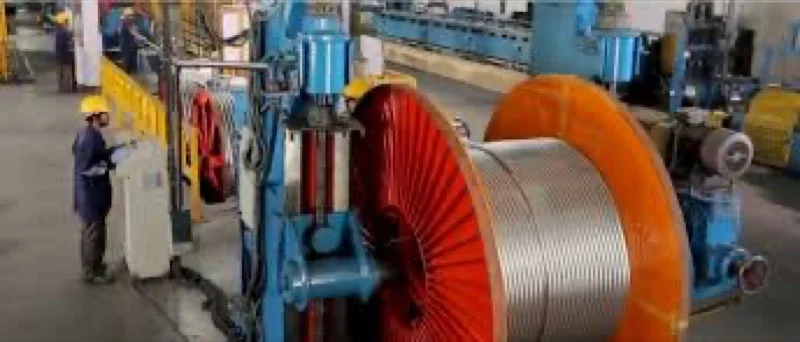 LiveAPAR Industries · Factory · 720 kW / 500 kWh battery
A factory whose process lines keep running through every dip in power.
- <1 ms
- response when the load jumps or the grid dips
- Zero
- gaps in power to the production lines
- End to end
- battery, PCS, controls and installation by one team
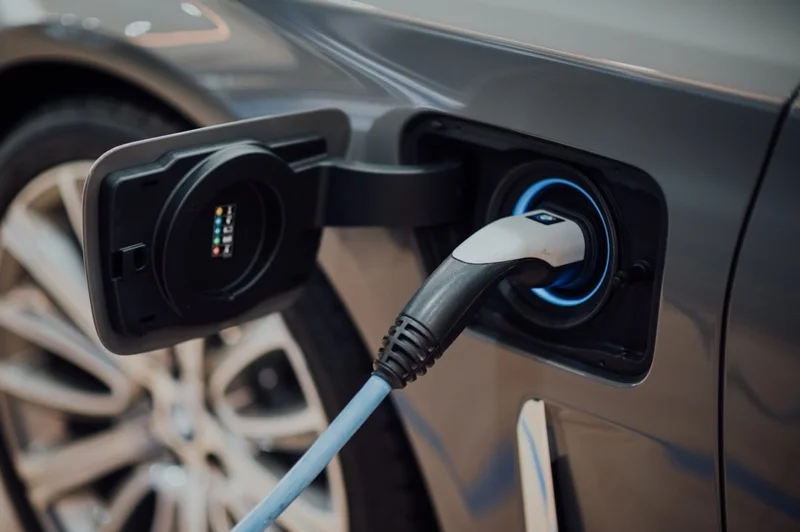 LiveEV charging hub · 260 kW / 580 kWh battery · India
Electric buses and cars keep charging, even when the grid is gone.
- 2.5×
- charging power from the same grid connection
- 1 s
- battery and PCS data, cell by cell
- Grid outage
- buses and cars still charge off the battery
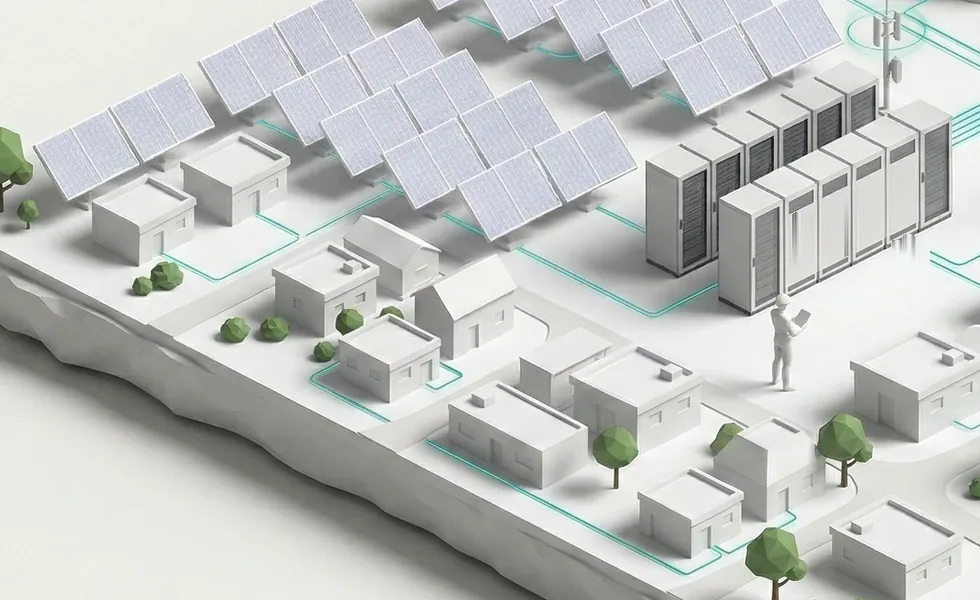 UnderwaySolar + battery micro-grid · Melghat, Maharashtra
A village without a grid. A solar and battery micro-grid that powers it.
- Village
- no grid connection
- Black start
- from standstill, no outside source
- 820
- homes on solar and battery
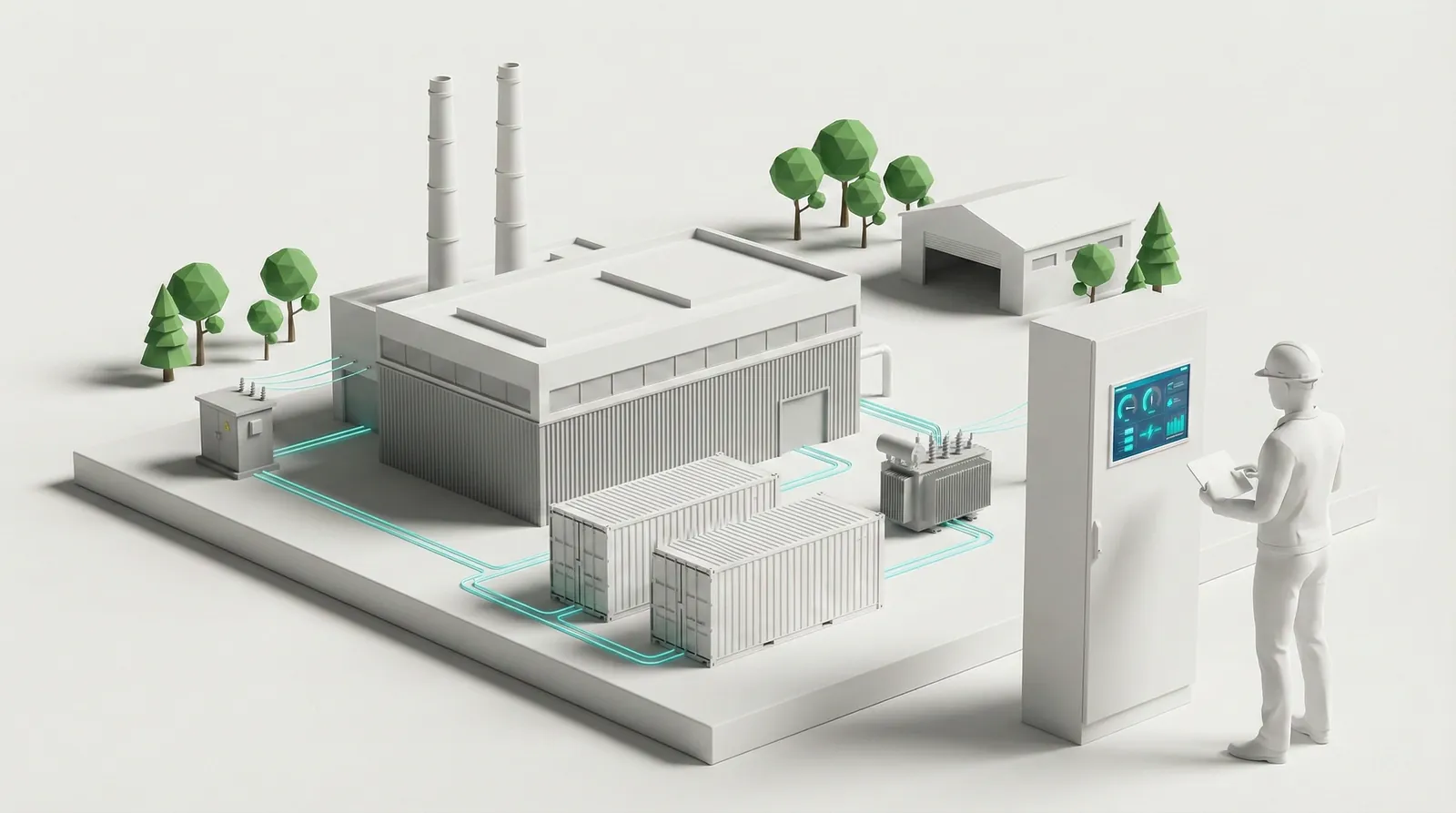 In testingIndustrial battery plant · Pune · 2.5 MW / 10 MWh
Two battery containers, two vendors, two languages. One EMS runs them as one plant.
- 2
- container makes, each with its own BMS protocol
- 1
- PCS and one EMS across both
- Hot-swap
- take a container out for service, plant keeps running
Tell us about your site
Free expert advice on your site. Send what you know and an Ingro engineer works out the complete solution: the solar and battery size, what stays on the DG, the cost and the payback over your site's life. If you go ahead, our team takes care of the rest: design, equipment from any maker, installation, help with the approvals, commissioning, Ingro EMS and maintenance, and the move to your next site.
What happens next: we reply within one working day, by phone or WhatsApp. No site visit is needed at this stage, and there is nothing to pay.