Battery backup for a coaching institute or student hostel: classes, tests, lifts and the diesel bill
Your institute is a multi-storey building in Kota, Sikar, Patna, Hyderabad or Delhi's Mukherjee Nagar, with classrooms packed from morning to night, a computer lab where you run your own online tests, lifts, water pumps and a DG set squeezed into the basement or parked on the street. Or you own the hostel or PG block next door, with a hundred or more students who need lights, fans, lifts and water at night. This page is for the owner or director of the institute and the owner of the hostel building. It covers what must not stop in a cut, what you pay for grid and diesel units, where a battery (BESS) can and cannot stand in a city building after the coaching-centre fires and the Rajinder Nagar basement deaths, and when it is not worth it. It is written for systems of roughly 50 kW and up. If you run a campus outside the city, the college and school guide fits you better.
Reviewed 16 November 2026 by Ingro Energy's project team
The short answer
- A unit from your DG costs about ₹30 in diesel alone. A unit stored in a battery from the grid costs about ₹11 at a grid price of ₹9; on a higher commercial tariff it costs a little more, but the gap to diesel stays wide. If your DG runs every day, that gap is what pays for the battery.
- The bigger reason for most institutes is the cut itself. A battery takes over in a moment, so a lecture, a smart-classroom screen or a computer-based test does not stop while someone starts the DG.
- Carry what must not stop: classroom lights, fans, projectors and sound, the test lab and its server and network, lifts, pumps and CCTV. Fire pumps and the fire-alarm supply stay on whatever backup your fire design calls for. Leave most air conditioning on the DG.
- Where it stands matters as much as its size. Not in the basement: basements flood and are hard for firefighters to reach. The spot has to fit your fire NOC or building safety certificate.
- In the worked example, a building burning 1,500 litres a month saves about ₹9.2 lakh a year and pays back in about 4.9 to 7.5 years on diesel alone. If your city supply hardly ever fails, or there is no safe spot for it, a battery is not worth it.
Your commercial bill and your diesel register
A coaching institute is a business, and the DISCOM bills it like one: in the non-domestic or commercial category, usually at a higher rate per unit than a home or a school. Hostels and PGs are often billed the same way. Delhi's tariff schedule, for example, puts "Hostels/Schools/Colleges/Paying Guests" in the non-domestic category unless they are covered under domestic. Check the category printed on your bill; it is the grid price you will compare everything against.
The second bill is diesel. If your DG runs every day in summer, through the evening peak or when the feeder trips, the purchase slips or the DG log book show the litres. At ₹95 a litre and about 3.2 units a litre, each DG unit costs about ₹30 before servicing, oil and the operator.
| Where the unit comes from | Cost per unit to you |
|---|---|
| DG set (diesel only) | about ₹30 |
| Battery, charged from the grid at ₹9 | about ₹11 |
| Grid, straight | your commercial rate |
A DG that carries only lights and fans between classes runs lightly loaded and gives fewer units per litre than the figure above, so your real diesel cost per unit is probably higher, not lower.
Classes and tests in a cut
When the grid goes, a full classroom goes dark and silent, the projector or smart board reboots, the mic dies, and the teacher waits. Then someone runs to start the DG, which takes a minute or more to come on and switch over, longer if it is cold or short of diesel. In a building with eight or ten batches a day, every cut costs a part of a lecture in every room at once.
The in-house test is worse. If you run your own computer-based tests in a lab, to get students used to the exam format, a cut mid-test hits a whole batch at once. The PCs usually sit on small UPS units that last minutes; the server, switches and Wi-Fi may not be on UPS at all. If the DG is slow to take over, the test stops.
A battery in the building's supply changes this. It takes over in a moment, so the lights, fans, screens and lab carry on, and it holds them for hours, not minutes. The DG starts only if the cut outlasts the battery.
- Classrooms: lights, ceiling fans, projectors or smart boards, the PA system.
- The test lab: the PCs, the test server, network switches, Wi-Fi and internet link, and the lab's air conditioning, which a closed room full of PCs cannot do without for long.
- The front office, biometric attendance, CCTV recording and the server room.
Which circuits go on the battery, and how the changeover is done so the lab UPS units hardly notice, is the engineer's work at the site check. What you bring is the list of what must not stop, and the hours of your batches and tests.
Who powers the building, minute by minute
The solid arrow is what is carrying the load. The dashed arrow is the DG waiting as backup.
Hostels and PGs: lifts, water and the night
A student hostel is a residential building with a commercial bill. At night it needs corridor and room lights, fans, phone and laptop charging, Wi-Fi, CCTV, and above all the lifts and the pumps that fill the overhead tanks. Students study late before tests, so a cut at 11 pm is not a quiet hour.
Lifts and pumps are the hard part: they draw a heavy current when they start, and several can restart in the same second after a cut. The battery's inverter is sized for that, and pumps can be set to start one after another or to fill the tanks before evening. What happens to a lift caught between floors, and how a battery keeps it running through the cut, is the same as in a housing society; that guide covers it in detail.
Room air conditioners in a hostel can add up to more than everything else in the building. Carry lights, fans, lifts, water and Wi-Fi on the battery; leave the room ACs on the DG or off.
What the coaching-centre fires and the basement flooding showed
Three incidents shape how a fire officer looks at any electrical change in a coaching building, and they should shape where you put a battery.
- Surat, 24 May 2019: a fire at a coaching centre in Takshashila Arcade, a multi-storey commercial building, killed at least 20 students. Initial reports pointed to a short circuit; the fire started near the staircase, so students could not get down, and some jumped from the top floor.
- Mukherjee Nagar, Delhi, 15 June 2023: a fire in a five-storey building where about 250 students were in class. Students broke windows and climbed down ropes and pipes; police said 61 were taken to hospital, with no deaths. The MCD pointed to a short circuit in a ground-floor electric meter; Tata Power said the cause was unknown and smoke came from an air conditioning unit on the fourth floor. In May 2024 the Delhi High Court told the MCD and DDA to shut coaching centres breaching fire safety norms and to get electrical equipment installed outside premises, which may be dangerous to the public, relocated.
- Old Rajinder Nagar, Delhi, 27 July 2024: the basement of a coaching institute flooded after rain and three students in the basement library died. The Delhi Fire Service chief said the fire NOC had been given on the condition that the basement would be used solely as a storage room.
The lesson for a battery is simple: it is electrical equipment holding a lot of energy, it must never sit where it can flood, block an exit or feed smoke into a staircase, and it must sit inside what your fire NOC allows.
Where a battery can and cannot go in a city building
Not in the basement. A basement is where water collects in a cloudburst or a burst drain, as Rajinder Nagar showed, and water and a battery cabinet do not mix. It is also the hardest place for firefighters to reach and ventilate, and smoke from it rises through the stairs and lift shafts that students need to get out. Many city basements are approved only for parking or storage, so equipment there may also break the conditions of your NOC.
Not under or beside a staircase, an exit, the lift lobby or the electric meter room's escape path, and not in a classroom corridor. Not in a makeshift structure on the terrace.
Where it usually can go: on open ground at the building's setback or rear, in its own weatherproof enclosure, on a raised plinth, out of the main exit path and reachable by a fire tender. Where there is no open ground, a terrace can work if the slab can carry the weight and the fire authority accepts it, which has to be checked, not assumed. The systems use lithium iron phosphate (LFP) cells, the safer lithium type, in cabinets with their own monitoring, cooling and fire detection.
Any battery changes your building's electrical and fire picture. The spot is agreed with your electrical consultant and the fire authority that issued your NOC before anything is ordered. If someone offers to put it in the basement because it is the only free space, the answer is no.
What the coaching rules say about safety and power
The Ministry of Education's Guidelines for Registration and Regulation of Coaching Center (January 2024) were sent to the states as a model. They ask that coaching buildings comply with fire safety codes, building safety codes and other relevant standards, and allow at least one square metre per student in class.
Rajasthan has made this law. The Rajasthan Coaching Centres (Control and Regulation) Act, 2025, published in the gazette on 26 September 2025, covers centres coaching more than 100 students. Its infrastructure section says the building "shall adhere to fire safety codes, building safety codes and other standards and shall obtain a Fire and Building Safety Certificate from the local body concerned", and that it "shall be fully electrified, well-ventilated".
Neither says anything about power backup. A battery is not required by them. But the fire and building safety certificate covers the whole building, so a battery added later has to fit inside it: tell the authority, and do not put it anywhere that would put the certificate at risk.
If you are in Delhi: the DG in winter
When the Graded Response Action Plan (GRAP) is in force in Delhi-NCR, the Commission for Air Quality Management's DG schedule applies to commercial premises. As restated by the Ministry of Environment on 21 October 2024, a set of 62 kW (73 kVA) up to 800 kW (1000 kVA) built to the older standards may run only in dual-fuel mode or with a certified emission control retrofit; sets built to the 2022 standard or running on gas are not restricted. For an institute in Mukherjee Nagar or Rajinder Nagar with an older DG on the pavement, the hours a battery carries are hours the DG does not run on smoggy days. The schedule changes from time to time, so check the current CAQM orders.
Work it out from your diesel register
Four numbers from the DG log book or diesel slips: litres in a normal month, DG hours on a normal day, the diesel price you pay, and how many months a year are like that. Use your own register, not anyone's estimate of it.
Work it out from your DG diesel
Four numbers from the DG log book or diesel slips. Nothing is sent anywhere until you ask us to check it.
Enter your diesel litres and DG hours to see the figures.
How this is worked out
- A DG set makes about 3.2 units per litre of diesel.
- Grid power costs about ₹9 a unit, and a battery gives back about 85% of what it takes in. A higher commercial tariff lowers the saving a little.
- The battery is sized to carry one normal day's DG running on one charge.
- Installed cost is taken as ₹25,000 to ₹38,000 per kWh for a battery under 250 kWh, and ₹20,000 to ₹30,000 per kWh above that, before GST. Small systems cost more per kWh. This is a working range, not a quote.
- Lectures and tests that no longer stop, and DG servicing saved, are not counted.
- This is a first estimate. Lift and pump starting, your test-lab load, your tariff and the spot for the battery are checked before anyone gives you a price.
Get the figure for your building
Leave your name and number. We call back with free advice on size, cost, payback and where it can stand.
Tell us about your institute or hostel ↓An example building, worked in rupees and per student
This is an illustration, not a real institute. Its inputs: a five-storey coaching building with about 1,200 students across its batches, a computer test lab, two lifts and the water pumps; the DG carries them through about 3 hours of cuts and trips on a normal day, burning 1,500 litres a month for 10 months a year; diesel at ₹95 a litre. The figures come from the same sums as the calculator above.
- Diesel today: about ₹1.4 lakh a month, about ₹14 lakh over the 10 months.
- The DG makes about 4,800 units a month, an average of about 53 kW while it runs. Battery to carry a normal day's cuts: about 180 kWh.
- Installed cost: about ₹45 lakh to ₹68 lakh before GST.
- Diesel saved: about ₹9.2 lakh a year, roughly ₹760 per student a year.
- Payback: about 4.9 to 7.5 years, on diesel alone.
Not counted: the lectures and tests that no longer stop, DG servicing pushed further apart, and fewer DG hours on the street outside. The grid price used is ₹9; on a higher commercial tariff each stored unit costs a little more and the payback is slightly longer.
Change any input and the answer moves a lot. An institute with fewer cut hours saves less; one whose DG also carries the classroom ACs burns more diesel but needs a much bigger battery.
Cost and battery life, in brief
As a working range, an installed system costs about ₹20,000 to ₹35,000 per kWh of battery before GST, more per kWh for small systems; what a turnkey price includes is set out in the battery cost guide. Compare warranties in years, cycles and capacity left at the end, not just the price. For the head-to-head with diesel, see battery or diesel generator.
When a battery is not worth it for an institute or hostel
- Your city supply is reliable. If the DG log shows a few hours a month, there is little diesel to save; a good online UPS for the test lab and server may be all you need.
- There is no safe spot. If the only free space is the basement, a staircase landing or a corridor, do not do it. A battery in the wrong place is a new risk in a building full of students.
- Cuts last most of the day. The battery would be huge and could not recharge; the DG runs anyway.
- You want every classroom and hostel AC on backup. The battery grows far faster than the saving; carry the essentials first.
- You rent the floor and the lease is short. A battery pays back over years; agree with the building owner first who owns it and what happens if you move.
In the first case, put the money into a good UPS for the test lab. In the fourth, a smaller battery for lights, fans, the lab, lifts and pumps usually makes more sense than one sized for everything.
What a turnkey project covers for you
You run classes or a hostel, not an electrical project. In a turnkey project Ingro's team sizes the battery from your DG log and load, picks the battery from any maker, agrees the spot with your electrical consultant, installs and integrates it with your panels and DG, commissions it with Ingro EMS, and maintains it for the warranty years. Ingro does not make batteries; it designs, integrates, commissions and maintains the whole system.
What to ask before you sign
- Exactly which loads does it carry (classroom lights, fans and screens, the test lab, server and network, lifts, pumps), and for how many hours on one charge?
- Will you show us a grid-off test at handover with a full test lab running, a lift moving and the DG starting only when the battery runs low?
- Where will the cabinet stand, why there, and has the fire authority that issued our NOC accepted it? Is that approval in your scope?
- How do the lifts and pumps start on the battery without tripping it?
- What is the warranty in years and cycles, and what capacity is promised at the end?
- Who owns the battery if we rent the building, and what happens if we move?
- Who do we call when something goes wrong, how fast do they come, and is the maintenance contract for the whole warranty period?
Useful next
- College or school campus outside the city: exams, hostels and diesel
- Housing societies: lifts in a cut and the DG charge
- Commercial buildings: demand charges on the bill
- Battery or diesel generator: the comparison
- What a battery system costs in India
- BESS cabinets sold in India, with their specifications
- Online UPS systems sold in India
- Turnkey battery systems: design to O&M from one team
Questions institute and hostel owners ask
Can a battery keep our in-house computer test running through a cut?
Yes, if the lab PCs, the test server, the network and the lab's air conditioning are on the battery's circuits. It takes over at once and holds the lab for hours. Ask for a grid-off test with a full lab before relying on it.
Can we put the battery in the basement next to the DG?
No. Basements flood, are hard for firefighters to reach, and send smoke up the stairs students use to escape. Many are approved only for parking or storage. Put it on open ground at the setback, or on a terrace that can carry it, with the fire authority's agreement.
Does the Rajasthan coaching law or the central guidelines require power backup?
No. They require the building to follow fire and building safety codes, and Rajasthan's 2025 Act requires a Fire and Building Safety Certificate and a fully electrified, well-ventilated building. Any battery you add has to fit within that certificate.
Our hostel's lifts stop in every cut. Will a battery fix that?
If the lifts are on the battery and the changeover is fast enough, they keep running through the cut instead of stopping until the DG starts. The inverter is sized for lifts and pumps starting together.
We are on a commercial tariff. Does that hurt the saving?
A little. Each unit stored from the grid costs your grid rate divided by about 0.85, so a higher rate makes stored units dearer. Diesel at about ₹30 a unit is still far above it.
We rent our floors. Can we still do this?
Yes, with the building owner's written agreement on where it stands, who owns it and what happens if you move. A short lease makes the payback hard.
Sources
- Rajasthan Coaching Centres (Control and Regulation) Act, 2025 (Act No. 16 of 2025, Rajasthan Gazette 26 Sep 2025), PRS copy: definition (more than 100 students) and section 10(b), (d)
- Drishti IAS, 24 Jan 2024: summary of the Ministry of Education's Guidelines for Regulation of Coaching Centres 2024 (fire and building safety codes, one square metre per student)
- The Tribune, 15 Jun 2023: fire at a coaching institute in Mukherjee Nagar, students climb down using ropes
- Careers360 (PTI), 10 May 2024: Delhi High Court directs MCD and DDA to shut coaching centres violating fire safety norms and relocate electrical equipment
- Al Jazeera, 25 May 2019: death toll in Surat coaching centre fire rises to 20
- The Tribune, 28 Jul 2024: Rajinder Nagar coaching centre, storeroom in basement turned into library; fire NOC for storage only
- DERC, Electricity Tariff Schedule FY 2019-20 (BRPL, BYPL, TPDDL, NDMC): non-domestic category includes hostels and paying guests
- PIB (Ministry of Environment), 21 Oct 2024: GRAP Stage II and the DG set schedule under CAQM Direction No. 76
Sites that have benefited from battery storage
Different sites, same idea: use more of your own renewable power, cut the electricity bill, and keep running when the grid cannot keep up.
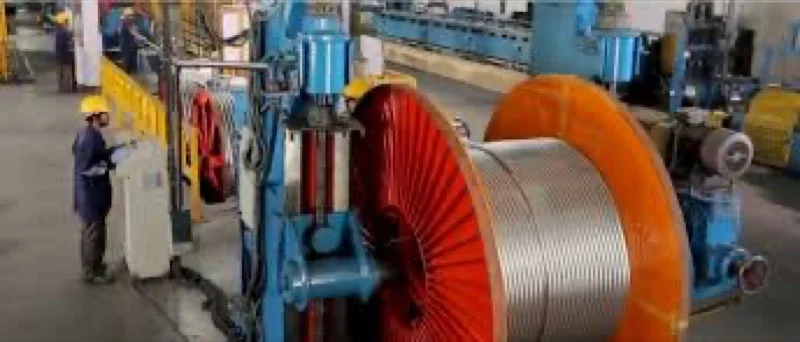 LiveAPAR Industries · Factory · 720 kW / 500 kWh battery
A factory whose process lines keep running through every dip in power.
- <1 ms
- response when the load jumps or the grid dips
- Zero
- gaps in power to the production lines
- End to end
- battery, PCS, controls and installation by one team
 LiveEV charging hub · 260 kW / 580 kWh battery · India
Electric buses and cars keep charging, even when the grid is gone.
- 2.5×
- charging power from the same grid connection
- 1 s
- battery and PCS data, cell by cell
- Grid outage
- buses and cars still charge off the battery
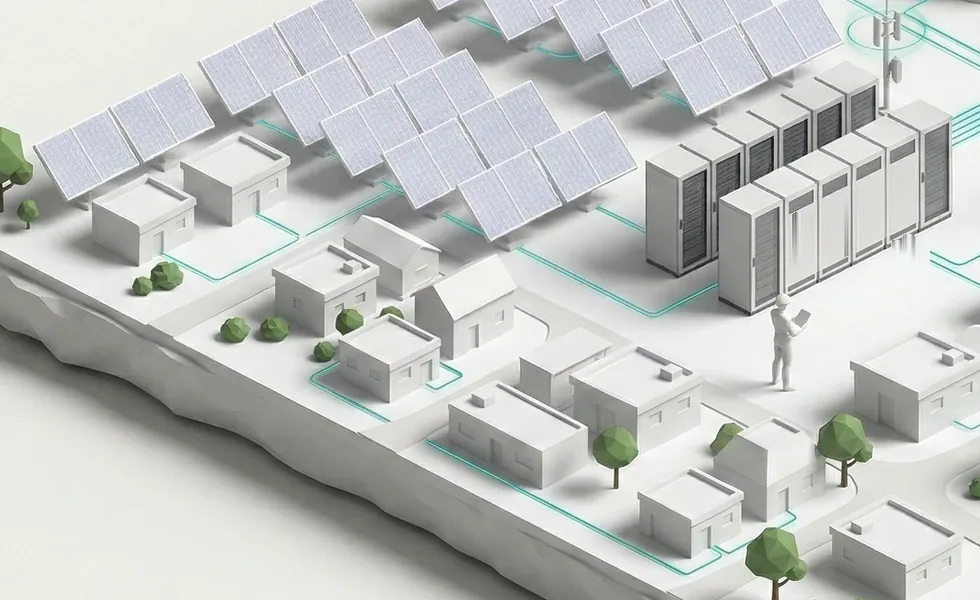 UnderwaySolar + battery micro-grid · Melghat, Maharashtra
A village without a grid. A solar and battery micro-grid that powers it.
- Village
- no grid connection
- Black start
- from standstill, no outside source
- 820
- homes on solar and battery
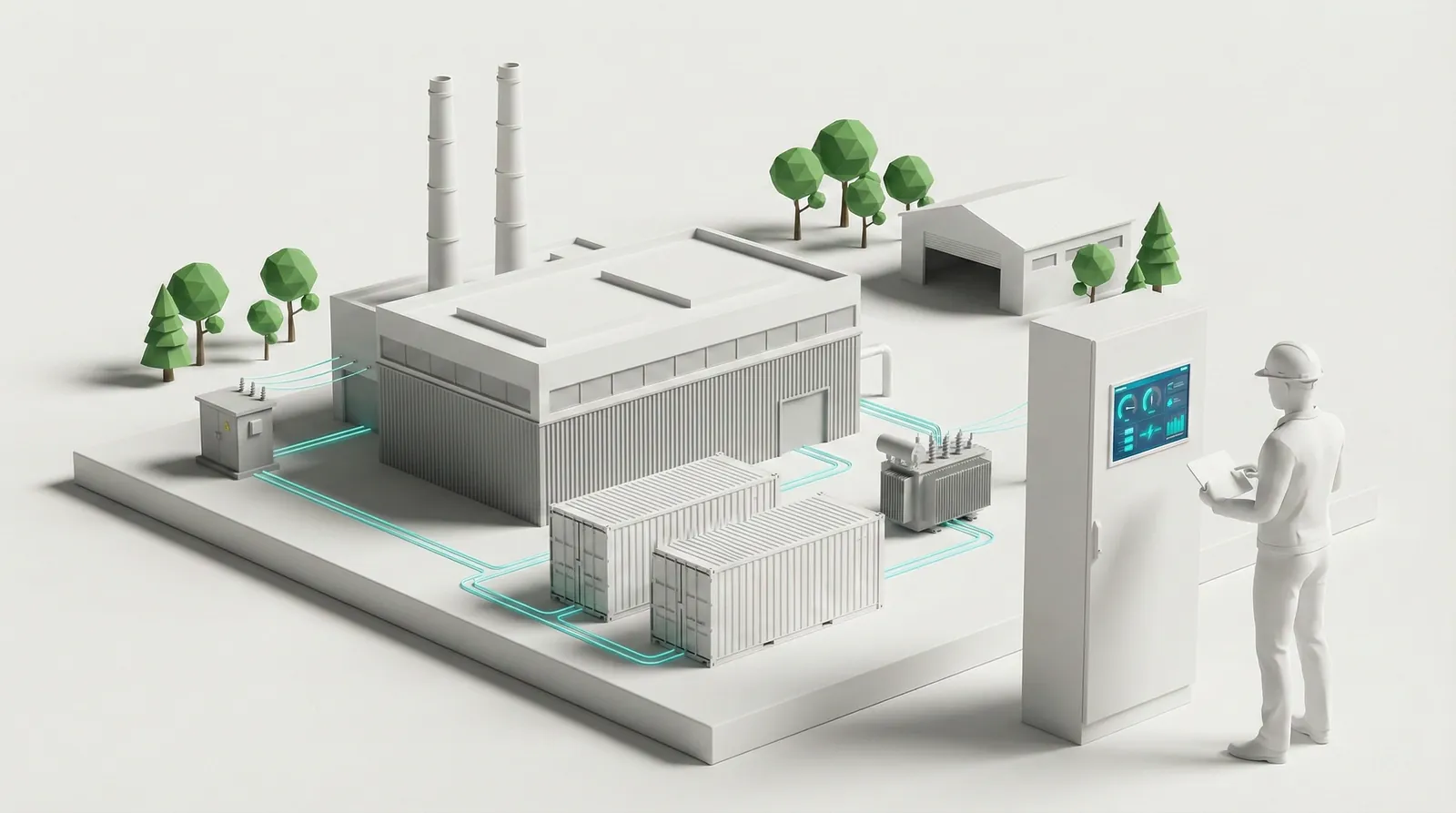 In testingIndustrial battery plant · Pune · 2.5 MW / 10 MWh
Two battery containers, two vendors, two languages. One EMS runs them as one plant.
- 2
- container makes, each with its own BMS protocol
- 1
- PCS and one EMS across both
- Hot-swap
- take a container out for service, plant keeps running
Tell us about your institute or hostel
Send what you know and get free expert advice on your building. An Ingro engineer works out which loads to carry, the battery size, where it can safely stand, and the cost and payback. If you go ahead, our team takes care of the rest as one turnkey project: design, equipment from any maker, installation, help with the approvals, commissioning, Ingro EMS and maintenance.
What happens next: we reply within one working day, by phone or WhatsApp. No site visit is needed at this stage, and there is nothing to pay.