Rooftop solar on a mustard oil mill in Rajasthan: why units lapse, and whether a battery pays
Your expellers start crushing when the new sarson comes into the mandi, and the shed roof has 100 to 400 kWp of panels on it. Some months the bill shows solar units exported that you never got anything for; on a zero-export plant the inverter app shows a flat top at noon instead. After the season the expellers stand still and the panels keep making power for nobody. This page is for the owner of a kachi ghani or expeller mill, or a small solvent extraction unit, in the Bharatpur, Alwar, Jaipur, Kota or Sri Ganganagar belt. It covers what is different in Rajasthan: the RERC rule that makes a mill's surplus lapse, the industrial tariff and its time-of-day rates, the mustard season, and when a battery is worth it and when it is not.
Reviewed 16 November 2026 by Ingro Energy's project team
The short answer
- Under Rajasthan's 2021 rooftop solar regulations, a non-domestic consumer on net metering gets no payment for surplus: whatever is left over at the end of the billing period lapses. On a plant behind the meter without net metering, the surplus is curtailed, and anything that leaks out is treated as inadvertent injection and can be penalised.
- So a unit lapses only in a month when the mill exports more than it imports. During the crushing season, with expellers running, that rarely happens on net metering. It happens in the off-season, and a battery cannot fix that, because there is nothing running to give the stored units to.
- At Rajasthan's industrial energy charge of ₹6.50 a unit plus the ₹1 regulatory surcharge, a battery that stores curtailed solar earns little. In the worked example below, a 250 kWp plant on zero export, the payback is about 21 to 32 years for a mill crushing 8 months a year, and about 14 to 22 years even if it crushes all year.
- The first step for most mills is the metering: net metering instead of zero export, a plant sized to the season's load, and asking whether group net metering can carry off-season units to another connection. A battery starts to make sense only with a regular evening or night load, frequent cuts that start the DG, or a plant that cannot get net metering at all.
Where your solar goes at an oil mill
An expeller mill's load is steadier than a rice mill's while it runs: the expellers, seed cleaner, elevators, filter press and pumps run for long hours together once seed is on hand. The surplus comes when the line stops, and the bigger surplus comes when the season ends. What happens to that surplus depends on how your plant is connected.
| What happens at the mill | Zero export (behind the meter) | Net metering |
|---|---|---|
| Expellers stopped at noon for cleaning, a breakdown or a power cut | Solar curtailed for those hours | Exported; set against the month's imports |
| Seed short in the godown, only some expellers running | Part of the day's solar curtailed | Exported; usually used up within the month |
| Weekly off or a mandi holiday | Most of the day curtailed | Exported; usually used up within the month |
| Off-season, mill shut | Nearly all generation curtailed, for months | Exports exceed imports; the month's surplus lapses |
| Season starting or ending, crushing a few days a month | Large daily curtailment | Surplus can exceed imports; that month's surplus lapses |
Check two numbers before deciding anything: the exported and imported units on each month's bill for the past year, and the inverter app's graph on a clear crushing day and a shut day.
Rajasthan's rules for rooftop solar on a mill
These come from the RERC regulations of 2021 and trade reports of later changes, with their year. Your connection agreement and your DISCOM (JVVNL in the Jaipur zone, AVVNL in Ajmer, JdVVNL in Jodhpur) decide what applies to you.
| Rule | What it says | What it means for an oil mill |
|---|---|---|
| RERC Grid Interactive DRE Regulations, 2021: size | Plant up to 100% of sanctioned load or contract demand, and up to 1 MW under net metering or net billing. All plants on one distribution transformer up to 50% of its capacity. Applies to plants commissioned from 1 July 2021. | A mill with 300 kVA contract demand can put up a plant matched to it; a full transformer can still stop the file |
| 2021: net metering, non-domestic | Net surplus left at the end of the billing period lapses, and no payment is made. Domestic consumers are paid for surplus; others are not. This also covers net-metering plants under the older 2015 rules. | Units only lapse in a month when exports exceed imports. In season that is rare; in the off-season it is normal |
| 2021: net billing | All generation is sold to the DISCOM at a tariff set from recent solar bids plus a 25% incentive, and credited against the bill. JVVNL's order of October 2025 put the net billing rate at ₹3.65 a unit, as reported. | Every unit earns the low rate, even the ones the mill could have used at ₹7.50. Rarely the right choice for a running mill |
| 2021: behind the meter, no net metering | Allowed after prior intimation to the DISCOM, up to 100% of contract demand. Any energy injected counts as inadvertent injection and can be penalised. | This is zero export: a controller must curtail the inverters whenever the mill uses less than the panels make |
| 2021: storage | A plant may be installed with or without storage. | A battery is allowed; it changes what the mill draws, not the settlement rule |
| Draft amendments, 2023 and 2024 | A draft First Amendment (2023) proposed that generation above the AC capacity in the connection agreement lapses. A draft Second Amendment (2024) dealt with approval timelines and net billing for schools. | Check whether either was notified, and in what form, before you rely on these |
| Third Amendment, 2025 (trade reports) | Virtual and group net metering approved, for plants of 1 kW to 1 MW across consumer categories. Wheeling charge waivers of up to 100% for plants with battery storage, depending on the storage size. | Ask whether a second connection you own could take the off-season surplus under group net metering |
These rules change often. Ask your DISCOM in writing which version of the regulations applies to your connection date, and whether any later amendment changed the lapse rule for industry.
What lapsing at the end of the billing period means for your mill
On net metering the DISCOM sets the units you export against the units you import over the billing period. If you imported more, you pay for the difference and nothing is lost. If you exported more, the extra is wiped out at the end of the period. Nothing carries into the next month and nothing is paid.
For a mill crushing through the day and into the evening, the noon surplus is usually used up against the evening and night imports of the same month. So in season, net metering already gives you most of a battery's benefit, free. The units that lapse are the off-season ones and those in the thin months at the start and end of the season.
On zero export the picture is different: the noon surplus is curtailed every crushing day, in season too, and that is the surplus a battery could catch. That is why the metering arrangement is the first thing to look at.
Rajasthan's industrial tariff, time of day and the seasonal-factory rule
The Rajasthan DISCOMs' 2025 tariff schedules, from RERC's tariff order of 3 October 2025, list oil mills by name as seasonal factories. Tariffs for 2026-27 were reported unchanged from 1 April 2026, except a cut for medium industry.
| Tariff item | What the schedule says | Why it matters for solar and a battery |
|---|---|---|
| Energy charge, large industry (LP/HT-5, above 150 HP or 125 kVA) | 650 paise a unit, plus a fixed charge of ₹380 per kVA of billing demand | This is what each solar unit used in the mill replaces |
| Regulatory surcharge | ₹1 a unit for industry, on top of the energy charge | Adds to the value of each unit not drawn from the grid |
| Time of day, loads above 10 kW | 10% rebate on the energy charge from 12 pm to 4 pm; 5% surcharge 6 am to 8 am; 10% surcharge 6 pm to 10 pm | Solar used at noon replaces the cheapest units of the day, about ₹6.85 with the surcharge; evening units cost about ₹8.15 |
| Seasonal factories: oil mills, oil refining units, ginning, rice mills and others | A season of up to 8 months; at least 4 off-season months with fixed charges at 25% of normal | The tariff itself expects your mill to be shut part of the year |
| Seasonal factories: off-season use | If a month's consumption in the off-season exceeds 25% of the average monthly consumption of the last season, that month's energy is charged at one and a half times the normal rate | Running extra load in the off-season to soak up solar can backfire on the bill; check before you try |
Electricity duty, fuel and power purchase surcharge and fixed charges come on top. The calculator and the worked example use only the energy charge and regulatory surcharge, so they are cautious.
The mustard season decides the sums
Rajasthan grows close to half of India's rapeseed and mustard: the Solvent Extractors' Association put the state at 53.9 lakh tonnes of a 119.4 lakh tonne crop in 2025-26. The new crop reaches the mandis from late February, and between 28 February and 30 March 2026 Rajasthan accounted for nearly half of the country's mustard arrivals. MSP procurement in the state opened on 1 April 2026, at ₹6,200 a quintal.
What the crop calendar does to your mill depends on how you buy seed. A mill that crushes only fresh arrivals has a short, busy season. A mill that buys and stores seed crushes for more months. The tariff lets a seasonal factory declare a season of up to 8 months.
A battery earns only on days the mill runs, when it can charge from the noon surplus and give the units back the same evening or the next morning. So count your crushing days honestly: 8 months at 26 days a month is about 17 crushing days a month averaged over the year, and that is the number for the calculator below.
What a stored solar unit is worth on a Rajasthan bill
A battery gives back about 85% of what it takes in. At ₹7.50 a unit (the ₹6.50 energy charge plus the ₹1.00 regulatory surcharge), a solar unit stored and used later saves about ₹6.38.
Time of day does not change much. A unit stored at noon would otherwise have replaced a grid unit at the rebated noon rate of about ₹6.85. Given back between 6 pm and 10 pm, it replaces a unit at about ₹8.15, but only about 85% of it comes back, which is worth about ₹6.93. The gain from moving a unit to the evening is a few paise; the battery has to earn from units that would otherwise be lost.
The calculator counts only the routine surplus on crushing days. It does not count solar kept running through grid cuts, diesel saved, demand charges or ToD rates.
Work it out from your mill's solar plant
Five numbers from your inverter app and the bill. Nothing is sent anywhere until you ask us to check it.
Enter your plant size and the share of solar going waste to see the figures.
How this is worked out
- Solar makes about 4.25 units per kWp on an average day. Hazy winter days and monsoon days make less.
- The share you type is the routine surplus on a crushing day. Only crushing days count: a mill that crushes 8 months at 26 days should enter about 17. Off-season surplus is left out because there is no load to give it to.
- The battery is sized to hold that surplus in one charge, using about 90% of its rated kWh, and is filled and emptied once each crushing day.
- A battery gives back about 85% of what it takes in. Each unit it gives back saves the grid rate you typed; the export credit you typed is taken off for every unit no longer exported.
- Installed cost is taken as ₹25,000 to ₹38,000 per kWh for a battery under 250 kWh, and ₹20,000 to ₹30,000 per kWh above that, before GST. This is a working range, not a quote.
- Not counted: solar kept running in grid cuts, diesel saved, ToD rates, demand charges, and battery capacity fading over the years.
- This is a first estimate. Your load pattern, motor starting, metering and tariff are checked before anyone gives you a price.
Get your mill's figures checked
Leave your name and number for free expert advice. We call back with what your solar is losing and the solution that pays at your mill.
Tell us about your mill and its solar ↓Worked example: a 250 kWp expeller mill on zero export, season and all year
An illustration, not a real mill. Inputs: 250 kWp of panels, behind the meter with no export, 20% of a crushing day's solar curtailed when expellers stop or seed runs short, grid power at ₹7.50 a unit. These are the calculator's own sums, so you can type the same numbers above and get the same result.
The plant makes about 1,063 units on an average day, and about 213 of them are curtailed. A 240 kWh battery holds that, and costs about ₹60 lakh to ₹91 lakh installed.
Crushing 8 months a year at 26 days a month, the battery saves about ₹2.8 lakh a year and pays back in about 21 to 32 years. If the mill crushes 300 quintals a day, that is about ₹4.52 per quintal crushed over the season's 62,400 quintals. Crushing stored seed all year at 26 days a month, the saving rises to about ₹4.2 lakh a year and the payback is still about 14 to 22 years.
The off-season run: for 4 months the mill is shut and the plant makes about 31,875 units a month, about 1,27,500 units in all. On zero export they are curtailed; on net metering they lapse at each month end. A battery saves none of them, because nothing runs to use them.
Compare that with net metering. The curtailed units on crushing days in season come to about 44,200 a year, worth about ₹3.3 lakh at ₹7.50 if net metering lets the mill set them against its evening and night imports, with no battery to buy.
Change the inputs and the answer moves. A regular night shift, or daytime cuts that start the DG, improve the battery's case; a smaller curtailment or fewer crushing days make it worse.
Try this before a battery
- If your plant is on zero export, apply for net metering, and ask in writing for the reason if it is refused. A full distribution transformer is the usual one.
- Read the last twelve bills. If units lapse only in the off-season months, a battery will not change that.
- Ask your DISCOM whether group net metering under the 2025 amendment could carry the off-season surplus to another connection you own.
- Do not add panels beyond what the mill uses in season. On net metering the extra lapses; on zero export it is curtailed.
- Move flexible daytime work such as seed cleaning, filtering, packing and pumping into the solar hours where the process allows.
- Before running extra load in the off-season to use solar, check the seasonal-factory rule: a month above 25% of the season's average is billed at one and a half times.
Expeller motors and grid cuts
An expeller line is a row of large motors that start under load, with elevators, cleaners, filter presses and pumps around them. Each motor draws several times its running current for a few seconds as it starts. On the grid that is the transformer's job. If a battery is also meant to keep the expellers running through a cut, its inverter has to supply those starting currents itself, which makes it larger and dearer than a battery that only stores surplus solar.
Whether that backup is worth paying for depends on how often the grid fails at your mill and what a stopped expeller costs you in cake, oil and restart time. That is a sizing question for the engineer, worked from your own cut log and motor list.
When a battery is not worth it for an oil mill
- Your surplus is mostly the off-season. A battery shifts units by hours, into a running mill, not across months.
- You are on net metering and the bills show nothing lapsing in the crushing months. The grid already does the battery's job for free.
- Net metering is available to you but not applied for. Fix the metering first.
- The mill runs only by day and the solar is smaller than the daytime load. There is no surplus to store.
- No evening or night load, no frequent cuts. The battery fills at noon and has nowhere to empty.
If grid cuts and the DG are the real problem at your mill and solar is secondary, the diesel sums are in our guide for a factory with a DG set.
What a turnkey project covers for your mill
If the sums do work for your mill, Ingro's team takes it from there: it reads your bills and solar data, sizes the system to your season, designs and integrates it with any maker's battery and the Ingro EMS, helps you with the DISCOM paperwork, commissions it and maintains it. Ingro does not make batteries. You deal with one team from the first check to O&M.
What to ask before you sign
- Is my plant on net metering, net billing or behind the meter, and which version of the RERC regulations applies to my connection date?
- How many units did I lose last year, by month, and how many of them were in the crushing season?
- Is the payback worked out on my real crushing days, or on 26 days a month for twelve months?
- Have you checked net metering or group net metering first, and what would that earn?
- Does my DISCOM set exported noon units against evening imports unit for unit, or by time-of-day block?
- Which motors must the battery inverter start, if any, and why?
- Where will the cabinet stand, away from seed dust, oil and cake, and what are the warranty's years and cycles?
Useful next
- Rice or flour mill with rooftop solar: zero export and the season
- Factory with rooftop solar: the general zero-export guide
- Factory with a DG set: battery or diesel
- What a battery system costs in India
- PCS (battery inverters) that can start motors
- Solar inverters sold in India
- Turnkey battery systems: design to O&M from one team
Questions oil mill owners ask
My bill shows exported solar units but no credit. Why?
Under RERC's 2021 regulations, a non-domestic consumer on net metering is not paid for surplus. Exports are set against imports over the billing period, and whatever surplus is left at the end of the period lapses. If it happens mostly in the off-season, that is the season, not a billing mistake.
Will a battery save the units that lapse in the off-season?
No. A battery shifts units by a few hours into a mill that is running. When the expellers are shut there is nothing to give stored units to. Group net metering to another connection you own, if your DISCOM allows it, is the thing to ask about.
Should I take net billing instead of net metering?
Rarely, for a running mill. Under net billing every unit is sold to the DISCOM at a rate set from solar bids, reported at ₹3.65 a unit in JVVNL's October 2025 order, while you buy at about ₹7.50. Net metering lets you use your own units at the full rate in season.
Does the time-of-day tariff make a battery pay?
Not by itself. The noon hours carry a 10% rebate and 6 pm to 10 pm a 10% surcharge, but a battery gives back only about 85% of what goes in, so a unit moved from noon to evening gains only paise. The battery has to earn from units that would otherwise be lost.
Can I run extra load in the off-season to use my solar?
Check the seasonal-factory rule first. Under the 2025 tariff, if an off-season month's consumption exceeds 25% of the last season's monthly average, that month's energy is billed at one and a half times the normal rate.
Is there a Rajasthan subsidy for solar or a battery at an oil mill?
The Rajasthan Agro-processing, Agri-business and Agri-export Promotion Policy, 2019 gave units taking its capital subsidy an extra 30% of a solar plant's cost, up to ₹10 lakh. It did not mention batteries, and it was operative till 31 March 2024. Ask the agriculture marketing board or industries department what replaced it before you count on any subsidy.
Sources
- CBIP summary of the RERC (Grid Interactive Distributed Renewable Energy Generating Systems) Regulations, 2021 (8 Apr 2021): plant up to 100% of sanctioned load, up to 1 MW, 50% of a transformer; non-domestic net-metering surplus lapses at the end of the billing period; behind-the-meter plants and inadvertent injection
- IIT Kanpur, Centre for Energy Regulation: note on the draft RERC (Grid Interactive DRE) (First Amendment) Regulations, 2023
- K S & K: RERC draft Grid Interactive DRE (Second Amendment) Regulations, 2024
- SolarQuarter (14 Oct 2025): RERC approves the Third Amendment, 2025: virtual and group net metering, wheeling waiver for systems with battery storage
- Powerline (17 Oct 2025): draft RERC Third Amendment, 2025: virtual and group net metering from 1 kW to 1 MW for all categories, battery-linked wheeling waiver
- SolarQuarter (4 Nov 2025): JVVNL order of 27 Oct 2025 on net metering and net billing rates
- Jaipur Discom (JVVNL) Tariff for Supply of Electricity, 2025 (RERC tariff order of 3 Oct 2025), as published by a distribution franchisee: seasonal factories incl. oil mills, industrial energy charges, ToD, regulatory surcharge
- Jodhpur Discom (JdVVNL) Tariff for Supply of Electricity, 2025, as published by a distribution franchisee: the same seasonal-factory and ToD terms
- Pink City Post (3 Apr 2026): Rajasthan tariffs for 2026-27 unchanged from 1 April; large industry ₹6.50 a unit, ToD and regulatory surcharge continue
- Government of Rajasthan: Rajasthan Agro-processing, Agri-business & Agri-export Promotion Policy, 2019 (notification of 12 Dec 2019)
- AgroSpectrum (Mar 2026): rapeseed-mustard mandi arrivals, 28 Feb to 30 Mar 2026, Rajasthan nearly half
- Devdiscourse / PTI (17 Mar 2026): Rajasthan mustard and gram procurement at MSP from 1 April, mustard MSP ₹6,200 a quintal
- Outlook Business / PTI (30 Mar 2026): SEA estimates 2025-26 rapeseed-mustard crop at 119.4 lakh tonnes, Rajasthan 53.9 lakh tonnes
Sites that have benefited from battery storage
Different sites, same idea: use more of your own renewable power, cut the electricity bill, and keep running when the grid cannot keep up.
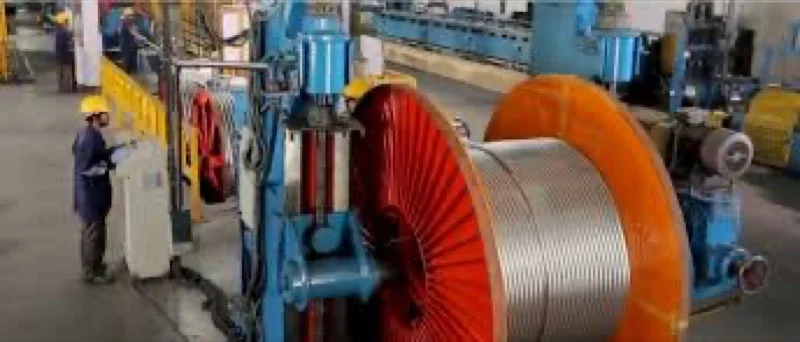 LiveAPAR Industries · Factory · 720 kW / 500 kWh battery
A factory whose process lines keep running through every dip in power.
- <1 ms
- response when the load jumps or the grid dips
- Zero
- gaps in power to the production lines
- End to end
- battery, PCS, controls and installation by one team
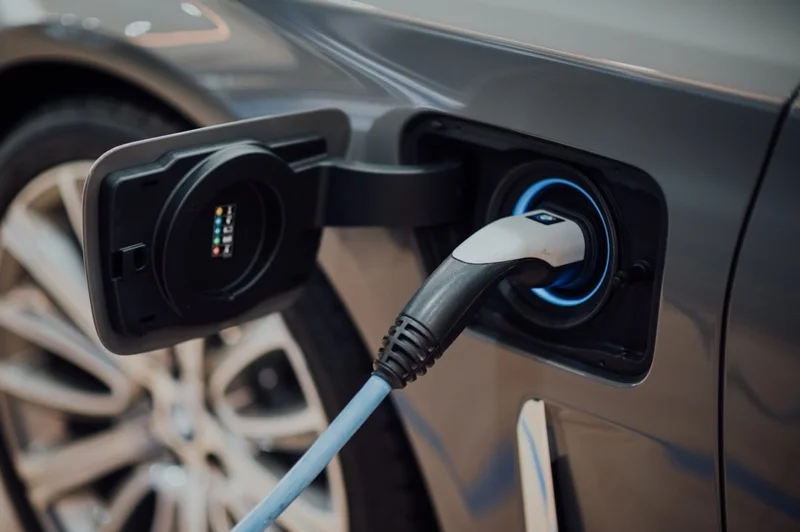 LiveEV charging hub · 260 kW / 580 kWh battery · India
Electric buses and cars keep charging, even when the grid is gone.
- 2.5×
- charging power from the same grid connection
- 1 s
- battery and PCS data, cell by cell
- Grid outage
- buses and cars still charge off the battery
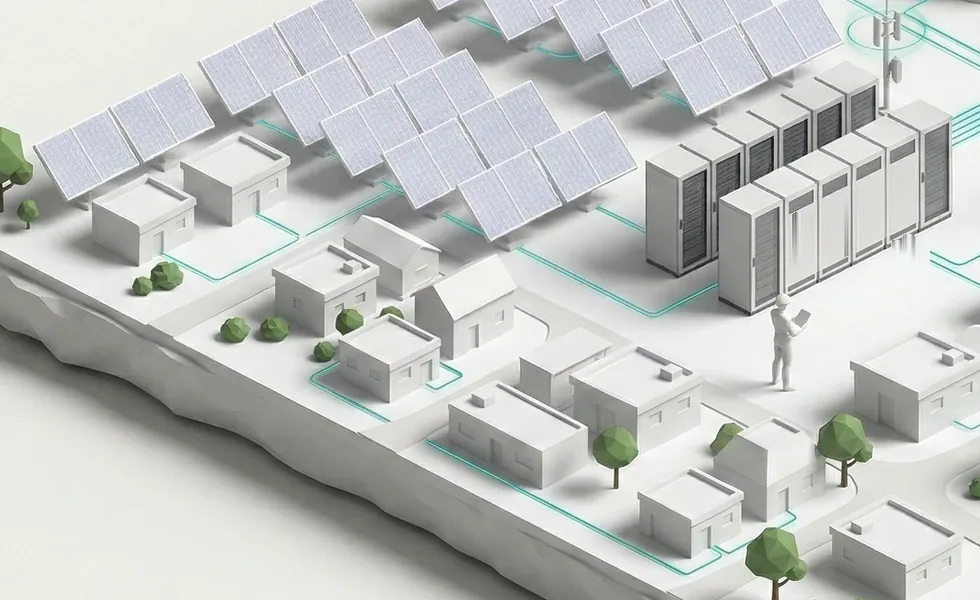 UnderwaySolar + battery micro-grid · Melghat, Maharashtra
A village without a grid. A solar and battery micro-grid that powers it.
- Village
- no grid connection
- Black start
- from standstill, no outside source
- 820
- homes on solar and battery
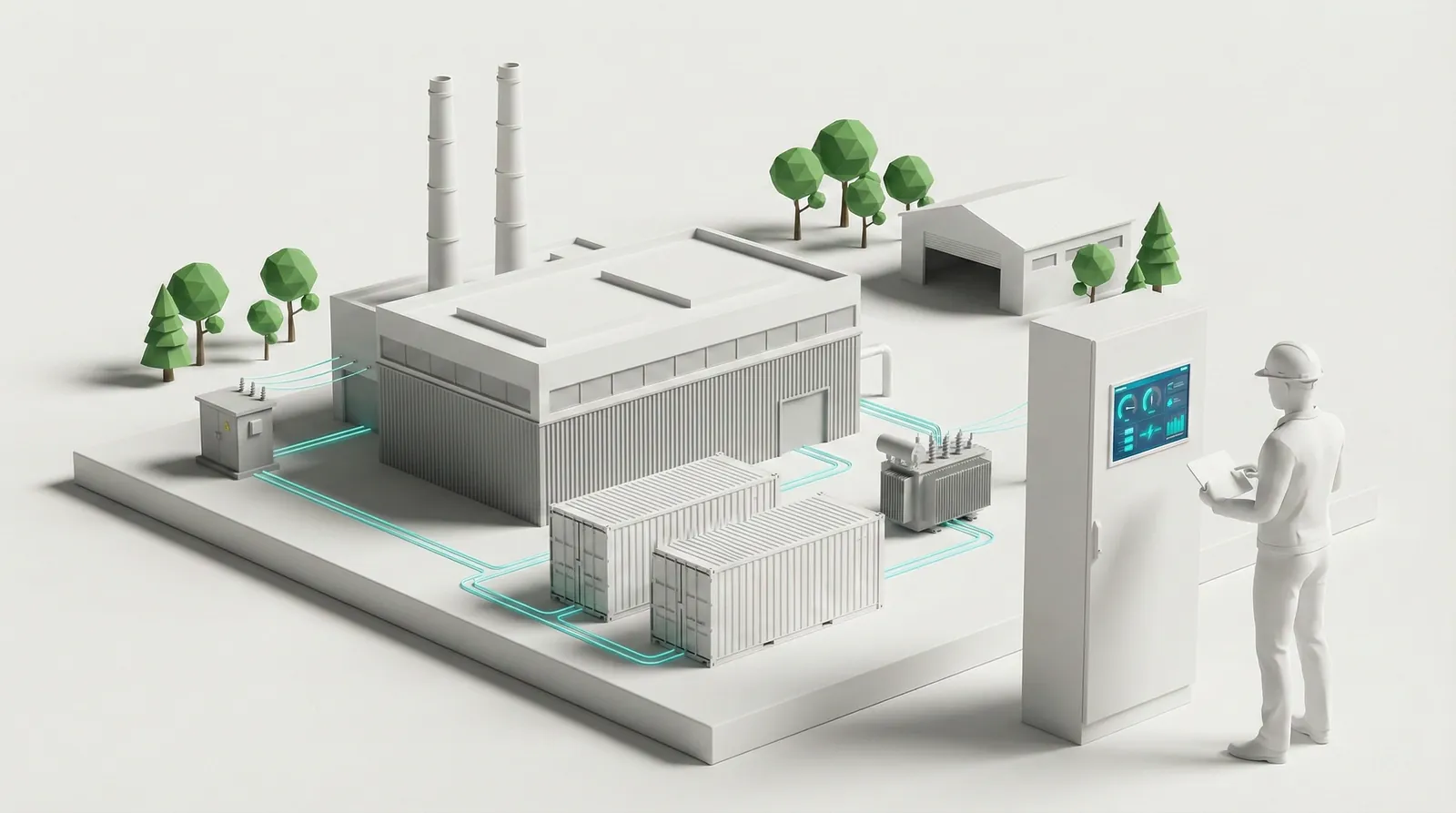 In testingIndustrial battery plant · Pune · 2.5 MW / 10 MWh
Two battery containers, two vendors, two languages. One EMS runs them as one plant.
- 2
- container makes, each with its own BMS protocol
- 1
- PCS and one EMS across both
- Hot-swap
- take a container out for service, plant keeps running
Tell us about your mill and its solar
Send what you know, for free expert advice on your mill. An Ingro engineer works out where your solar units are being lost, whether a metering change or a battery suits you, and the size, cost and payback. If it makes sense, our team takes care of the rest: design, equipment from any maker, installation, help with the DISCOM approvals, commissioning, the EMS and O&M.
What happens next: we reply within one working day, by phone or WhatsApp. No site visit is needed at this stage, and there is nothing to pay.